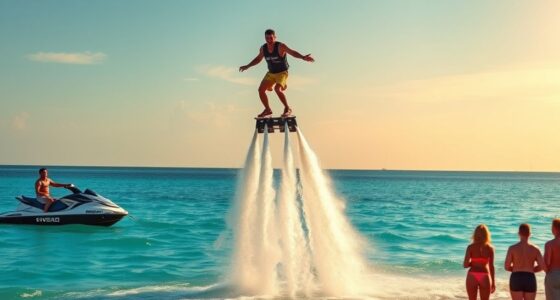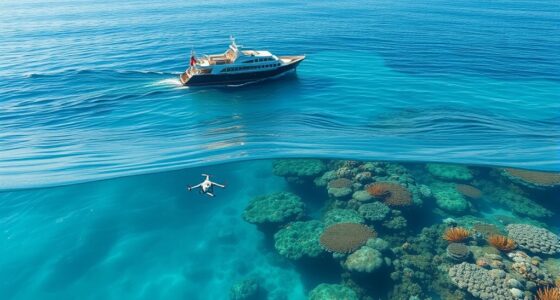
Flyboarding can harm marine ecosystems through noise pollution that disrupts communication and navigation among species, and fuel leaks that degrade water quality. Choosing eco-friendly gear, like electric-powered systems, helps reduce emissions. Also, selecting less sensitive locations for your activities minimizes disturbance to fragile habitats. By educating yourself and others on responsible practices, you can promote sustainability in water sports. There’s much more to learn about how to enjoy flyboarding while protecting marine life.
Get ready for Prime Big Deal Days — try Prime free
Exclusive member deals on October 6–7, plus fast free delivery. Cancel anytime.
As an affiliate, we earn on qualifying purchases.
Key Takeaways
- Jet propulsion noise from flyboarding disrupts marine life communication, leading to stress and disorientation in sensitive species like dolphins.
- Fuel and oil leaks from jet propulsion systems contribute to water pollution, degrading water quality and harming aquatic ecosystems over time.
- Utilizing eco-friendly equipment, such as electric-powered flyboards, can significantly reduce harmful emissions and the ecological footprint of water sports.
- Choosing less sensitive locations for flyboarding minimizes disturbances to marine habitats and helps preserve delicate ecosystems.
- Educating flyboarders about responsible practices fosters conservation awareness and promotes sustainable behaviors to mitigate environmental impacts.
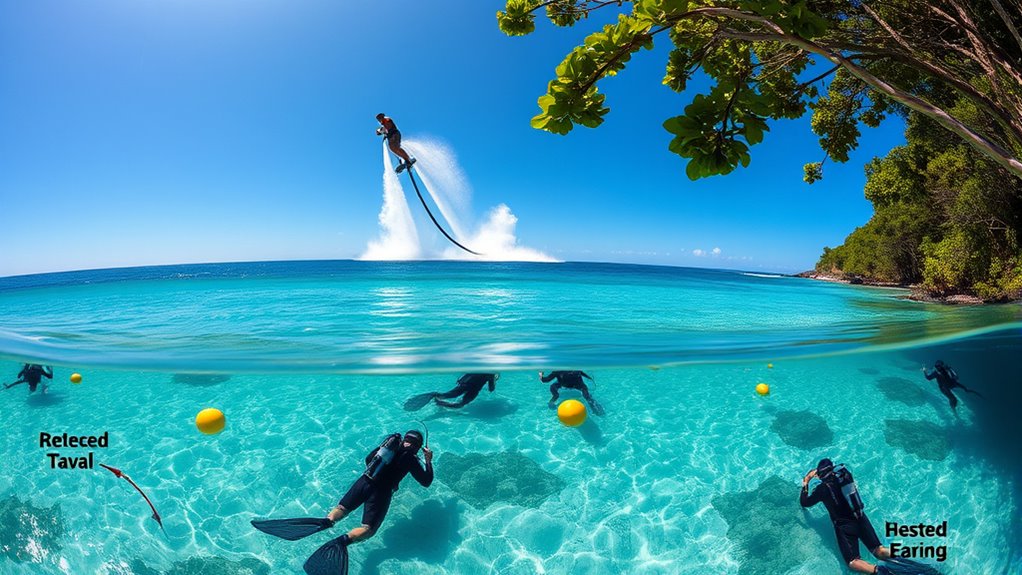
As you glide above the water on a flyboard, it’s easy to forget the potential environmental impacts of this thrilling activity. The exhilarating rush of soaring above the waves can overshadow your awareness of how flyboarding affects marine life and contributes to water pollution. While it might seem harmless at first glance, the reality is that the excitement of flyboarding can come at a cost to the ecosystem beneath you.
When you’re zipping around on a flyboard, the noise from the jet propulsion can disturb local marine life. Many species, including fish and marine mammals, rely on sound for communication and navigation. The roar of the engine can disrupt their natural behaviors, leading to stress and disorientation. If you’re not careful, you might inadvertently harm the delicate balance of the ecosystem. Imagine the impact on a pod of dolphins or a school of fish that rely on their surroundings to thrive. Your fun might be their distress.
Water pollution is another critical aspect to contemplate. The fuel and oils used in jet propulsion systems can leak into the water, introducing harmful substances into the aquatic environment. Even small spills can have significant effects, degrading water quality and harming marine organisms. When you flyboard, you might not see the immediate effects, but the long-term consequences can be severe. It’s essential to recognize that your enjoyment is intertwined with the health of the waters you play in. Festivals like Burning Sands Festival highlight sustainability initiatives, promoting awareness of environmental impacts and conservation efforts.
To minimize these impacts, you can take several proactive steps. First, always choose environmentally friendly flyboarding equipment. Look for options that use cleaner fuel alternatives or electric systems to reduce emissions. This can help mitigate some of the pollution associated with traditional jet propulsion. Additionally, consider your choice of location. Opt for spots that are less sensitive to disturbances, avoiding areas with high concentrations of marine life or delicate ecosystems.
Educating yourself and fellow flyboarders about the local environment can also make a difference. Understanding the importance of marine habitats and respecting wildlife can lead to better decision-making in the water. Encourage others to practice responsible flyboarding by promoting awareness of the environmental impact, creating a culture of conservation among thrill-seekers.
electric flyboard for eco-friendly water sports
As an affiliate, we earn on qualifying purchases.
As an affiliate, we earn on qualifying purchases.
Frequently Asked Questions
Is Flyboarding Suitable for All Age Groups?
Flyboarding isn’t suitable for all age groups. Most operators enforce age restrictions, typically allowing participants aged 12 and older, but this can vary. You’ll also need to take into account your physical fitness; flyboarding requires a certain level of strength and coordination. If you’re in good shape and meet the age requirements, you’re likely to have a blast. Always check with your local provider to make sure you meet their specific criteria before diving in.
What Are the Safety Measures for Beginners in Flyboarding?
To guarantee your safety as a beginner in flyboarding, wear the appropriate safety gear, including a life jacket and helmet. Before hitting the water, you’ll need to undergo beginner training, where instructors teach you the basics of balance, control, and emergency procedures. They’ll also help you get comfortable with the equipment and the water environment. Following these measures will boost your confidence and minimize risks while you learn to flyboard.
How Long Does a Typical Flyboarding Session Last?
A typical flyboarding session lasts about 30 minutes to an hour. Have you ever wondered how much fun you can pack into that time? While you’re soaring above the water, it’s important to think about the environmental concerns tied to flyboarding, like water pollution. By being mindful of your surroundings and practicing responsible flyboarding, you can enjoy your session while also protecting the beauty of the waters you love to ride on.
Are There Specific Weather Conditions for Flyboarding?
Yes, there are specific weather conditions for flyboarding. You’ll want to avoid windy days, as strong gusts can affect your balance and control. Ideally, the water temperature should be comfortable, usually above 60°F (15°C), to guarantee your safety and enjoyment. If rain or storms are in the forecast, it’s best to reschedule your session. Always check the weather restrictions before heading out to ensure a safe and fun experience!
Can Flyboarding Be Done in Any Water Body?
You can enjoy flyboarding in various water bodies, but it’s best to be mindful of the environment. While gliding above the surface feels exhilarating, consider the hidden footprints you might leave behind. Flyboarding in polluted waters can exacerbate water pollution, impacting local ecosystems. So, choose clean, natural lakes or oceans that invite adventure without compromising marine life. Always respect nature, ensuring your thrill doesn’t come at the cost of the environment’s well-being.
Conclusion
In the grand scheme of water sports, flyboarding can bring a splash of excitement, but it’s essential to tread lightly. By embracing eco-friendly practices and respecting marine life, you can enjoy this thrilling activity without leaving a heavy footprint. Your choices can turn ripples of concern into waves of positive change. So, let’s soar above the surface while keeping our oceans pristine—because every adventure should harmonize with nature’s melody, not disrupt its rhythm.
Fall yard work Picks
leaf blowers
As an affiliate, we earn on qualifying purchases.