Maintaining your canoe’s hull is crucial for safe paddling. For fiberglass repairs, clean and sand damaged areas before applying a gel coat or epoxy for larger holes. With wooden canoes, inspect for soft spots, use wood filler for minor cracks, or replace sections if needed. Sealing new wood with waterproof varnish will enhance durability. Proper techniques not only restore appearance but also guarantee your canoe’s ready for the water. Explore further to uncover essential tips and best practices.
Key Takeaways
- Regularly inspect your canoe hull for signs of damage, such as cracks or dull patches, to ensure quick repairs.
- For fiberglass hulls, use a gel coat repair kit for minor damage and epoxy for larger cracks or holes.
- Clean and prepare the damaged area by sanding and removing debris before applying repairs to ensure strong adhesion.
- Wooden canoes require regular inspections; use wood filler for small cracks or replace sections for significant damage before sealing with varnish.
- Proper maintenance and timely repairs enhance durability, appearance, and safety of your canoe, preventing costly future repairs.
A canoe’s hull is its lifeline, so keeping it in top shape is essential for a smooth and safe paddling experience. Over time, wear and tear can take a toll on your canoe, especially if you frequently navigate rocky rivers or windy lakes. Fortunately, with some basic skills and materials, you can perform effective repairs, ensuring your canoe stays in the water where it belongs.
For fiberglass canoes, gel coat restoration is a common repair method. If you notice cracks or dull patches in the gel coat, it’s time to act. Start by cleaning the affected area with soap and water to remove any dirt or grime. Once it’s dry, sand the area lightly with fine-grit sandpaper to create a smooth surface for the gel coat to adhere to. After sanding, apply a gel coat repair kit according to the manufacturer’s instructions. This typically involves mixing the gel coat with a hardener and applying it with a brush or spatula. Make sure to feather the edges for seamless blending. Once it’s cured, you can polish it to match the rest of the hull, restoring that shiny finish.
If your canoe has deeper damage, epoxy bonding comes into play. Epoxy offers a strong, waterproof bond that’s perfect for fixing larger cracks or holes. First, clean the damaged area thoroughly, removing any loose debris. If the damage is extensive, you might need to fill it with a fiberglass cloth before applying the epoxy. Mix the epoxy resin with the hardener as directed, then apply it to the repair area, ensuring it fills the crack or hole completely. Use a spreader or brush to smooth it out and let it cure as per the instructions. Once cured, you can sand it down for a smooth finish and paint over it if desired.
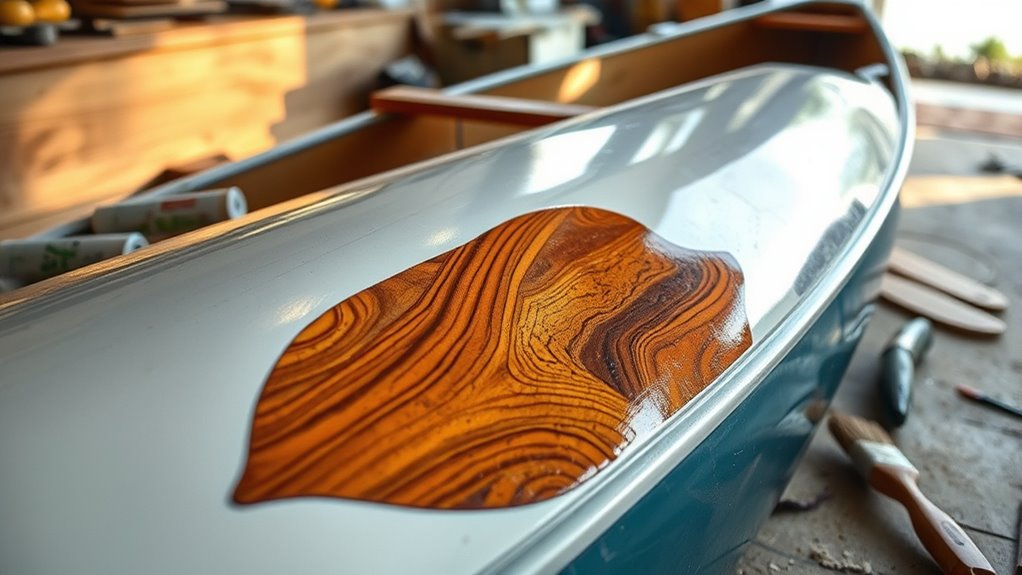
For wooden canoes, patching requires a different approach. Inspect the wood for soft spots or cracks. You can use a wood filler for smaller cracks, but if the damage is significant, consider replacing the affected section. Make sure to seal any new wood with a waterproof varnish to protect it from moisture. Additionally, maintaining color accuracy in your canoe’s finish can enhance its overall appearance and longevity.
fiberglass canoe gel coat repair kit
As an affiliate, we earn on qualifying purchases.
As an affiliate, we earn on qualifying purchases.
Frequently Asked Questions
How Long Do Canoe Hull Repairs Typically Last?
Canoe hull repairs typically last several years, depending on the materials used and how well you maintain your canoe. If you perform regular canoe maintenance, like cleaning and inspecting for damage, you can substantially improve repair longevity. Using high-quality materials for your repairs also makes a difference. It’s essential to address any issues promptly to prevent further damage and prolong the life of your canoe, ensuring many enjoyable outings on the water.
Can I Repair My Canoe Hull Without Professional Help?
Yes, you can repair your canoe hull without professional help! With some DIY techniques, you’ll save on repair costs while gaining new skills. Think of it this way: every scratch tells a story, and fixing them yourself adds a chapter. Gather your materials, follow online guides, and take your time. You’ll feel a sense of pride as you restore your canoe, ready for new adventures on the water. So grab your tools and get started!
What Tools Do I Need for Fiberglass Patching?
For fiberglass patching, you’ll need fiberglass resin, a mixing container, brushes, and a roller for application. Don’t forget sandpaper for smoothing the surface—sanding techniques are essential for proper adhesion. You may also want a utility knife for trimming and some gloves to keep your hands clean. Having a mask is smart too, as the fumes can be strong. Gather these tools, and you’re ready to tackle your repair!
How Do I Prevent Further Damage After Repairs?
To prevent further damage after repairs, regularly inspect your work for any signs of wear or leaks. Make it a habit to check the repaired areas before each use. Guarantee your canoe’s storage environment is dry and protected from extreme temperatures. Apply a sealant if necessary, and avoid dragging your canoe over rough surfaces. By taking these steps, you’ll keep your repairs intact and extend the life of your canoe.
Is It Safe to Use My Canoe Immediately After Repairs?
They say, “Haste makes waste,” and that rings true for your canoe. It’s best to wait before using it immediately after repairs. You want to verify the repair safety of the patched areas; they need time to cure properly. Rushing can lead to further damage or safety hazards on the water. Give your canoe a little time, and you’ll enjoy smoother, safer outings. Trust the process; it’ll be worth it!
Conclusion
In the grand adventure of canoeing, a repaired hull is like a knight’s shining armor—essential for conquering the wild waters! So, whether you’re patching fiberglass or wood, don’t underestimate the power of your handy skills. With every repair, you’re not just fixing a boat; you’re crafting a vessel of dreams, ready to face the fiercest storms and glide over the calmest lakes. Immerse yourself in those repairs, and let your canoe rise like a phoenix from the ashes!