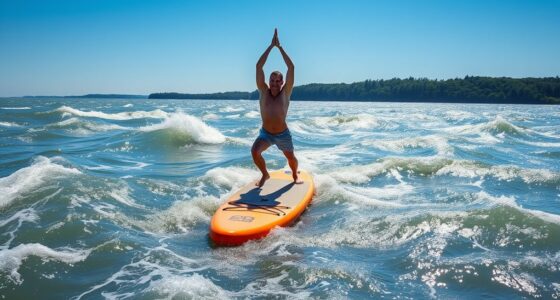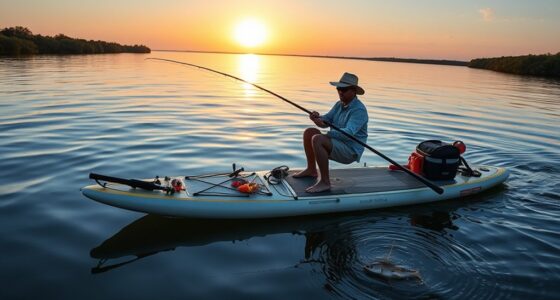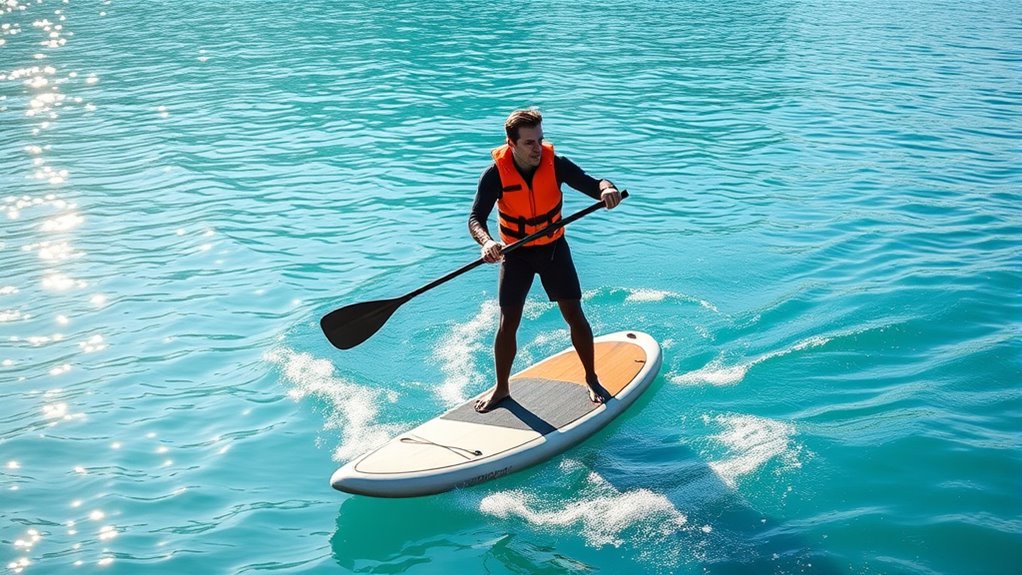

To self-rescue on a SUP in under 30 seconds, stay calm and face your board in the water. Use your paddle as support by inserting it at a shallow angle and pulling back to stabilize. Position yourself alongside the board, grab its edge with your free hand, and kick your legs to push up. Engage your core and keep movements smooth to avoid panic. Keep practicing these steps, and you’ll master quick recovery techniques when it counts.

Get sports gear delivered free — and shop member deals
- Fast, free delivery on millions of items
- Access to Prime Big Deal Days deals on October 6–7
- Prime Video, Amazon Music and more included
Key Takeaways
- Stay calm, face the board, and avoid panicking to conserve energy and maintain control.
- Use your paddle at a shallow angle to support and stabilize yourself in the water.
- Position yourself alongside the board, grab the edge with one hand, and kick to lift yourself back on.
- Keep movements smooth and controlled to prevent losing balance or tiring quickly.
- Once on the board, stabilize by centering your weight, keeping knees bent, and using the paddle for extra support.
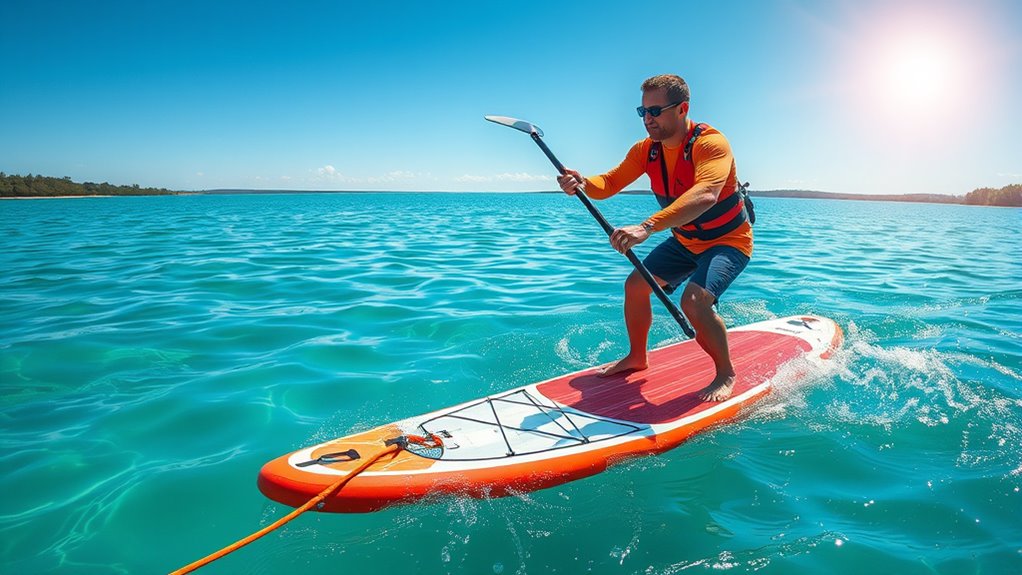
Falling off your stand-up paddleboard (SUP) is inevitable, but knowing how to self-rescue can make all the difference in staying safe on the water. When you find yourself in the water unexpectedly, your first priority is to regain control quickly and efficiently. The key to a swift self-rescue lies in mastering paddle techniques that help you get back on your board and practicing balance recovery to maintain stability. With proper skills, you can get back on your SUP in under 30 seconds, minimizing fatigue and staying safe.
Start by staying calm. Panic wastes energy and makes balance recovery harder. Once you’re in the water, position yourself close to your board, ideally facing it. Reach out with your paddle, gripping it firmly. Your paddle acts as an extension of your body, providing leverage and stability. Use paddle techniques that involve placing the paddle in the water at a shallow angle, pulling it back toward your body to stabilize yourself. If you’re close enough, you can plant the paddle in the water and hold onto it, providing extra support for balance recovery. Additionally, understanding proper rescue techniques can ensure you execute your self-rescue efficiently and safely.
Next, focus on getting back onto your board. Position yourself alongside the SUP, facing the center. Use your paddle for support and leverage, planting it in the water to steady yourself. Grab the edge of the board with your free hand, and kick your legs to push yourself up. Keep your core engaged to maintain stability as you lift yourself onto the board. It’s important to avoid panicking and making sudden, uncoordinated movements, as this can cause you to lose balance again.
Once on the board, take a moment to settle and regain your composure. Use your paddle to help stabilize yourself if needed. Focus on balance recovery by keeping your weight centered over the board’s centerline. Slightly bend your knees, spread your feet shoulder-width apart, and stay relaxed. This stance helps you respond quickly to any shifting water or movement. Practice shifting your weight back and forth gently to feel how the board responds, reinforcing your ability to maintain balance.
stand-up paddleboard paddle leash
As an affiliate, we earn on qualifying purchases.
As an affiliate, we earn on qualifying purchases.
Frequently Asked Questions
What Should I Do if I Panic During a Self-Rescue?
If you panic during a self-rescue, stay calm and focus on your panic management. Take slow, deep breaths to steady your mind and body, which helps prevent exhaustion and disorientation. Remind yourself that you’re capable of rescuing yourself, and use controlled breathing techniques to keep calm. Keeping a clear head guarantees you can efficiently perform your self-rescue steps and return safely to shore.
How Can I Prevent Capsizing in the First Place?
Ever wondered how to stay upright longer? You can prevent capsizing by focusing on proper board positioning and maintaining a steady paddle grip. Keep your weight centered and balanced, avoiding sudden movements that throw you off. Adjust your stance as needed, and stay aware of wind or currents. Do these simple steps, and you’ll enhance stability, making capsizes less likely and your paddling experience more enjoyable.
Is It Necessary to Wear a Life Jacket for Self-Rescue?
You might wonder if wearing a life jacket is necessary for self-rescue. While safety gear importance can’t be overstated, a life jacket provides buoyancy, keeping you afloat if you fall. It’s especially useful during unexpected capsizes or fatigue. Wearing one can make self-rescue quicker and safer, giving you peace of mind. Ultimately, for your safety, always prioritize a properly fitted life jacket when paddling on a SUP.
What Are Common Mistakes to Avoid During Rescue Attempts?
Did you know that over 60% of rescue failures happen due to common mistakes? During rescue attempts, avoid rushing water entry techniques, as improper timing can worsen the situation. Always check your equipment maintenance beforehand to verify safety, and stay calm. Don’t panic, and remember that rushing or not following proper procedures can delay your rescue or cause injury. Stay focused, practice regularly, and prioritize safety above all.
How Does Weather Affect Self-Rescue Strategies?
Weather conditions greatly influence your self-rescue strategy on a SUP. Strong winds can make paddling back difficult and push you off course, so you need to adjust your approach accordingly. Calm weather allows for quicker, more controlled rescues, while gusty conditions demand extra attention to wind impact and currents. Always assess the weather before heading out, and be prepared to modify your rescue plan if conditions change suddenly.
Conclusion
Once you master quick self-rescue, you’ll feel like a ninja on the water—swift, confident, in control. I remember the first time I flipped and managed to climb back on in under 30 seconds; it was as if I’d uncovered a secret superpower. Just like learning to ride a bike, the more you practice, the easier it becomes. With these skills, you’ll turn every wipeout into just a brief pause before riding confidently again.
Fall Picks
fall essentials
As an affiliate, we earn on qualifying purchases.