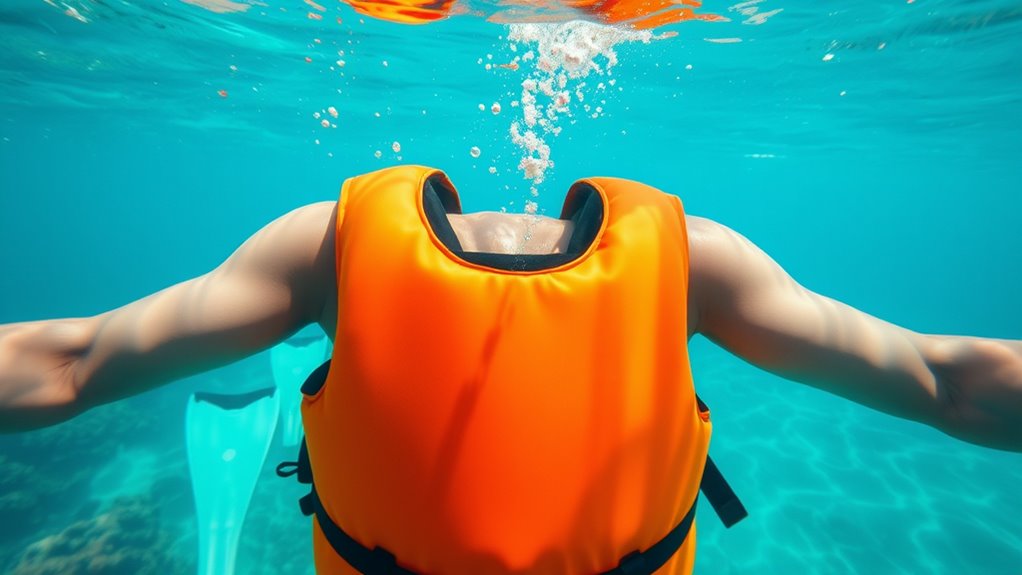

Balancing buoyancy and mobility in your snorkel vest is key for a safe and enjoyable experience. If you inflate it too much, you’ll get more float, but it can restrict your movement and make swimming sluggish. Underinflate, and you’ll struggle to stay afloat comfortably, risking fatigue. Finding the right level lets you stay stable without sacrificing agility. Keep adjusting your vest as needed, and you’ll discover more tips to optimize your underwater adventures.
Key Takeaways
- Proper inflation balances buoyancy for safety and mobility, preventing sluggishness or instability underwater.
- Overinflating increases buoyancy but restricts movement, making swimming and maneuvering more difficult.
- Underinflating reduces buoyancy, improving mobility but risking instability and fatigue near the surface.
- Regularly adjusting vest inflation helps maintain an optimal balance based on conditions and swimmer confidence.
- Slight deflation enhances range of motion without compromising safety, supporting better underwater navigation.
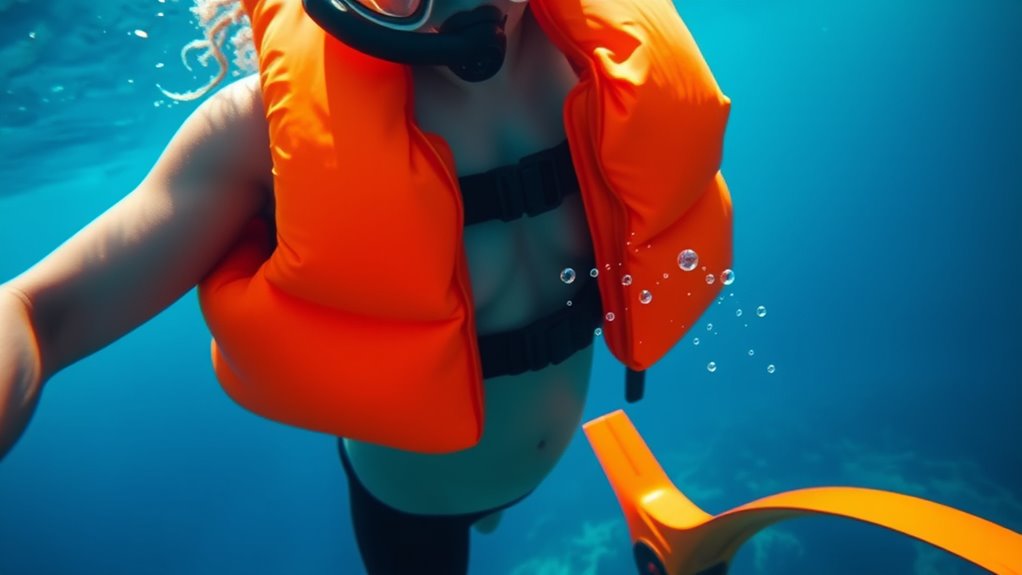
Inflating your snorkel vest correctly is essential for safety and comfort while exploring underwater. When you manage your vest’s buoyancy properly, you’ll find it easier to stay afloat and navigate through the water with confidence. Proper inflation ensures that your gear safety is maintained, preventing unnecessary risks like sinking or uncontrolled floating. It also enhances your underwater navigation by keeping your head above water and allowing you to focus on your surroundings rather than fighting against your gear.
Proper snorkel vest inflation ensures safety, comfort, and confident navigation underwater.
As you begin your snorkeling adventure, pay close attention to how much you inflate your vest. Overinflating can make your movement more restricted and reduce your mobility, making it harder to maneuver efficiently. Conversely, underinflating leaves you too close to the water’s surface, risking instability and potential fatigue. Striking the right balance is key; your vest should provide enough buoyancy to keep you comfortably afloat without limiting your ability to swim freely or observe marine life up close.
The trade-off between buoyancy and mobility is a common concern among snorkelers. When your vest is inflated to maximum capacity, you gain increased flotation, which can be helpful if you’re tired or need to rest. However, this increased buoyancy also means you might feel sluggish or less agile in the water. If you prefer more freedom of movement, you should deflate your vest slightly, allowing for a better range of motion without sacrificing safety. Finding this balance depends on your confidence, swimming skills, and the specific conditions of your dive site.
Monitoring your vest’s inflation level throughout your snorkel session helps prevent fatigue and ensures you maintain ideal underwater navigation. You’ll want to practice inflating and deflating your vest efficiently, so adjusting it becomes second nature. Modern snorkel vests often come with easy-to-use inflation valves, making quick adjustments possible without breaking your rhythm. Remember, your gear safety depends on maintaining control over your buoyancy, especially in varying currents or when encountering waves. Properly inflated vests keep you stable, allowing you to focus on enjoying the underwater scenery rather than fighting to stay afloat.
Additionally, understanding celebrity transformations and how they can influence public perception can be useful in recognizing the importance of proper gear management, as it often involves adjustments and fine-tuning—similar to inflating or deflating your vest for optimal performance.

SOLY Inflatable Snorkel Vest, Inflatable Snorkel Vest for Adult,Snorkeling Vest Adjustable,Light Snorkeling Jackets Water Sports Safety
- Lightweight and Comfortable: Provides buoyancy and safety during diving
- Durable Material: Nylon outer layer with polyester and PVC inner layer
- Adjustable Straps: Vertical and horizontal adjustments for a secure fit
As an affiliate, we earn on qualifying purchases.
As an affiliate, we earn on qualifying purchases.
Frequently Asked Questions
Can Inflating a Snorkel Vest Damage Its Materials?
Inflating your snorkel vest incorrectly can cause material degradation over time, especially if you overinflate or use improper inflation techniques. Excessive pressure puts stress on the materials, leading to cracks or tears. To avoid damage, inflate gradually and follow the manufacturer’s instructions. Proper inflation techniques help maintain your vest’s integrity, ensuring it remains durable and reliable while keeping you buoyant and safe during your snorkeling adventures.
How Often Should I Check My Vest’s Buoyancy?
Imagine giving your vest a gentle check-up to keep it in prime shape. You should test its buoyancy before each snorkel trip and periodically during extended uses. Follow maintenance schedules recommended by the manufacturer, and consider storage considerations to prevent damage. Regular checks ensure your vest maintains proper buoyancy, keeping you safe and comfortable in the water. Don’t neglect this essential step—it’s your key to worry-free snorkeling adventures.
Are There Specific Conditions That Require More Inflation?
You should adjust your vest’s inflation based on environmental factors like water temperature and depth, which affect buoyancy needs. More inflation is needed in colder or deeper water for safety, but guarantee inflation remains consistent to avoid mobility issues. Always check your vest regularly to maintain proper buoyancy. By tailoring inflation to conditions, you optimize safety and comfort, balancing buoyancy consistency with your ability to move freely.
Does Inflation Impact the Lifespan of the Vest?
Inflation can impact your vest’s lifespan by affecting material degradation over time. If you frequently inflate and deflate it, the material may weaken faster, reducing durability. Consistent inflation helps maintain the vest’s shape and buoyancy, but over-inflation or repeated cycles can accelerate wear. To extend your vest’s life, monitor inflation levels and avoid unnecessary stress, ensuring it stays reliable and safe for future use.
Can Over-Inflation Cause Safety Hazards?
Think of over-inflation like a balloon ready to burst; water pressure can cause your vest to become unstable. Over-inflation can create safety hazards, making it harder to breathe and risking sudden deflation. You might experience breathing difficulty or lose control in the water. To stay safe, always inflate your vest correctly, ensuring it provides buoyancy without compromising mobility or causing dangerous water pressure buildup.
Conclusion
When you choose to inflate your snorkel vest, you gain buoyancy, but you often sacrifice mobility. You keep yourself afloat, but limit your range of motion. You enhance your safety, yet may hinder your freedom to explore. Balancing buoyancy and mobility requires awareness, adjustment, and intention. Ultimately, your choice depends on your priorities—whether you favor stability or agility. By understanding these trade-offs, you can snorkel confidently, enjoying the water while maintaining control.