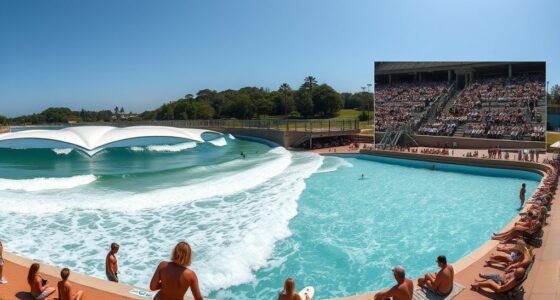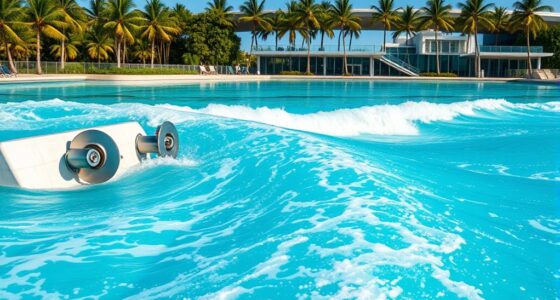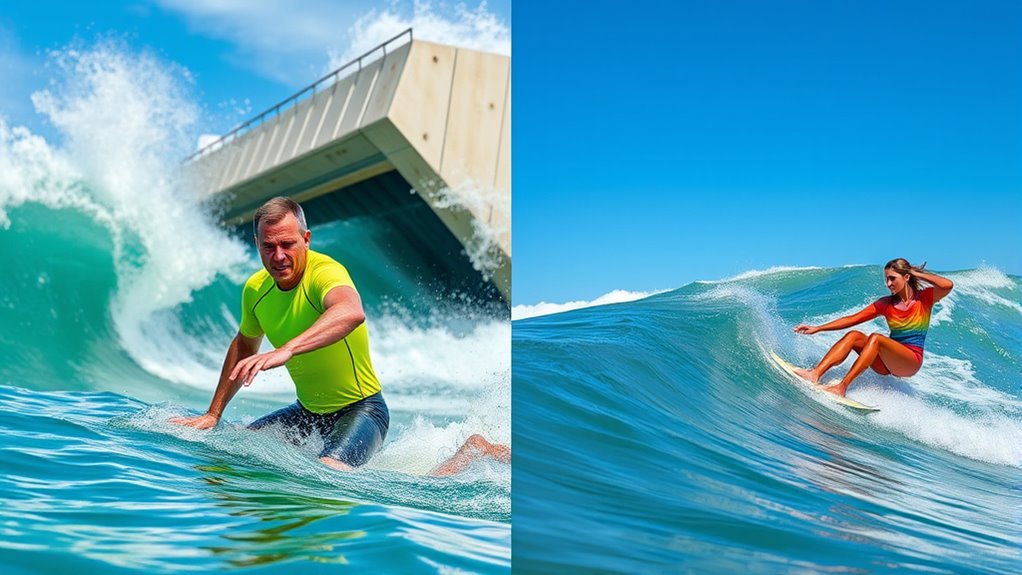

Injury statistics show that surfing on artificial waves results in fewer, less severe injuries because conditions are controlled and hazards are minimized. Natural surf environments pose higher risks with larger, powerful waves, unpredictable conditions, and hazards like rocks or marine life, leading to more serious injuries. Proper safety gear and awareness help reduce risks in both settings. To understand how these differences can impact your surfing experience, keep exploring the key safety factors involved.
Key Takeaways
- Artificial wave surfing generally results in fewer and less severe injuries due to controlled conditions.
- Natural surf environments have higher injury frequency and often involve more serious injuries like fractures or head trauma.
- Ocean hazards in natural surf, such as rocks and reefs, increase injury risk compared to artificial settings.
- Proper safety gear and training significantly reduce injury severity in both artificial and natural surfing.
- Injury data shows that natural surf poses greater risks, emphasizing the need for heightened awareness and caution.
Have you ever wondered how common injuries are and what data reveals about them? When it comes to surfing, understanding injury patterns is vital, especially as you navigate different environments like artificial waves versus natural surf. Both types of waves pose unique risks, but prioritizing wave safety can greatly reduce your chances of injury. Injury prevention starts with knowing the hazards associated with each surfing type and taking proactive steps to stay safe.
Understanding injury risks in surfing helps you stay safe across artificial and natural waves.
Artificial waves, often found at surf parks or indoor facilities, are designed to provide consistent, controllable conditions. Because they are engineered, many believe they’re safer, but they still carry injury risks. Data shows that injuries related to artificial wave surfing tend to be less severe overall, largely because the environment is predictable and managed. However, repetitive impacts or improper use of safety equipment can still lead to strains, sprains, or even more serious injuries. Injury prevention in this setting depends heavily on following safety protocols, such as wearing appropriate protective gear and receiving proper instruction. Additionally, the controlled environment helps lessen the chance of unexpected hazards, making injury prevention more straightforward, but it doesn’t eliminate risks entirely.
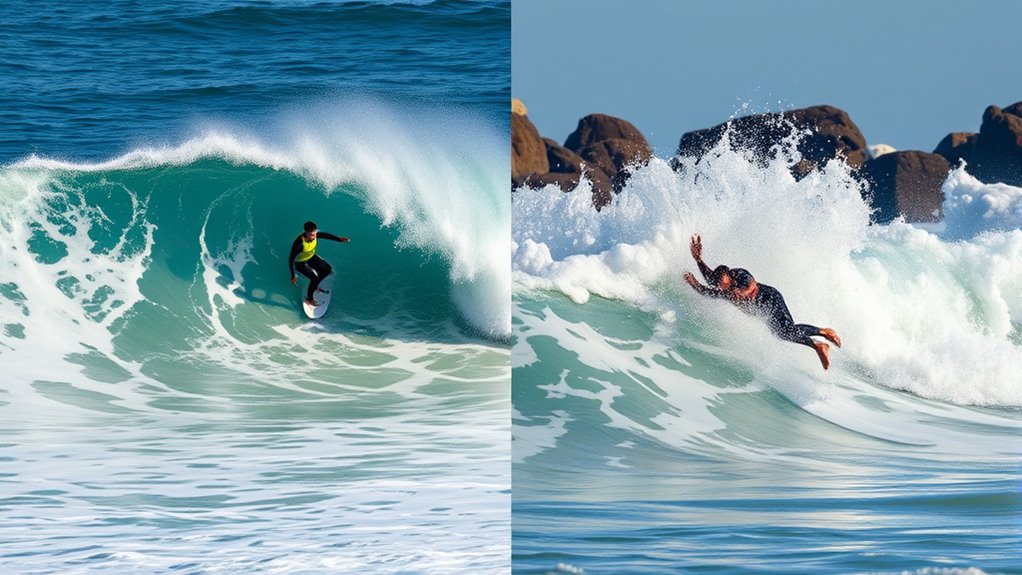
Natural surf, on the other hand, presents a different set of challenges. The unpredictability of ocean conditions means that waves can vary in size, power, and shape, increasing the likelihood of injury. Data indicates that surfers in natural environments often face more severe injuries, including fractures, dislocations, and head traumas, especially when caught off guard by large or powerful waves. The presence of rocks, reefs, and marine life also adds to the risk profile. To minimize injury, you must prioritize wave safety by evaluating conditions carefully before entering the water, understanding your skill level, and respecting the ocean’s power. Proper training, experience, and wearing suitable safety gear like helmets and impact vests further contribute to injury prevention. Recognizing the importance of consistent safety measures can make a significant difference in the severity of potential injuries.
Injury statistics reveal that both artificial and natural waves can lead to injuries, but the severity and frequency vary. While artificial wave surfing might reduce some risks due to its controlled nature, it’s not risk-free. Conversely, natural surf demands heightened awareness, experience, and respect for the environment. Whichever setting you choose, staying informed about the common injuries and practicing injury prevention strategies are key. Knowing the data helps you make smarter choices, ensuring that your surfing experience remains enjoyable and safe. Ultimately, prioritizing wave safety in every session can help you avoid unnecessary injuries and continue enjoying this exhilarating sport.

SurfCo – Longboard Nose Guard Kit in Black
A “MUST HAVE” for safety!
As an affiliate, we earn on qualifying purchases.
As an affiliate, we earn on qualifying purchases.
Frequently Asked Questions
How Do Injury Types Differ Between Artificial and Natural Waves?
When considering injury types, you might notice differences between artificial and natural waves. You’re more likely to encounter injuries from marine life in natural settings, while artificial waves can lead to injuries caused by equipment failure or impact with hard surfaces. Natural waves often result in cuts or bruises from rocks or coral, whereas artificial waves might cause sprains or fractures due to sudden falls or equipment malfunction.
What Safety Measures Are Recommended for Artificial Wave Parks?
Ever wonder how to stay safe in an artificial wave park? You should follow strict safety protocols and guarantee emergency preparedness is first-rate. Wear the recommended gear, listen carefully to staff instructions, and know your limits. Are you ready to enjoy the thrill while keeping yourself protected? Prioritize safety measures like proper supervision, clear signage, and quick access to first aid to make your experience both exciting and secure.
Are Injuries More Severe in Artificial Wave Surfing?
You might wonder if injury severity is higher in artificial wave surfing. Generally, wave impact can be controlled better in artificial parks, reducing the risk of severe injuries. However, because artificial waves are often faster and more powerful, they can sometimes cause more serious injury severity if you’re not careful. Proper safety measures, like wearing protective gear and following park guidelines, help minimize risks regardless of wave impact.
How Does Age Affect Injury Risk in Artificial vs. Natural Surfing?
Age-related risk influences your injury chances in both artificial and natural surfing. As you get older, age and injury risk increase due to factors like slower healing and reduced flexibility. In artificial surfing, you might face a higher injury risk because of the intense, repetitive motions that can strain aging bodies. Understanding how age affects your vulnerability helps you take precautions, like warming up properly and listening to your limits.
What Role Does Experience Level Play in Injury Rates?
Your experience level substantially impacts injury rates as it influences your skill development and ability to handle challenging conditions. With more experience, you learn proper techniques and safety measures, reducing the likelihood of accidents. Beginners often face higher risks because they haven’t fully developed their skills yet. So, the experience impact is vital—more experienced surfers tend to stay safer and handle surf environments better, whether artificial or natural.

Surf Skull Surf Helmet – Bucket hat (Blue, Large)
Protection Design: Hidden protective padding integrated seamlessly into the bucket hat style for surfer safety
As an affiliate, we earn on qualifying purchases.
As an affiliate, we earn on qualifying purchases.
Conclusion
So, next time you’re tempted to chase those perfect artificial waves, remember—you might just be trading a few minor scrapes for a full-blown injury marathon. Natural surf may come with its own risks, but at least you get the thrill of unpredictability and real danger. Artificial waves promise safety, but clearly, they’ve mastered the art of sneaking in injuries when you’re least expecting it—because who needs calm when you can have chaos?

WYYHAA Mens Neoprene Wakesurf Impact Vest, Designed for Wake Surf and Skimboard, Great for Boating Rafting Surfing All Other Watersports Activities,XXL
Surf Fit: This vest is designed to be lightweight and flexible, allowing you to move better while surfing,…
As an affiliate, we earn on qualifying purchases.
As an affiliate, we earn on qualifying purchases.
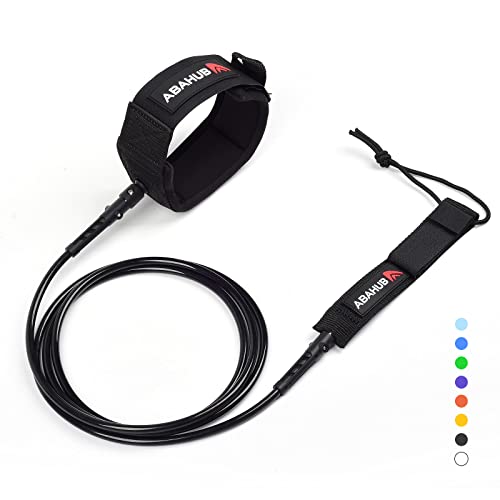
Abahub Premium Surfboard Leash, Straight Surf Board Leg Rope, Legrope Strap for Shortboard, Skimboard Replacement Leashes 6 Foot Black 6 mm Thick
5 Sizes for Perfect Fit: It's suggested to choose a surfboard leash equal in length to or slightly…
As an affiliate, we earn on qualifying purchases.
As an affiliate, we earn on qualifying purchases.