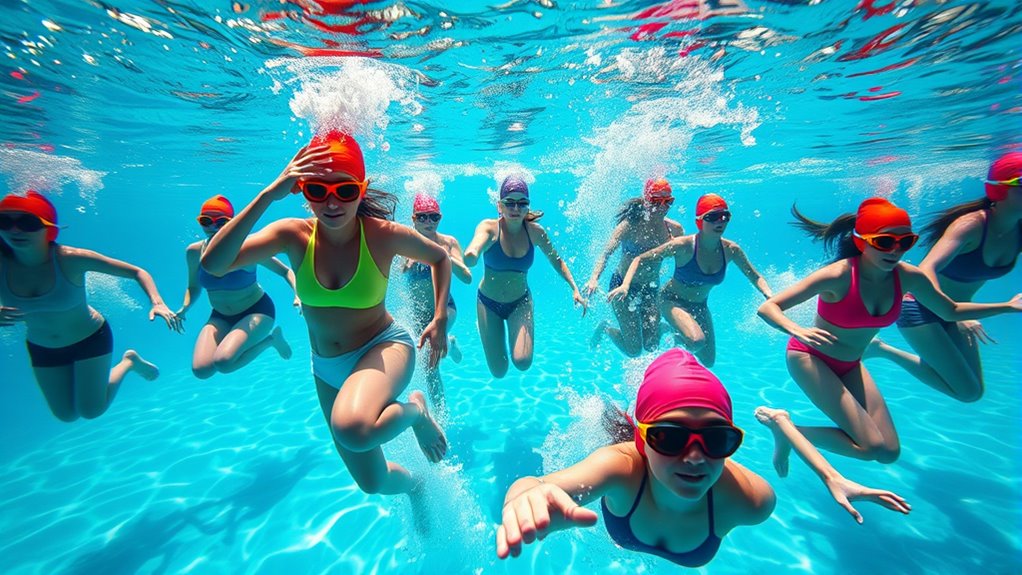
To gauge your effort in aqua aerobics, listen to your body and use perceptual cues like breathing pace and muscle fatigue. You can also monitor your heart rate to stay within moderate, vigorous, or maximum zones. A simple way to judge effort is by talking—if you can chat comfortably, you’re in moderate; if talking is difficult, you’re moving into vigorous. To master maintaining the right intensity, keep exploring how effort affects your workout outcomes.
Key Takeaways
- Use perceived exertion to determine effort: comfortable talking indicates moderate, difficulty speaking suggests vigorous, and inability to talk signals maximum effort.
- Monitor heart rate to stay within target zones aligned with your fitness goals during water workouts.
- Observe breathing patterns: steady, easy breathing for moderate effort; labored breathing for vigorous effort.
- Incorporate interval training to alternate between different intensity zones and gauge effort levels effectively.
- Adjust equipment and water resistance to modify effort, ensuring you stay within desired intensity zones.
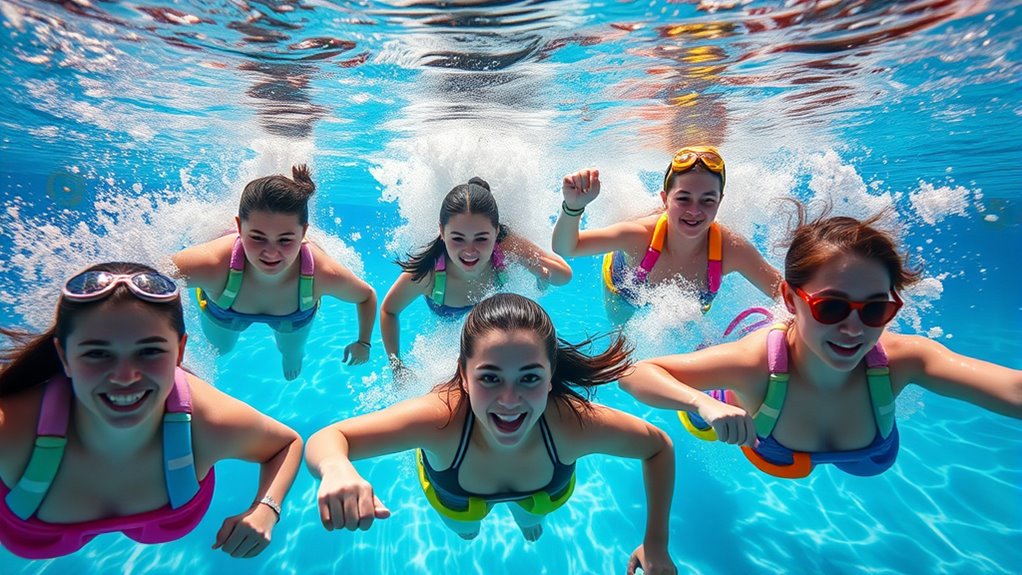
Aqua aerobics offers a versatile workout that can be tailored to your fitness level by adjusting its intensity zones. Whether you’re just starting out or pushing for peak performance, understanding how to gauge your effort helps maximize benefits and prevent overexertion. One key aspect to consider is your hydration strategy. Water workouts may seem less dehydrating, but you still lose fluids through sweat, especially during higher-intensity sessions. Make sure to drink water regularly before, during, and after your workout. Proper hydration keeps your muscles functioning ideally, reduces fatigue, and helps you recover faster. Listening to your body for signs of dehydration—such as dizziness or dry mouth—can inform when to take a break or sip some water.
Hydrate properly during aqua aerobics to prevent dehydration and optimize performance.
Another essential factor in managing your effort is equipment selection. The right gear can influence your intensity zone and help you maintain consistent effort levels. For example, resistance equipment like water weights or foam noodles can increase the difficulty of your movements, helping you reach higher intensity zones comfortably. Conversely, using less resistance allows for a lower-intensity workout suitable for recovery or warm-up sessions. Proper footwear or buoyancy belts can also impact your stability and effort, making it easier or harder to perform certain exercises. When selecting equipment, think about your fitness goals and current ability. Lightweight equipment is ideal for beginners or those focusing on endurance, while heavier or more challenging gear suits more advanced users aiming for strength and power. Additionally, understanding the concept of exercise intensity zones can help you target specific fitness outcomes and optimize your workout plan.
As you progress through your aqua aerobics session, you’ll want to pay attention to how your body feels—your breathing, muscle fatigue, and heart rate. You can use perceived exertion as a guide, aiming for a moderate, vigorous, or maximum effort depending on your goal. A good rule of thumb is that during moderate effort, you should be able to talk comfortably; during vigorous effort, talking becomes more difficult, and during maximum effort, talking might be impossible. Incorporating interval training, where you alternate between different effort levels, helps you stay in the desired intensity zones and prevents plateauing.
Ultimately, mastering your effort in aqua aerobics involves a combination of hydration strategies, equipment choice, and self-awareness. Adjusting these factors allows you to customize your workout, challenge yourself appropriately, and stay safe. When you understand how to gauge effort and tailor your workout accordingly, you’ll find that aqua aerobics becomes more effective, enjoyable, and sustainable over time.
Frequently Asked Questions
Can Beginners Safely Perform High-Intensity Aqua Aerobics?
You can safely perform high-intensity aqua aerobics as a beginner if you listen to your body and follow proper guidance. Water temperature should be warm enough to prevent muscle strain, and an instructor with certification can help tailor the workout to your fitness level. They’ll ensure you progress gradually, avoiding overexertion. Always communicate your comfort levels, and don’t push beyond your limits, especially as you’re just starting out.
How Often Should I Vary Intensity Zones During Workouts?
Imagine you’re in the middle of your workout, like a modern-day gladiator. You should vary your intensity zones every 10-15 minutes to avoid plateaus and keep your muscles guessing. Incorporate interval variation to challenge yourself and prevent boredom. However, maintain some intensity consistency to build endurance safely. Listening to your body helps determine when to push harder or ease up, ensuring a balanced, effective aqua aerobics routine.
What Equipment Can Help Measure Exercise Intensity in Water?
To measure exercise intensity in water, you can use water resistance devices that help monitor your effort levels, providing feedback during workouts. Underwater heart rate monitors are also great tools, as they track your heart rate directly in water, giving you accurate data on your effort. These devices make it easier to stay within your target intensity zone, ensuring an effective and safe aqua aerobics session.
Are There Specific Health Conditions to Consider With High-Intensity Aqua Aerobics?
Imagine your body as a finely tuned instrument—high-intensity aqua aerobics can hit those high notes, but if you have joint restrictions or cardiovascular risks, it’s like playing without considering the strain. You might worsen joint pain or push your heart too hard. Always check with your healthcare provider first. Adjust your effort and listen closely to your body, ensuring you enjoy the music of exercise without risking discord.
How Do Hydration Needs Change With Different Intensity Zones?
When you shift between different intensity zones, your hydration needs change. During higher effort levels, you sweat more, so you should increase your water intake and follow hydration strategies like sipping water regularly. For moderate zones, maintain consistent hydration, but for intense sessions, consider adding electrolyte drinks to replenish lost minerals. Pay attention to thirst cues and adjust your water intake accordingly to stay properly hydrated throughout your workout.
Conclusion
By understanding your aqua aerobics intensity zones, you can tailor your workouts for maximum benefit. Think of it like a thermostat—adjust your effort to stay in the right zone, whether you’re aiming for fat burn or cardiovascular endurance. Some experts believe training in specific zones can accelerate progress, but listening to your body remains key. So, immerse yourself, gauge your effort, and enjoy safer, more effective workouts in the water.