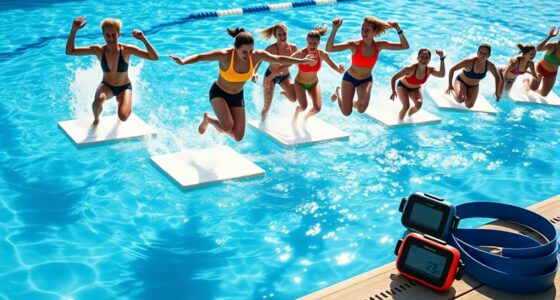
Hydrotherapy and aqua aerobics effectively aid your rehabilitation by providing low-impact exercises that reduce strain on your body. Water resistance enhances muscle strength while allowing you to recover pain-free. It also regulates temperature, making workouts more comfortable and soothing joint pain. With these methods, you can safely progress in your fitness journey and enjoy the therapeutic benefits of water. Curious about how these techniques can fit into your routine? There’s more to explore!
Key Takeaways
- Hydrotherapy utilizes water’s resistance to enhance muscle engagement, supporting gradual strength building during rehabilitation.
- Aqua aerobics offers low-impact exercises that reduce injury risk while promoting cardiovascular health and muscle strength.
- The soothing properties of water provide relief for joint pain and inflammation, facilitating pain-free movements essential for recovery.
- Consistent temperature regulation in water helps maintain comfort and prevents overheating, allowing for longer, more effective workout sessions.
- The calming effects of water reduce stress and anxiety, promoting a positive rehabilitation experience and enhancing overall mental well-being.

Have you ever wondered how water can transform your fitness routine? The unique properties of water, especially when it comes to hydrotherapy and aqua aerobics, can markedly aid in rehabilitation. Engaging in water-based exercises brings a multitude of benefits, thanks to water’s natural resistance and its ability to help with temperature regulation.
Water’s unique properties, like resistance and temperature regulation, can significantly enhance your fitness routine and aid in rehabilitation.
When you immerse yourself in water, you’ll notice how it feels different from exercising on land. Water resistance is a game changer. Every move you make in the pool challenges your muscles more than if you were just jogging on the ground. As you push against the water, you’re not only strengthening your muscles but also improving your endurance. This resistance allows you to build strength gradually, which is particularly beneficial if you’re recovering from an injury. You can perform movements that would typically be painful on land without the same strain, making it easier for you to work towards your rehabilitation goals.
Temperature regulation is another fantastic aspect of hydrotherapy. Water helps maintain a consistent body temperature, making workouts more comfortable, especially for those who might struggle with overheating during traditional exercise. If you’ve ever experienced discomfort from joint pain or inflammation, the coolness of the water can provide soothing relief, allowing you to focus on your movements rather than your aches. In warmer water, you can relax your muscles, which can be particularly beneficial for rehabilitating injuries.
Aqua aerobics combines these benefits into a fun and engaging workout. You’ll find that the buoyancy of water supports your body, reducing the risk of injury while still providing a robust cardiovascular workout. The low-impact nature of aqua aerobics means you can push your limits without fear, making it an ideal option for everyone from beginners to seasoned athletes. Whether you’re doing leg lifts, arm curls, or even dance routines, the water will provide you with a unique challenge that keeps your body guessing.
Incorporating hydrotherapy and aqua aerobics into your routine not only enhances your physical fitness but also promotes mental well-being. The calming effects of water can help reduce stress and anxiety, making your rehabilitation process more enjoyable. Moreover, the principles of color accuracy in water exercises can enhance your overall experience by ensuring you’re aware of your movements and their impact. So, if you’re looking for a way to boost your recovery while having fun, jumping into the water could be just what you need. Give it a try, and you might just discover a powerful ally in your fitness journey.
Frequently Asked Questions
What Conditions Are Best Treated With Hydrotherapy?
Hydrotherapy’s great for treating conditions like arthritis, chronic pain, and muscle injuries. The warm water temperature helps relax your muscles, easing tension and reducing pain. It’s also effective for post-surgery recovery, as the buoyancy supports your body, allowing for gentle movement without strain. If you’re dealing with fibromyalgia or sports injuries, hydrotherapy can markedly aid your pain management, improving your overall mobility and quality of life.
How Often Should I Participate in Aqua Aerobics?
You should aim to participate in aqua aerobics at least two to three times a week. This frequency helps you build strength and endurance through water resistance while minimizing the risk of injury. Always prioritize exercise safety by listening to your body and adjusting intensity as needed. Consistency is key, so find a schedule that keeps you motivated while enjoying the benefits of a low-impact workout in the water.
Can Hydrotherapy Be Done at Home?
Hydrotherapy at home can be like creating a personal oasis for your recovery. You can definitely practice DIY hydrotherapy using warm baths or showers, but remember to prioritize hydrotherapy safety. Start with manageable temperatures and durations to avoid overheating. Incorporate gentle movements or stretches while in the water for added benefits. Just make certain you’re following any guidelines from your healthcare provider, so you’re nurturing your body effectively and safely.
What Equipment Is Needed for Aqua Aerobics?
For aqua aerobics, you’ll need a few essential pieces of equipment. Start with water shoes to guarantee pool safety and enhance grip. Use water dumbbells or resistance gloves to increase water resistance during your workouts. A pool noodle can help with support and balance. If you’re serious about your routine, consider a flotation belt for added buoyancy. Always remember to verify the pool’s safety guidelines before starting your session.
Are There Age Restrictions for Hydrotherapy Sessions?
Hydrotherapy helps heal, but age considerations can affect your experience. Generally, there aren’t strict age restrictions for hydrotherapy sessions. However, some facilities might impose session limitations for very young children or elderly individuals, ensuring safety and comfort. It’s best to check with your provider about their specific policies. So, whether you’re young or wise, hydrotherapy can be a wonderful way to rejuvenate and recover, but be sure to ask about age-related guidelines!
Conclusion
In the gentle embrace of water, you find healing and strength. Hydrotherapy and aqua aerobics aren’t just exercises; they’re lifelines, like a buoy in turbulent seas, guiding you back to shore. As you glide through the water, each movement becomes a step toward recovery, washing away pain and doubt. Embrace this journey, for in the rhythm of the waves, you’ll discover resilience, transforming your struggle into a dance of renewal and hope.