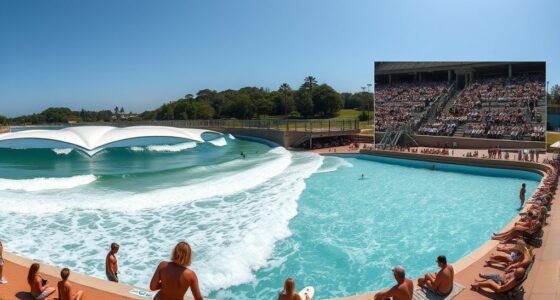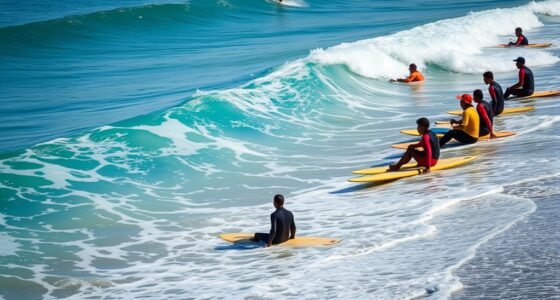
When engineering artificial waves through hydraulic systems, you harness wave propagation principles to control energy transfer in water. By using paddles or pumps, you can manipulate wave height, frequency, and speed. The key lies in managing pressure dynamics, as the movement of paddles creates pressure variations that influence wave characteristics. This precision allows for the creation of dynamic environments, suitable for testing or recreation. Keep exploring to discover more about the intricacies of wave mechanics.
Key Takeaways
- Engineers utilize paddles or pumps to create artificial waves by displacing water, controlling wave characteristics like height and frequency.
- Pressure dynamics play a crucial role in wave generation, with paddle movement affecting fluid pressure to modify wave size.
- Sophisticated simulations and modeling help predict wave behavior and optimize hydraulic system designs before physical construction.
- Balancing wave propagation with pressure dynamics is vital for achieving desired outcomes and ensuring system reliability and safety.
- Artificial waves are applied in various fields, including marine testing and recreational wave pools, showcasing the intersection of physics and engineering creativity.
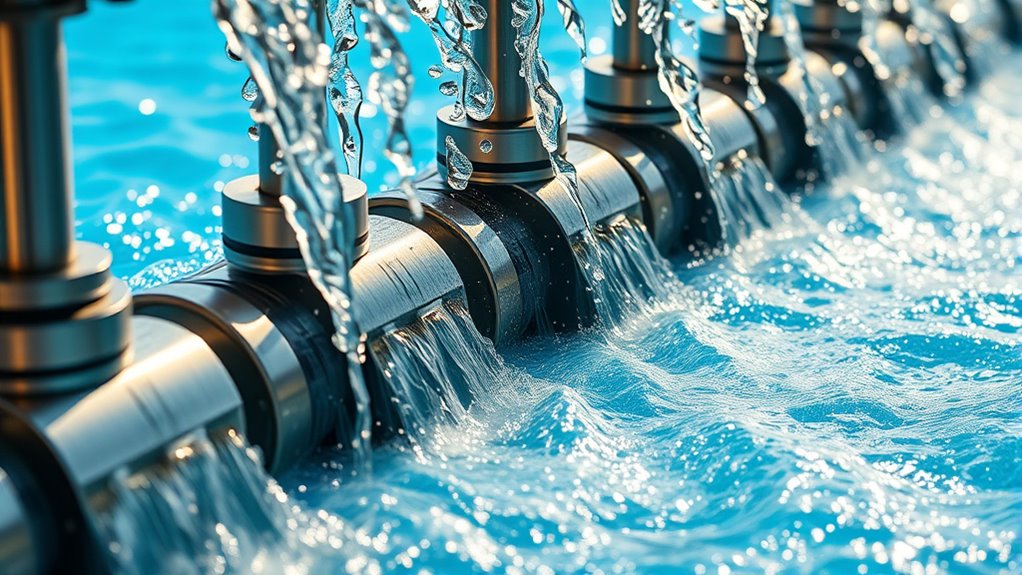
Have you ever wondered how engineers manipulate water to create controlled hydraulic waves? It’s a fascinating process that combines physics, engineering, and creativity. By understanding wave propagation and pressure dynamics, engineers can design systems that generate artificial waves for various applications, from testing marine structures to creating wave pools for recreation.
Engineers skillfully harness physics and creativity to craft controlled hydraulic waves for diverse applications, blending art with science.
When you think about wave propagation, it’s essential to grasp how waves travel through water. Engineers use specific mechanisms to create these waves. For instance, they might deploy paddles or pumps that displace water, allowing energy to transfer through the medium. This energy transfer creates ripples that evolve into waves, which can be controlled with regard to height, frequency, and speed. It’s all about controlling the energy input and understanding how it interacts with the water’s surface.
Pressure dynamics play a critical role in this manipulation. When a paddle moves through the water, it generates pressure changes that affect the surrounding fluid. These changes can either amplify or diminish the waves produced, depending on how they’re managed. Engineers carefully analyze these pressure dynamics to ensure the waves behave as intended. For instance, they can adjust the force applied to the paddle or the speed at which it moves to create larger or smaller waves.
You might find it intriguing that engineers often use sophisticated simulations and models to predict how waves will behave under varying conditions. These simulations help them optimize designs before they even hit the water. By tweaking parameters in a controlled environment, they can foresee potential issues, ensuring the final product meets safety and performance standards.
In many ways, the art of engineering hydraulic waves is about balance. It’s about understanding the intricate relationship between wave propagation and pressure dynamics. When these elements work together seamlessly, the result is an impressive display of controlled chaos. Whether it’s for research, recreation, or engineering challenges, the ability to create artificial waves opens up a world of possibilities.
Frequently Asked Questions
What Materials Are Commonly Used in Hydraulic Wave Systems?
Common materials used in hydraulic wave systems include high-density polyethylene (HDPE), steel, and aluminum. These materials offer excellent durability, ensuring they withstand pressure and environmental conditions. You’ll also want to consider fluid compatibility; choosing materials resistant to corrosion and erosion is essential for longevity. Rubber seals and gaskets often complement these systems, providing a reliable barrier against leaks while maintaining structural integrity under varying pressures. Prioritize both durability and compatibility for maximum performance.
How Do Environmental Factors Affect Wave Generation?
Environmental factors affect wave generation like a conductor influences an orchestra. Changes in water temperature, salinity, and wind patterns can profoundly impact wave modulation. For instance, warmer waters can increase evaporation, altering local humidity and wind, which in turn can affect wave height and frequency. Additionally, pollution can disrupt marine ecosystems, leading to changes in wave behavior. Understanding these environmental impacts helps you design more effective wave systems for various conditions.
Can Hydraulic Waves Be Used for Energy Production?
Yes, hydraulic waves can be harnessed for energy production. By utilizing wave energy, you can convert the movements generated by hydraulic dynamics into usable electricity. This process involves capturing the kinetic energy of waves and transforming it through specialized systems. As you explore this technology, you’ll discover innovative methods to optimize energy extraction and contribute to sustainable power solutions. Embracing hydraulic wave energy can be a significant step toward greener energy alternatives.
What Are the Main Applications of Artificial Waves?
Artificial waves symbolize the power of innovation, resonating with potential. You’ll find their main applications in coastal protection, creating energy through wave interference, and enhancing marine research. They help simulate various ocean conditions, aiding in frequency modulation for better data collection. Additionally, artificial waves can be harnessed for recreational purposes, like surfing, offering thrill-seekers an unforgettable experience. Embracing these technologies, you can discover a world of possibilities that bridge nature and engineering.
How Is Wave Stability Maintained in Hydraulic Systems?
To maintain wave stability in hydraulic systems, you focus on wave damping and stability control. You adjust the system parameters to minimize oscillations and absorb excess energy, ensuring smoother wave patterns. By incorporating damping mechanisms like hydraulic dampers or adjustable valves, you effectively reduce the amplitude of unwanted waves. Additionally, you implement feedback systems that continuously monitor wave behavior, allowing for real-time adjustments that enhance overall stability and performance in the hydraulic setup.
Conclusion
In conclusion, engineering artificial waves through hydraulic systems is not just a fascinating challenge; it’s also an essential aspect of managing water resources effectively. Did you know that about 70% of the world’s freshwater is used for agriculture? By mastering the mechanics of hydraulic waves, you can help optimize irrigation techniques, ensuring that crops receive just the right amount of water. So, immerse yourself in this exciting field, and make a real difference in sustainable water management!