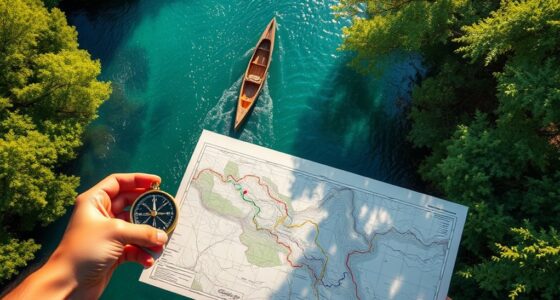
To minimize reflective surfaces on your canoe, choose water-resistant matte or satin paints that reduce glare and avoid shiny finishes. Use organic shapes and natural patterns like mottled browns, greens, and greys to break up your canoe’s outline and help it blend into the environment. Proper surface prep and applying paint with sponge or stippling techniques can enhance camouflage. Keep exploring to discover more tips on creating an effective, low-reflective outdoor setup.
Key Takeaways
- Use matte or satin water-resistant paint to reduce glare and prevent reflections on the canoe’s surface.
- Apply natural, irregular patterns with sponge or stippling brush to break up the canoe’s outline.
- Choose colors that mimic natural surroundings like browns, greens, and greys for effective camouflage.
- Ensure thorough surface preparation and primer application to enhance paint adherence and durability.
- Avoid glossy finishes and uniform strokes to minimize shiny reflections and help the canoe blend into the environment.

Have you ever wondered how some canoes blend seamlessly into their surroundings? It’s all about minimizing reflective surfaces and mimicking the natural environment. When you’re out on the water, your goal is to avoid drawing attention, which means tackling the shine and glare that can make your canoe stand out. One effective way to achieve this is by using water resistant paint designed specifically for outdoor gear. This type of paint not only shields your canoe from water damage but also helps reduce unwanted reflections. Look for options that have a matte or satin finish rather than gloss, because shiny surfaces tend to catch and reflect light more easily.
The key to truly blending in, however, is natural patterning. Instead of opting for solid colors that scream “look at me,” you want to mimic the textures and patterns found in nature. You can do this by applying paint that incorporates subtle, organic shapes—think mottled browns, greens, and greys—that resemble the bark of trees, leaves, or the ripples of water. These patterns break up the outline of your canoe, making it less distinguishable from the surrounding environment. When you carefully select your paint color palette and pattern design, you’ll notice your canoe becomes less of an obstacle and more like an extension of the landscape.
Applying water resistant paint with natural patterning might seem complicated at first, but with patience, it’s straightforward. Prepare the surface by cleaning it thoroughly to remove dirt and oils that could interfere with adhesion. Use a primer tailored for outdoor use, ensuring that your paint sticks well over time and withstands exposure to water and sunlight. When painting, use a sponge or a stippling brush to create irregular, organic shapes, mimicking natural patterns rather than uniform strokes. This irregularity is essential because it helps break up the visual silhouette of the canoe, especially from a distance.
Frequently Asked Questions
How Does Water Reflection Affect Camouflage Effectiveness?
Water reflection can substantially impact your camouflage effectiveness by revealing your position. The water surface acts like a mirror, bouncing light reflection and making you more visible. To stay concealed, you need to minimize these reflective surfaces, such as by choosing shaded areas or using camouflage that blends with the water and surroundings. Reducing light reflection helps you stay hidden from wildlife and maintains your stealth in aquatic environments.
Are There Eco-Friendly Materials for Camouflaging Canoes?
Did you know eco-friendly materials can enhance your canoe’s camouflage? You should consider biodegradable fabrics combined with natural dyes, which blend seamlessly into natural surroundings and break down without harming the environment. These materials are sustainable, reducing your ecological footprint while keeping your canoe discreet. By choosing biodegradable fabrics and natural dyes, you not only protect wildlife but also support eco-conscious practices, making your outdoor adventures more responsible and eco-friendly.
Can Camouflage Patterns Harm Aquatic Ecosystems?
Camouflage patterns can potentially harm aquatic ecosystems if they contain harmful chemicals or non-biodegradable materials. These substances might disrupt aquatic biodiversity by leaching into water or affecting wildlife. To protect ecosystems, you should choose eco-conscious materials that are safe for water environments. Opting for natural or biodegradable dyes and paints minimizes environmental impact, ensuring your camouflage supports conservation efforts rather than causing harm to aquatic biodiversity.
How Long Does Paint or Tape Camouflage Last?
Think of your camouflage as a chameleon blending in; its lifespan depends on durability concerns. Typically, paint lasts 1-3 years before fading or chipping, while tape may hold up 6 months to a year, especially in wet conditions. Material lifespan varies based on exposure to sun, water, and handling. To keep your setup effective, regularly inspect and reapply or replace worn sections, ensuring your concealment remains sharp as ever.
Is Professional Camouflage Application Necessary for Best Results?
You might wonder if professional camouflage application is necessary for the best results. While DIY methods can work, professional application guarantees adherence to camouflage ethics and optimizes aesthetic considerations, reducing reflective surfaces effectively. Experts understand how to blend patterns and colors seamlessly, making your canoe less noticeable. Investing in professional work enhances durability and effectiveness, especially if you’re serious about stealth. Ultimately, it’s about balancing cost, skill, and your desired level of concealment.
Conclusion
By blending into the water’s mirror, you become a whisper on the surface, unseen and silent. Minimizing reflective surfaces on your canoe transforms it into a shadow slipping through the depths, not a beacon slicing through the silence. With careful camouflage, you’re not just paddling—you’re becoming part of the landscape’s quiet poetry. So, embrace the subtle art of concealment, and let your journey flow unnoticed, like a ripple fading into the vast, calm embrace of nature.