
When packing your canoe, choose essential gear like paddles, life jackets, and safety items first. Place heavier items near the center and lower in the hull for stability. Distribute weight evenly on both sides and avoid stacking gear too high. Use waterproof dry bags to safeguard your gear from water, color-coding them for quick access. Keep food and hydration items within reach but secure enough not to affect balance. There’s more to guarantee a smooth journey ahead!
Key Takeaways
- Place heavier items near the center of the canoe to enhance stability and balance.
- Distribute weight evenly on both sides to improve maneuverability and prevent capsizing.
- Keep all gear low in the hull to enhance overall stability during the journey.
- Use dry bags for waterproofing, ensuring that clothing and food remain protected from water.
- Leave space for additional items while ensuring they do not compromise safety or stability.

Packing a canoe requires careful planning to guarantee you have everything you need for your adventure. You want to make sure you have the right gear while also ensuring canoe safety. Understanding how to pack effectively can make all the difference in your experience on the water. Start by listing essential items like paddles, life jackets, and dry bags. These basics are non-negotiable; you can’t compromise on safety, so double-check that you’ve got them.
Packing a canoe requires careful planning to ensure safety and an enjoyable adventure on the water.
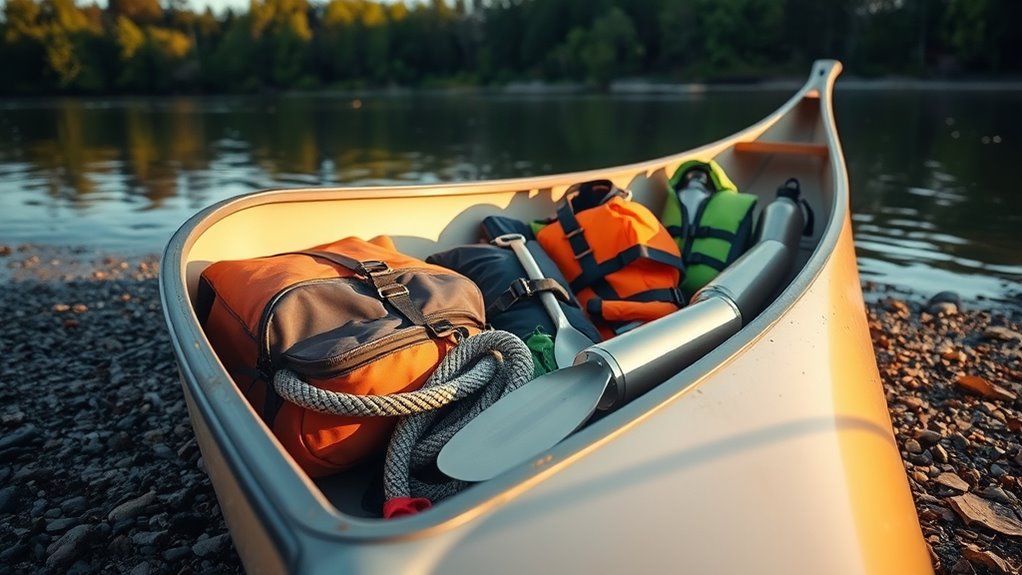
When it comes to packing techniques, consider the weight and distribution of your gear. Place heavier items close to the center of the canoe and lower in the hull. This keeps your canoe stable and makes it easier to maneuver. If you shove all your gear to one side or stack everything too high, you risk capsizing or losing control. Balancing the weight will not only enhance your canoe’s performance but also improve your safety on the water.
Next, pack your gear in dry bags to keep them safe from water. Even if you’re paddling on calm waters, conditions can change rapidly. Waterproofing your gear is a crucial step in canoe safety. You’ll want to make certain everything remains dry, especially items like clothing and food. Use smaller dry bags for individual items and color-code them for easy access. It’ll save you time and frustration when you need something quickly.
Don’t forget about food and water. Pack snacks and meals in easily accessible locations, but keep them lightweight. Consider bringing a cooler that fits snugly in the canoe without affecting balance. Hydration is essential, so stash extra water bottles securely, but make sure they’re reachable. You could also use collapsible containers to save space.
Lastly, leave a little room for spontaneity. You never know when you might want to grab a fishing rod or a camera for those perfect moments. Just make sure whatever you add doesn’t compromise your canoe’s stability or safety. As in many aspects of life, mindfulness practices can help you remain focused on your packing process. Check your packing one last time before setting out; a well-organized canoe will ensure a smoother journey.
Frequently Asked Questions
What Types of Canoes Are Best for Beginners?
For beginners, stable canoes like recreational or flatwater options are best. They offer excellent canoe stability, making it easier for you to balance while paddling. Look for wider models, as they provide better support. When you choose a canoe, consider maintenance tips such as regular cleaning and checking for leaks. This’ll keep your canoe in good shape and enhance your paddling experience. Enjoy your time on the water, and don’t hesitate to practice!
How Do I Choose a Paddle for My Canoe?
Did you know that the right paddle can increase your efficiency by up to 20%? To choose a paddle for your canoe, consider paddle materials like wood, aluminum, or fiberglass, each offering different weights and durability. For paddle length, a standard range is between 210 to 240 cm, depending on your height and canoe width. Test a few options to find what feels comfortable and effective for your paddling style.
Is It Necessary to Wear a Life Jacket While Canoeing?
Yes, it’s necessary to wear a life jacket while canoeing. Safety precautions are crucial for any water activity, and a life jacket greatly increases your chances of survival in case of an accident. Besides safety, consider environmental factors too—wearing a life jacket helps you stay buoyant without straining your energy. So, always buckle up with your life jacket, enjoy your adventure, and respect the water around you!
What Food Items Are Best for Canoe Trips?
For canoe trips, focus on lightweight, non-perishable food items. Think dried fruits, nuts, energy bars, and vacuum-sealed meals. Meal planning is key; prep your meals in advance to make certain you have balanced nutrition. You’ll want to contemplate food preservation methods, like dehydrating or using freeze-dried options, to keep your meals fresh. Don’t forget to pack some easy-to-cook items like instant oatmeal or pasta for quick, satisfying meals on the water!
How Do I Secure My Gear Against Water Damage?
To secure your gear against water damage, invest in waterproof storage solutions like dry bags and containers. These will keep your items protected from splashes and rain. When packing, place more vulnerable items inside these waterproof containers and seal them tightly. You should also use waterproof tarps or covers for extra protection. Always check for leaks before your trip, and be mindful of how you stow everything in your canoe.
Conclusion
Packing your canoe with care is like crafting a balanced recipe; every ingredient plays a vital role in the final dish. By distributing weight evenly and securing your gear, you guarantee a smoother journey across the water. Remember, a well-packed canoe not only enhances stability but also boosts your confidence on the trip. So, take the time to organize your equipment, and you’ll glide through the adventure with ease, ready to embrace whatever nature throws your way.