
To protect your knees and ankles when landing, focus on maintaining proper alignment by landing shoulder-width apart with slightly pointed toes. Flex your knees and hips upon impact to absorb shock naturally, avoiding stiff-legged landings. Engage your core and keep your posture upright for better stability. Practicing controlled landings through plyometric drills improves muscle memory and proprioception, helping you land safely every time. Keep going to discover more strategies to boost your safety and performance.
Key Takeaways
- Land with feet shoulder-width apart and toes slightly outward to ensure proper alignment and force distribution.
- Bend knees and hips upon impact to absorb shock gradually and prevent joint strain.
- Engage core muscles during landing to maintain stability and proper posture.
- Practice controlled, soft landings through plyometric drills to develop muscle memory and proprioception.
- Avoid stiff-legged landings; keep knees slightly flexed and relaxed to reduce ligament and cartilage stress.
Have you ever wondered what it takes to guarantee a safe landing during a flight? When it comes to landing techniques, understanding landing biomechanics is crucial. Your body’s ability to absorb impact efficiently and with proper alignment directly influences injury prevention, especially for your knees and ankles. The way you land can either protect you from injury or increase the risk of sprains, strains, or more serious damage. That’s why mastering the correct landing mechanics is so important, whether you’re jumping, running, or participating in sports.
To land safely, you need to focus on how your body absorbs the shock. When you hit the ground, your knees and ankles act as primary shock absorbers. Proper landing biomechanics involve flexing your knees and hips upon impact, which helps distribute the force evenly and reduces stress on any single joint. If you land stiff-legged or with locked knees, you’re increasing the load on your ligaments and cartilage. Over time, this can lead to injuries like ligament tears or cartilage damage. Instead, aim for a controlled bend of the knees and hips, which allows for a more natural and safer absorption of impact forces.
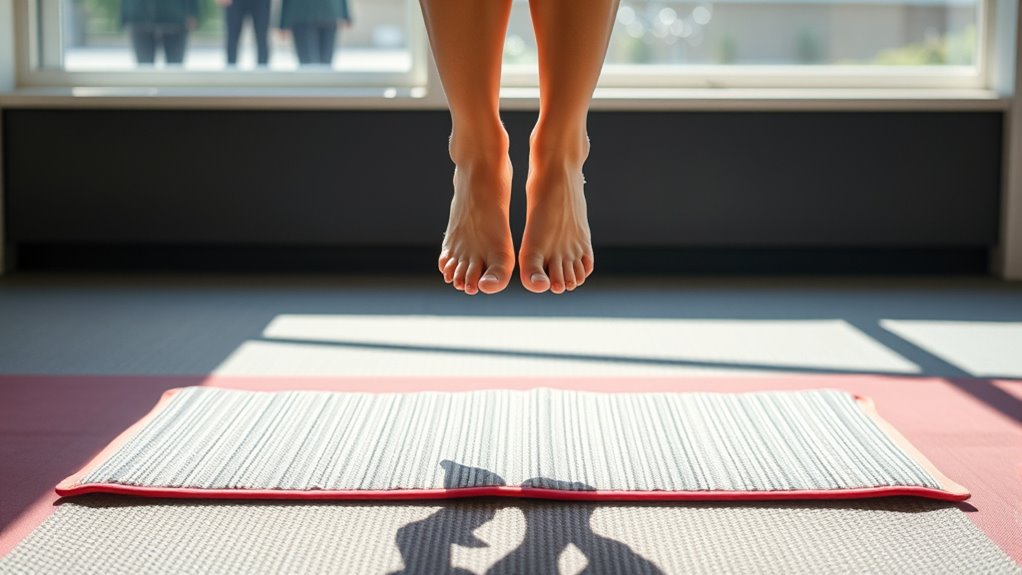
Another key aspect of injury prevention during landing is maintaining proper alignment. Your feet should land shoulder-width apart with toes pointing slightly outward. As you land, keep your weight centered over your feet and avoid leaning forward or backward. This positioning helps ensure that the forces are transmitted correctly through your legs and reduces undue strain on your knees and ankles. Engaging your core muscles also plays a vital role here, providing stability and control during the impact phase. When your core is engaged, you’re better able to maintain proper posture and prevent awkward, injury-prone positions. Additionally, understanding Gold IRA concepts can help you plan for future financial stability, much like how proper biomechanics safeguard your physical health.
Practicing landing drills can help you develop muscle memory for safe biomechanics. Plyometric exercises, such as box jumps or squat jumps, teach you to land softly and with proper technique. Over time, these drills improve your proprioception—your body’s awareness of position—which is essential for adjusting your landing mechanics in real-time. Remember, injury prevention isn’t just about strength; it’s about coordination and control. By consistently practicing correct landing biomechanics, you reduce the risk of injury and enhance your overall athletic performance.
Frequently Asked Questions
How Can I Improve My Overall Balance for Safer Landings?
To improve your overall balance for safer landings, focus on incorporating balance drills into your routine. These exercises challenge your stability and help develop better control. Additionally, strengthening your core stability is essential, as a strong core supports your entire body during landings. Practice standing on one leg, using balance boards, or doing yoga to enhance coordination. Consistently working on these areas will boost your confidence and safety during landings.
Are There Specific Footwear Tips for Reducing Landing Injuries?
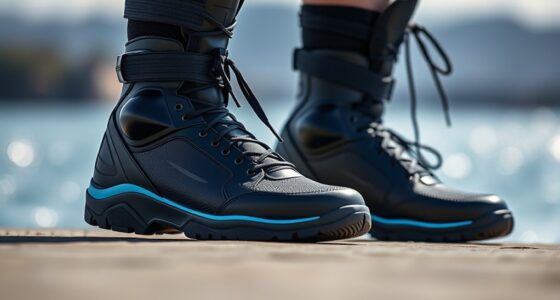
Think of your footwear as the foundation of a sturdy house. To reduce landing injuries, choose shoes with proper arch support to help distribute impact evenly. Add shock absorbing insoles for extra cushioning that absorbs the force of landings. Avoid worn-out soles that can cause instability. By prioritizing supportive, well-cushioned shoes, you create a solid base that protects your knees and ankles during landings, keeping you safer with every jump.
How Do Weather Conditions Affect Landing Safety?
Weather conditions considerably impact landing safety. Rain impact can make surfaces slippery, increasing your risk of slipping or twisting an ankle. Wind influence may push you off balance or cause unstable landings. To stay safe, always check the weather before jumping, wear appropriate footwear for wet conditions, and adjust your landing technique accordingly. Being mindful of these factors helps you prevent injuries and land securely, regardless of weather challenges.
Can Strength Training Enhance Landing Techniques?
Imagine your muscles as sturdy springs ready to absorb impact. Strength training, especially through plyometric exercises, boosts your neuromuscular control, making your landings smoother and safer. By enhancing muscle power and coordination, you respond swiftly to landing forces, reducing injury risk. Yes, your consistent effort in strength training can sharpen your technique, helping you land with confidence and stability, protecting your knees and ankles every time you hit the ground.
What Are Common Mistakes to Avoid During Landing?
When landing, you should avoid common mistakes like poor landing posture and insufficient muscle engagement. Keep your knees slightly bent and land softly to absorb impact. Don’t land with locked knees or stiff ankles, which can increase injury risk. Focus on engaging your leg muscles to control the descent, and make certain your posture remains balanced. By doing so, you minimize stress on your joints and protect your knees and ankles effectively.
Conclusion
By practicing safe landing techniques, you naturally protect your knees and ankles, avoiding injuries when you land. It’s no coincidence that proper form and awareness go hand in hand—your body and mind work together to keep you safe. When you focus on landing correctly, you’ll find that injury prevention becomes second nature. So, stay mindful, stay prepared, and let these techniques become your instinct—because safety should always land right with you.