
Flyboarding is an exciting hydroflight sport where you ride a board powered by jets of water. To get started, always wear a life jacket and helmet for safety. Begin by familiarizing yourself with the equipment and practicing in calm waters. Keep your knees bent and stay relaxed for better balance. Don’t rush; take things slow and work with an experienced instructor. With time, you’ll master the art of flying. There’s much more to explore on your journey!
Key Takeaways
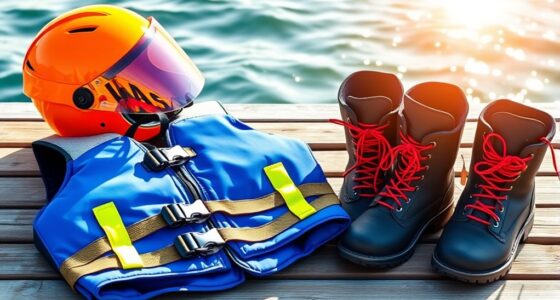
- Always wear essential safety gear, including a life jacket, helmet, and water shoes, to minimize injury risks.
- Start by familiarizing yourself with the flyboard and practicing in calm waters under the guidance of an experienced instructor.
- Focus on maintaining balance by keeping your knees slightly bent and body relaxed while controlling your ascent and descent.
- Choose designated practice areas away from other watercraft to ensure a safe environment and avoid collisions.
- Embrace the learning process, as persistence and practice will lead to improved skills and confidence in flyboarding.
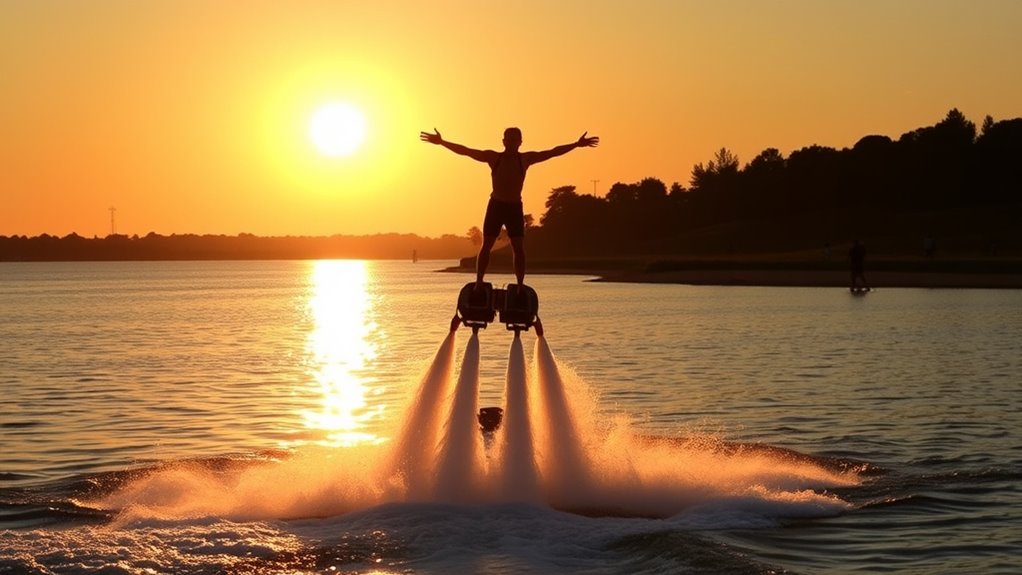
Flyboarding 101
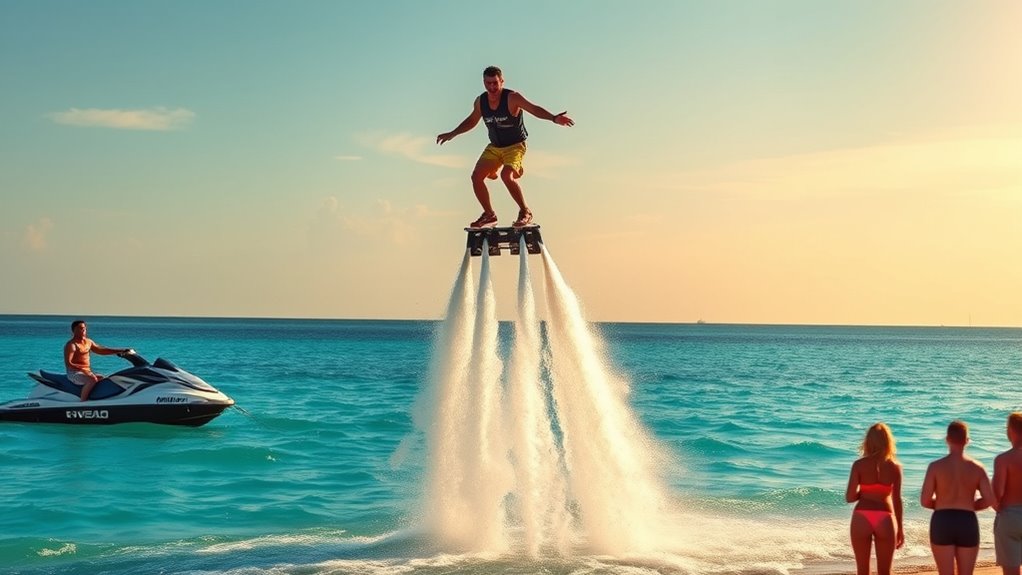
Have you ever dreamed of soaring above the water like a superhero? If you’re ready to take the plunge into hydroflight sports, flyboarding could be your ticket to an adrenaline-fueled adventure that feels like something out of a comic book. You’ll hover above the waves, twist and turn in the air, and experience the thrill of flying. But before you strap on that flyboard, let’s cover some essential beginner tips and safety gear to guarantee your experience is both exciting and safe.
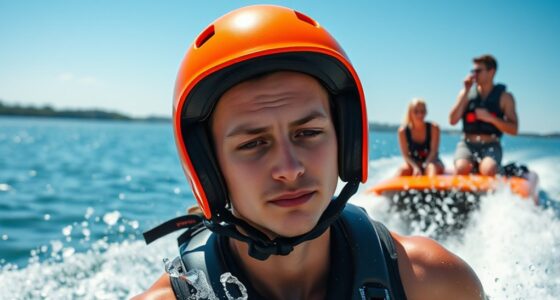
First things first, safety gear is non-negotiable. Before you hit the water, make sure you’re equipped with a life jacket and a helmet. These aren’t just for show; they can protect you in case of an unexpected fall. It’s also wise to wear water shoes to give you better grip and support. Don’t forget to check the flyboard itself for any damage before you get started. A quick inspection can save you from potential accidents.
Safety gear is essential—always wear a life jacket, helmet, and water shoes before hitting the water for a fun and secure flyboarding experience.
Once you’re suited up, it’s time to familiarize yourself with the flyboard. As a beginner, you’ll want to start slow. Don’t rush into the air; instead, get comfortable with how the board responds to your movements. As you’re learning to balance, keep your knees slightly bent and your body relaxed. It might feel awkward at first—everyone goes through that stage—but with practice, you’ll find your groove.
Now, let’s talk about the water. Choose a calm day to practice. Choppy waters can make it harder to control your board and may increase the risk of accidents. When you’re ready, work with an experienced instructor who can guide you through the basics. They’ll help you understand how to control your ascent and descent, which is vital for a smooth ride.
Remember to stay aware of your surroundings. Keep an eye out for other watercraft, and ensure you’re practicing in designated areas. It’s also a good idea to establish a signal with your instructor so you can communicate effectively while you’re in the air. Additionally, understanding the importance of safety gear can greatly enhance your overall experience and confidence while flyboarding.
Finally, don’t be discouraged by early struggles. Everyone has a learning curve, and the more you practice, the better you’ll become. Embrace the process and enjoy the sensation of defying gravity. Soon enough, you’ll be soaring, twisting, and turning above the water like the superhero you’ve always wanted to be. So get out there, gear up, and let the adventure begin!
Frequently Asked Questions
What Safety Gear Is Required for Flyboarding?
You’ll need several pieces of protective equipment to guarantee your safety while flyboarding. A well-fitted life jacket is vital, along with a helmet to protect your head. Don’t forget water shoes for better grip and comfort. Following safety guidelines is essential; always check your gear before hitting the water and listen to your instructor. Staying aware of your surroundings will help you enjoy the experience while minimizing risks.
Can Anyone Try Flyboarding, Regardless of Fitness Level?
Yes, anyone can try flyboarding, regardless of fitness level! It’s designed to be beginner-friendly, so don’t worry if you’re not in peak shape. Just follow some basic tips, like practicing balance and staying relaxed. Make sure you listen to your instructor and take your time getting comfortable on the board. With the right mindset and guidance, you’ll find it’s an exciting way to enjoy the water!
How Much Does a Flyboarding Session Typically Cost?
A flyboarding session typically costs between $100 and $300, depending on the location and session duration. Think of it like renting a kayak—pricing options vary based on how long you want to paddle through the excitement. You can usually find packages that offer a 30-minute or an hour-long experience. Just like conquering waves in a kayak, mastering flyboarding can be thrilling, and investing in the right session can make all the difference!
What Weather Conditions Are Best for Flyboarding?
The best weather conditions for flyboarding are calm and warm. Ideally, you want water temperatures above 60°F for comfort. Look for low wind speeds, ideally under 10 mph, to guarantee stability while you’re up in the air. Clear skies also enhance visibility and enjoyment. If you check the forecast and find ideal conditions, you’re more likely to have a fantastic flyboarding experience without the stress of unpredictable weather.
Are There Age Restrictions for Flyboarding Participants?
Yes, there are age restrictions for flyboarding participants. Typically, you need to be at least 13 years old to join in, but some operators might require parental consent for those under 18. Always check with the specific facility you’re considering, as participant eligibility can vary. They’ll also assess your physical fitness and comfort in water. So, make sure you meet the requirements before planning your flyboarding adventure!
Conclusion
As you plunge into the thrilling world of flyboarding, you’re not just skimming the surface; you’re harnessing the power of water to soar like a bird chasing the horizon. With practice and patience, you’ll discover the secrets of hydroflight, transforming your dreams of flying into reality. So gear up, embrace the waves, and let the wind guide you. Your adventure is just beginning, and the sky’s the limit!