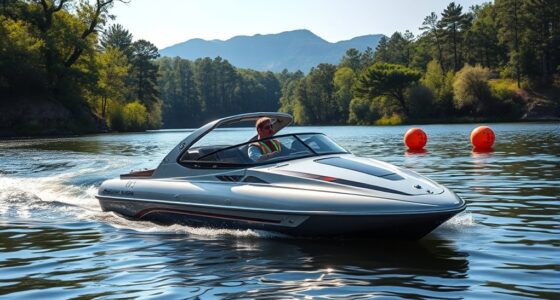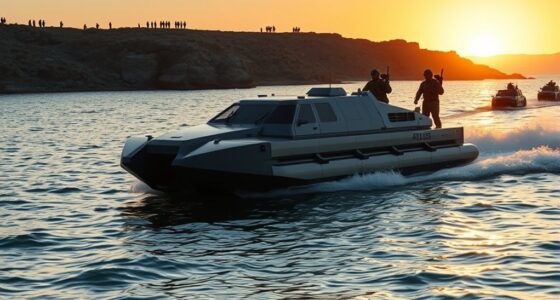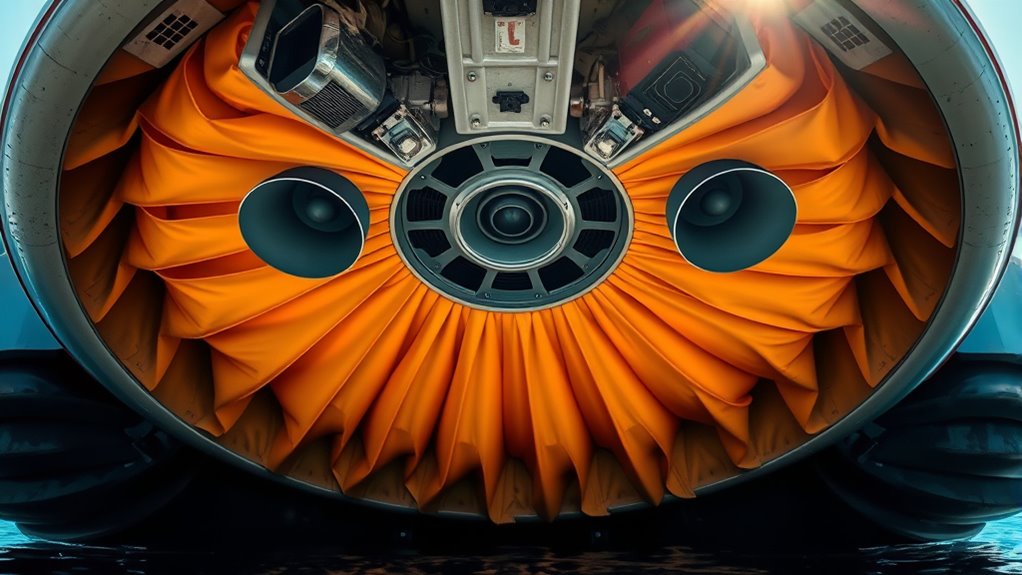

A hovercraft stays afloat by making a cushion of air beneath it. Powerful lift fans blow air downward, filling the gap between the craft and the surface, whether water or land. This creates a pressurized air layer that lifts and supports the vehicle, reducing contact and friction. You can control how high it floats by adjusting the fans’ power. Want to discover how these fans work together to keep you buoyant? Keep exploring.
Key Takeaways
- Hovercrafts stay afloat by creating a cushion of air beneath them, which lifts the vehicle off the surface.
- Lift fans generate continuous airflow that inflates and maintains this air cushion for stable hovering.
- The air cushion evenly distributes the hovercraft’s weight, reducing ground or water contact and enabling smooth movement.
- Larger and more powerful lift fans can support heavier loads and improve performance in difficult terrains.
- Control of the cushion’s height is achieved by adjusting fan power, allowing precise altitude and direction control.
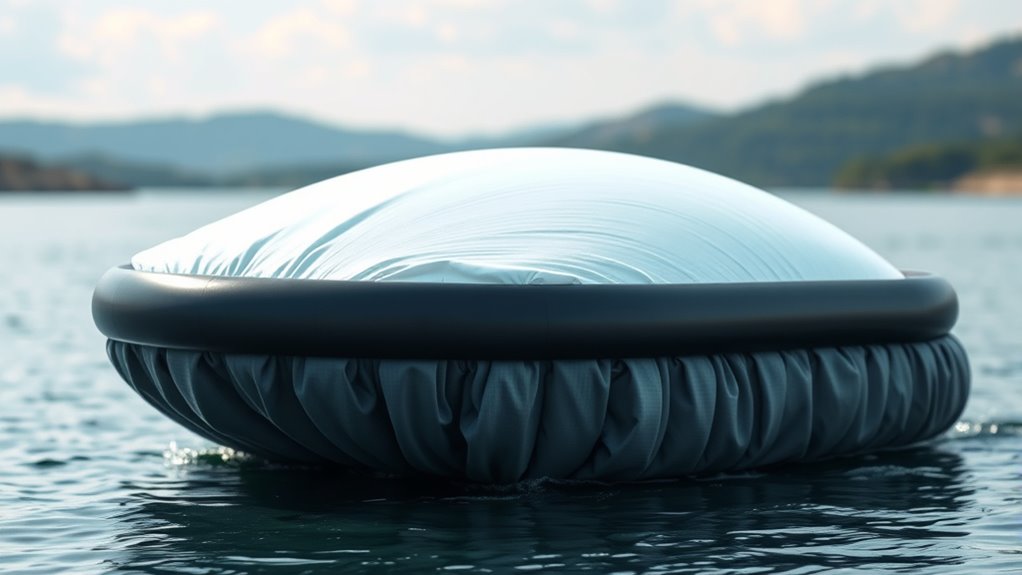
Hovercrafts stay afloat by generating a cushion of air beneath them, which lifts the vehicle off the surface. This air cushion is created by powerful fans called lift fans, which force air downward into the space beneath the craft. As the lift fans operate, they push air underneath the hull, filling the gap between the hovercraft and the ground or water. This pressurized layer of air acts as a cushion, effectively reducing the contact between the vehicle and the surface. Because of this, the hovercraft can glide smoothly over a variety of terrains, including water, mud, sand, and ice, without needing wheels or a traditional propulsion system for movement. The efficiency of the lift fans depends on their design and placement, which are optimized for different types of terrain and load capacities.
Hovercrafts hover by creating a pressurized air cushion beneath them using powerful lift fans.
The lift fans are vital in maintaining the air cushion. They generate a continuous flow of air that keeps the cushion inflated, preventing the craft from touching the surface directly. The fans are mounted inside the body of the hovercraft, often on the top or sides, and are powered by engines that can be adjusted for different conditions. When you want the hovercraft to rise, you increase the power to the lift fans, which pushes more air into the cushion, raising the vehicle. Conversely, reducing the fan power causes the cushion to deflate slightly, bringing the hovercraft closer to the surface. This dynamic control allows for smooth altitude adjustments, giving you precise handling over varied terrains.
The air cushion created by the lift fans is essential because it transfers the hovercraft’s weight evenly across the entire surface of the cushion. This distribution minimizes ground pressure, making it possible to traverse soft or uneven surfaces without sinking or getting stuck. It also means the hovercraft doesn’t rely on wheels or tracks, making it highly versatile. The size and power of the lift fans directly influence the size of the air cushion and the maximum weight the hovercraft can carry. Larger, more powerful lift fans generate a bigger cushion, enabling the craft to lift heavier loads or operate in more challenging conditions.
In essence, the lift fans serve as the heart of the hovercraft’s lift mechanic. Without them, there would be no sustained air cushion, and the craft couldn’t hover. Their ability to produce a stable, controlled air cushion allows you to travel effortlessly over surfaces that would be impossible for traditional vehicles. By mastering the operation and adjustment of the lift fans, the hovercraft maintains its altitude and stability, making it a unique and effective vehicle for transportation across diverse terrains. The ongoing development of sustainable energy sources is also impacting hovercraft technology, making it more eco-friendly and efficient for future uses.
Frequently Asked Questions
How Do Hovercrafts Handle Rough or Uneven Terrain?
When you encounter rough or uneven terrain, your hovercraft’s design and lift system efficiency come into play. The lift system, which creates a cushion of air, helps you glide smoothly over obstacles, while a well-designed hull maintains stability. You can navigate challenging surfaces more easily because the lift system adjusts to terrain variations, allowing you to handle rough ground without losing balance or control.
What Are the Main Safety Features of a Hovercraft?
Think of a hovercraft as a guardian angel gliding smoothly over water and land. Its design incorporates safety features like inflatable skirts for stability and safety protocols such as emergency shut-off systems. These elements guarantee safe operation on various terrains, preventing accidents and enabling quick responses to issues. You can trust that the careful hovercraft design and safety protocols work together to keep you secure during your journey across unpredictable surfaces.
How Does Weather Affect Hovercraft Lift Performance?
Weather impact substantially affects your hovercraft’s lift performance, especially atmospheric conditions. Wind can disrupt the airflow underneath, reducing lift and stability. Rain adds weight and can make surfaces slippery, while fog reduces visibility, making navigation risky. Temperature changes influence air density, affecting lift efficiency. You should always check weather conditions before operating your hovercraft to guarantee safe and ideal lift performance, adapting your tactics based on current atmospheric factors.
Can Hovercrafts Operate Underwater Temporarily?
Did you know some specialized vehicles can operate underwater for extended periods? While hovercrafts are designed for surface travel, they can’t operate underwater temporarily like submarines. Submarine capabilities include underwater propulsion systems that allow deep, prolonged dives. Hovercrafts rely on lift cushions and air propulsion, making underwater operation impossible. If you’re curious about underwater travel, submarines excel with sealed hulls and advanced propulsion, unlike hovercrafts that stay afloat on surfaces only.
What Maintenance Is Required for Hovercraft Lift Systems?
You need to regularly inspect and maintain your hovercraft’s lift system components, including the fans, blowers, and ducting. Follow proper maintenance procedures like checking for wear, tightening bolts, and cleaning filters to guarantee peak performance. Lubricate moving parts and replace any damaged components promptly. Consistent maintenance prevents malfunctions, extends the lifespan of your lift system, and keeps your hovercraft operating safely and efficiently on the water or land.
Conclusion
So, now you see how hovercrafts stay afloat—they use a cushion of air, not magic. It might seem tricky at first, but once you understand the lift mechanics, it’s clear how they effortlessly glide over water and land. Don’t worry if it feels complex; with a little curiosity, you’ll see that hovercrafts are just clever machines using simple principles. Next time you see one, you’ll know exactly how it stays up and moves so smoothly.