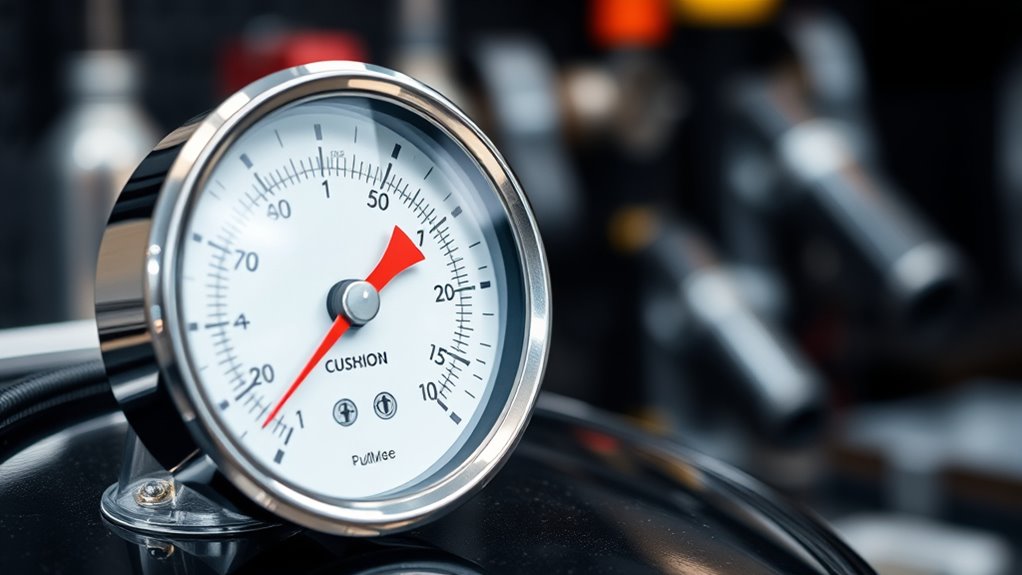

To guarantee the right cushion height, focus on your pressure gauge’s needle position, which indicates the system’s pressure level. Check that the gauge is clean and properly calibrated for accurate results. Compare the needle’s position to the recommended pressure range for your equipment. Adjust pressure as needed to stay within that range, ensuring safety and ideal performance. Keep reading to uncover more tips on maintaining precise pressure management.
Key Takeaways
- Ensure the pressure gauge is clean and free of dirt or damage before reading to improve visibility and accuracy.
- Check the gauge’s needle position relative to the recommended cushion height specified by equipment guidelines.
- Confirm the units displayed (PSI, bar, kPa) match the system’s required pressure range for optimal cushion height.
- Perform regular calibration to maintain gauge accuracy and prevent false readings affecting cushion height.
- Interpret the reading in context with system performance, making adjustments if pressure deviates from the optimal cushion height range.

Knowing how to read pressure gauges is essential for maintaining safety and proper operation of equipment. When you’re working with pressurized systems, accurate readings ensure everything runs smoothly and help prevent accidents. To achieve this, understanding the importance of pressure calibration and gauge maintenance is vital. Proper calibration ensures your gauge provides precise readings, which is essential for making informed decisions about system adjustments. Regular gauge maintenance keeps the device in top condition, preventing inaccuracies caused by wear, dirt, or damage. Neglecting these steps can lead to faulty readings, risking safety and efficiency.
When you approach a pressure gauge, start by inspecting it visually. Check for any signs of damage, corrosion, or leaks around the connection points. Dirty or damaged gauges can give false readings, so cleaning the glass face and ensuring the connections are secure are initial steps. Once the gauge looks good, you can interpret the reading. Most gauges have a dial with clear numbers and a needle pointing to the current pressure level. Take note of the units—PSI, bar, or kPa—to understand the pressure you’re dealing with. It’s important to compare the reading with the recommended operating pressure for your equipment to prevent over-pressurization or under-pressurization.
For accurate readings, ensure the gauge is properly calibrated. Pressure calibration involves verifying that the gauge’s readings match a known standard, often performed periodically by professionals. If you notice discrepancies, it’s time to calibrate or replace the gauge. Regular calibration not only guarantees measurement accuracy but also prolongs the lifespan of your gauge. Incorporate routine gauge maintenance into your workflow—clean the device regularly, check for leaks, and replace worn parts promptly. This proactive approach minimizes errors and keeps your system operating safely.
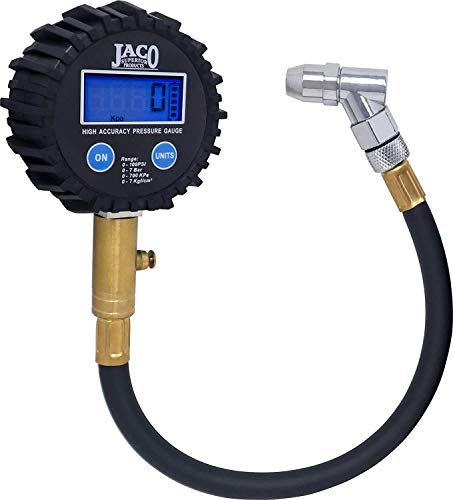
JACO ElitePro Digital Tire Pressure Gauge – Professional Accuracy – 100 PSI
PRO ACCURACY – mechanic recommended, performance tested, & calibrated accurate to professional ANSI 2A standards – with dual…
As an affiliate, we earn on qualifying purchases.
As an affiliate, we earn on qualifying purchases.
Frequently Asked Questions
What Types of Pressure Gauges Are Most Accurate for Cushion Height?
You need to know which pressure gauges give you the most accurate readings for cushion height. Digital sensors are highly precise and easy to read, making them ideal for consistent measurements. Analog meters, on the other hand, offer reliable, straightforward visuals and are often preferred in environments where quick, clear readings are needed. Both types can work well, but digital sensors generally provide the highest accuracy for ideal cushion height.
How Often Should I Calibrate My Pressure Gauge?
You should calibrate your pressure gauge regularly to guarantee accurate readings and maintain proper gauge maintenance. Typically, a calibration schedule of at least once a year is recommended, but if you use the gauge frequently or work in demanding conditions, consider calibrating every 6 months. Regular calibration helps identify any inaccuracies early, keeping your cushion height consistent and safe. Always follow the manufacturer’s guidance for ideal calibration intervals.
Can Temperature Affect Pressure Gauge Readings?
Did you know that temperature fluctuations can cause pressure gauge readings to vary by up to 2%? This happens because temperature affects gauge sensitivity, leading to inaccurate measurements. When temperatures change, the internal components expand or contract, skewing the readings. To maintain accuracy, you should consider ambient temperature conditions and, if needed, recalibrate your gauge or use temperature-compensated models. Staying aware helps ensure precise cushion height adjustments.
What Are Common Causes of Incorrect Gauge Readings?
You might get incorrect gauge readings due to calibration procedures that haven’t been properly followed or regular gauge maintenance that’s been neglected. Over time, gauges can drift from their original calibration, leading to inaccuracies. Additionally, dirt, debris, or damage can affect the gauge’s performance. Always guarantee you regularly calibrate your gauges and perform maintenance checks to maintain accurate readings, preventing costly mistakes or safety issues.
How Do I Identify a Faulty Pressure Gauge?
A faulty pressure gauge is like a broken compass—leading you astray. To identify issues, check for inconsistent readings or sudden jumps, which suggest calibration problems. Regular gauge maintenance helps spot damage or wear. Use calibration techniques to verify accuracy; if readings don’t match a known standard, it’s time to substitute the gauge. Trust your instincts and perform routine checks to ensure reliable performance.
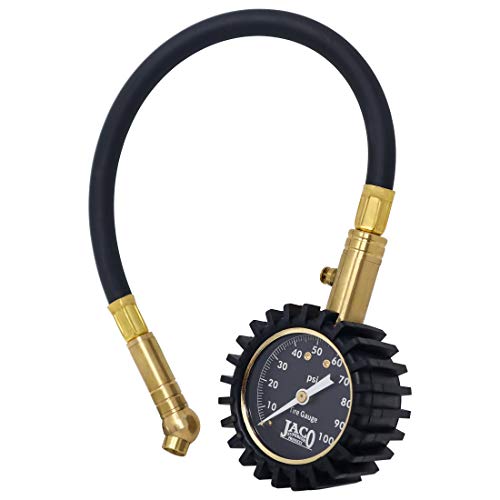
JACO ElitePro Tire Pressure Gauge – 100 PSI
Mechanic Recommended – performance tested, certified, & calibrated accurate within ANSI Standards (±1.5%) at our ANSI accredited calibration…
As an affiliate, we earn on qualifying purchases.
As an affiliate, we earn on qualifying purchases.
Conclusion
Remember, understanding your pressure gauge is like reading the signs along your journey—stay attentive, and you’ll reach your destination smoothly. Keep a close eye on the readings, adjust your cushion height as needed, and don’t forget, “A stitch in time saves nine.” By staying proactive and informed, you’ll guarantee ideal comfort and safety every time you check your pressure gauge. Trust your gauges, and you’ll always be on the right path.

YUZES Professional 23 Pcs Set Cleaning Kit for Cleaning Spray Guns, Suction, Gravity, Pressure Feed,HVLP, and Airbrushes
Professional Set : Our YUZES cleaning kit that's perfect for cleaning all types of suction, gravity, pressure feed,…
As an affiliate, we earn on qualifying purchases.
As an affiliate, we earn on qualifying purchases.

Portable Handheld Pressure Calibrator/Pressure Gauge calibrator – Static Pump Differential Pressure Gauge Tester, Fine Coarse Adjustment for Calibration Tool; Model: IK-HPP-01 (Static Pump only)
Calibrator: Static Pressure Pump Calibrator (IK HPP-01) | Knobs: 2 Nos for Fine & Coarse Pressure Adjustment
As an affiliate, we earn on qualifying purchases.
As an affiliate, we earn on qualifying purchases.