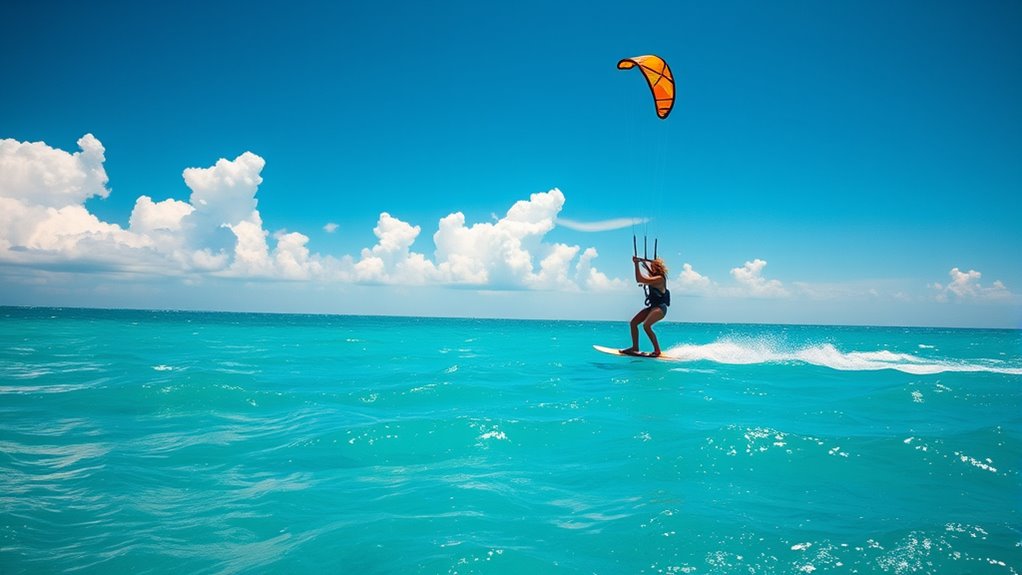

Downwinders and long-distance kitefoiling offer you an exhilarating way to explore water while feeling the wind in your hair. You’ll glide effortlessly across the surface, powered by nature while mastering foil setups for peak performance. These adventures take you to diverse locations, allowing you to immerse yourself in stunning sights and sounds. By understanding wind conditions and fine-tuning your equipment, you can maximize each experience. There’s so much more to discover about this thrilling sport!
Key Takeaways
- Downwinders offer thrilling experiences by allowing riders to glide effortlessly over water while harnessing the wind for propulsion.
- Understanding the wind window is crucial for maximizing lift, speed, and control during kitefoiling sessions.
- Selecting the right foil and board setup is essential for stability and performance, particularly for long-distance rides.
- Long-distance kitefoiling promotes exploration of diverse locations, enhancing the adventure and connection with nature.
- Proper equipment tuning and awareness of external factors improve ride quality and overall safety on the water.
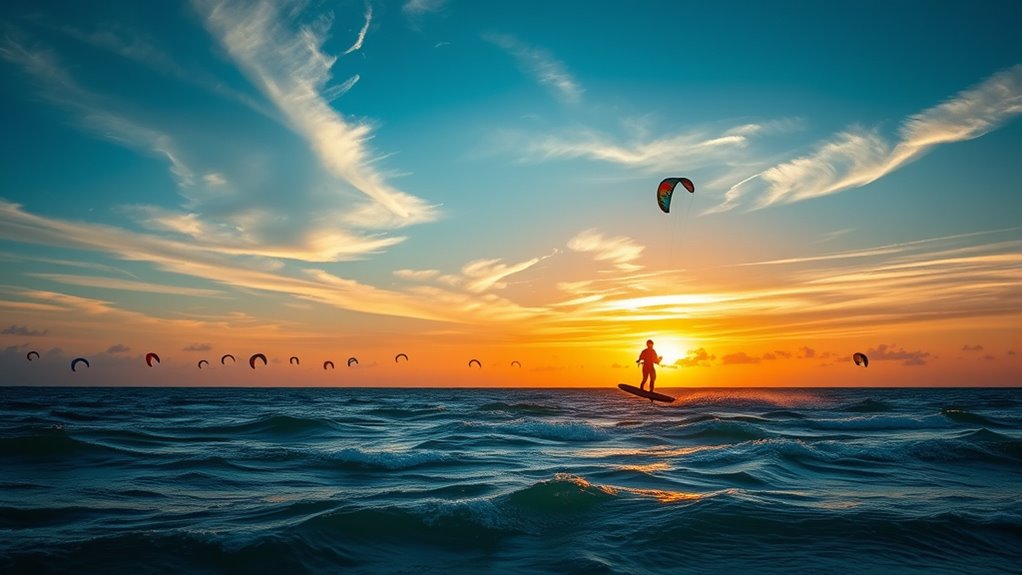
Whether you’re chasing the thrill of the wind or seeking a serene escape on the water, downwinders and long-distance kitefoiling offer an exhilarating way to experience the elements. As you glide across the surface, feeling the wind in your hair and the spray of the water against your skin, you’ll quickly realize that mastering your foil setup is essential for a successful ride. The right equipment can make all the difference in your performance and enjoyment.
When planning your downwinder, understanding your wind window is vital. The wind window is the area where your kite can effectively generate lift, and knowing how to navigate this space will help you maximize your speed and control. Positioning yourself correctly within your wind window allows you to harness the wind efficiently, propelling you forward with ease. As you become familiar with this concept, you’ll find that your confidence in kitefoiling grows. You’ll be able to anticipate shifts in the wind and adjust your kite’s position accordingly.
A well-tuned foil setup is another key component of your kitefoiling experience. This includes choosing the right board and foil combination to suit your skill level and the conditions of the day. A larger foil with more surface area might be ideal for beginners, providing extra lift and stability. Conversely, if you’re more experienced and looking for speed, a smaller foil will allow you to harness the wind’s power more effectively. Don’t underestimate the importance of your setup; it can greatly impact your ability to ride efficiently over longer distances.
As you set out on long-distance kitefoiling adventures, you’ll discover the beauty of exploring new locations while gliding effortlessly on the water. With the right wind conditions and a solid understanding of your foil setup, you can cover impressive distances with minimal effort. The freedom of downwinders allows you to connect with nature in a unique way, immersing yourself in the sights and sounds of your surroundings. Additionally, understanding the state tax implications of your location can help you maximize your financial resources for these thrilling activities.
Frequently Asked Questions
What Gear Is Essential for Long-Distance Kitefoiling?
For long-distance kitefoiling, you’ll need essential gear selection tailored to wind conditions. Start with a reliable kite that matches the expected wind strength, ensuring it’s easy to handle. A lightweight, durable board improves your performance over distance. Don’t forget a comfortable harness for support and a safety leash for security. Finally, invest in a good wetsuit to keep you warm and protected during your extended sessions on the water.
How Do I Choose the Right Kite Size?
To choose the right kite size, consider your weight, skill level, and wind conditions. For light winds, go larger, while in strong winds, opt for a smaller kite. Always adapt your kite size selection based on the current wind condition—if it picks up or drops, you might need to switch kites to maintain control. Experimenting can help you find the sweet spot for your unique riding style and local conditions.
Are There Safety Measures for Downwinders?
Yes, there are essential safety measures for downwinders. First, always check for weather hazards like strong winds or storms before heading out. Develop emergency procedures, including a plan for quick communication with others and identifying safe landing spots. Carry a life jacket, a whistle, and a first aid kit. Make sure your gear is in good condition, and consider riding with a buddy to increase your safety in case something goes wrong.
Can Beginners Attempt Long-Distance Kitefoiling?
Absolutely, you can attempt long-distance kitefoiling as a beginner, but it’s like learning to ride a bike on a busy highway. You need good kite control and to be aware of wind conditions. Start in lighter winds and practice your skills before venturing far. It’s essential to build confidence and experience gradually. Always prioritize safety gear and consider going with more experienced friends for guidance as you progress.
What Are the Best Locations for Downwinders?
The best locations for downwinders often feature consistent local wind patterns and ideal water conditions. You’ll want spots like the Columbia River Gorge, where strong winds and smooth waters create perfect conditions. Maui’s north shore is another favorite, offering reliable trade winds and stunning scenery. Don’t forget about the coastlines of Cape Hatteras, known for its varied terrain and wind dependability. Always check local forecasts to ensure you’re set for a great ride!
Conclusion
In the world of downwinders and long-distance kitefoiling, you’ll discover a thrilling connection between the wind, water, and your spirit. Just when you think you’ve mastered the art of riding the waves, a sudden gust catches you off guard, reminding you that nature always has the upper hand. Embrace these coincidences; they’ll teach you to adapt and enjoy the ride. So, gear up and let the unexpected propel you forward into unforgettable experiences on the water!