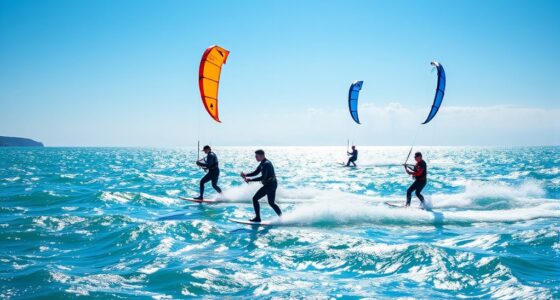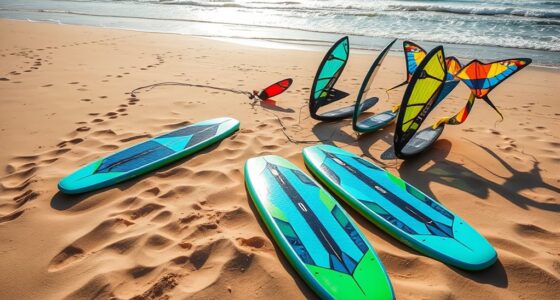
To successfully waterstart on a foil board, guarantee you’re equipped with proper safety gear like a helmet, buoyancy aid, and impact vest. Position your kite at about 45° to the wind and maintain tension in the lines. Lay your foil board flat, with your back foot on the tail. Push down on the back foot to lift the board, shifting your weight forward as you rise. Expect to fall—each attempt boosts your confidence. Stay tuned for more tips!
Key Takeaways
- Ensure you wear proper safety gear, including a helmet, impact vest, and buoyancy aid, before attempting a waterstart.
- Launch the kite at a 45° angle to maintain lift and control while keeping tension in the lines.
- Position the foil board flat in the water, placing your back foot on the tail and centering your weight.
- Push down on your back foot to lift the board, then shift your weight forward, keeping the kite at 45° for support.
- Practice consistently, maintaining balance with slightly bent knees and an engaged core while expecting falls as part of the learning process.

Have you ever wondered how to master the art of waterstarting on a foil board? It’s one of the most exhilarating experiences you can have on the water, but it also comes with its challenges. Before you immerse yourself, make sure you’ve got the right safety gear. A helmet and impact vest are essential, as they’ll protect you from any falls or unexpected encounters with the board. Additionally, wear a buoyancy aid to help keep you afloat if you find yourself in deeper water.
Once you’re geared up, focus on your kite control. Proper kite positioning is vital for a successful waterstart. Start by launching your kite at around 45 degrees to the wind. This angle allows you to generate the lift you need without overflying the kite. As you settle into the water, keep tension in your lines and maintain a steady grip on the bar. You’ll want to feel the kite pulling you forward while keeping your body relaxed.
Next, you’ll need to position yourself correctly on the board. Lay the foil board flat in the water, placing your back foot on the tail and your front foot slightly forward. As you prepare to pop up, confirm your weight is centered. Leaning too far back can cause the board to sink, while leaning too far forward can send you face-first into the water. When you’re ready, give a gentle pull on the bar and push down on your back foot. This action will help lift the board out of the water.
As the board begins to rise, shift your weight slightly toward your front foot, which helps stabilize the foil. Your kite should be at about 45 degrees, providing you with the necessary lift. If you find yourself losing balance, don’t panic. Relax your body and regain control. Maintaining kite control is critical, so keep your eyes on the kite and make adjustments as needed. Additionally, be aware that just like in AI security, continuous monitoring and practice are essential for mastering new skills safely and effectively.
Once you’re up and riding, keep your knees slightly bent and your core engaged. This stance will help you absorb any bumps and maintain balance. Remember, practice makes perfect. You might fall a few times, but each attempt will improve your skills and build your confidence.
Frequently Asked Questions
What Conditions Are Best for Learning to Waterstart on a Foil Board?
The best conditions for learning are light to moderate winds of around 10 to 15 knots. This range allows you to focus on foil handling without feeling overwhelmed. Flat water is ideal, as it makes it easier to stabilize yourself and the board. Avoid choppy or super windy days, as they can hinder your progress. With the right wind conditions and a calm surface, you’ll master the waterstart in no time!
How Long Does It Typically Take to Master Waterstarting?
It typically takes several sessions to master waterstarting, but don’t rush it. Picture yourself gliding over the water, feeling the thrill. With consistent practice and patience, you’ll start to see progress. Seek instruction from experienced riders; their tips can make a huge difference. Remember, it’s all about finding your rhythm and building confidence. Celebrate small wins along the way, and soon enough, you’ll be waterstarting like a pro!
Can I Use My Regular Board for Practicing Waterstarts?
You can use your regular board to practice waterstarts, but keep in mind the board compatibility with your gear. If your board’s design supports it, you might not need major adjustments. However, make sure your fins and straps are suitable for the technique. Practicing on your regular board can help you get comfortable with the motions, but shifting to a foil board will require some specific adjustments later on.
What Safety Gear Should I Wear While Learning?
Safety’s your lifeline on the water, so gear up! You should wear a proper helmet to protect your head from unexpected falls and collisions. An impact vest is also essential; it cushions your body and offers buoyancy, helping you stay afloat in tricky situations. With these key pieces, you’ll feel more secure while you learn. Remember, staying safe isn’t just smart—it’s the foundation for building your skills and confidence on the water!
Are There Specific Brands Recommended for Beginner Foil Boards?
For beginner-friendly models, you might want to check out brands like Naish, Slingshot, and Fanatic. They offer great options tailored for newcomers, ensuring a smoother learning curve. Naish’s “Hover” board is particularly popular, while Slingshot’s “Ghost Whisper” is lightweight and stable. Fanatic’s “Sky” series also provides excellent balance for beginners. These brands prioritize ease of use, so you can focus on enjoying your time on the water!
Conclusion
So, when you’re ready to elevate your experience on the water, just remember that mastering the art of waterstarting on a foil board isn’t as formidable as it seems. With a sprinkle of patience and a dash of practice, you’ll soon find yourself gliding above the waves, effortlessly dancing with the wind. Embrace the learning curve—it’s all part of the journey to soaring heights. Your adventure awaits, and the water’s calling you to take flight!