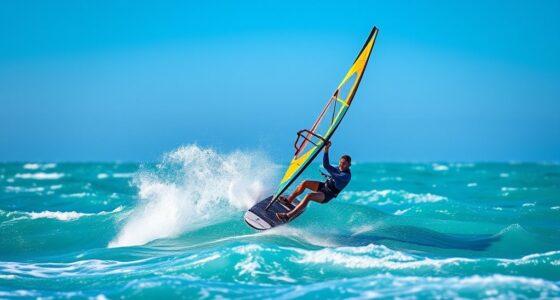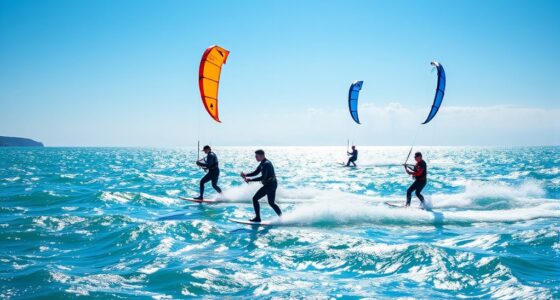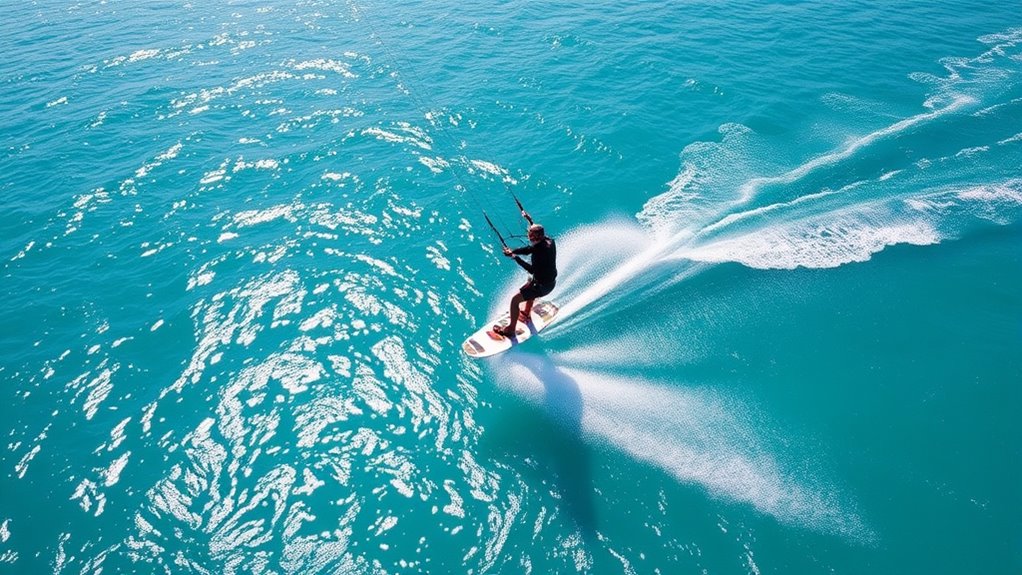

Kitefoiling combines kitesurfing and hydrofoiling, letting you glide effortlessly above the water using wind power. The kite pulls you while the hydrofoil, a wing-like structure submerged beneath the surface, generates lift. This unique setup allows for an exhilarating ride with a smooth, elevated view. You’ll experience the thrill of speed and fluidity while connecting with nature. Plus, there’s plenty more to explore about this exciting sport and how to get started.
Key Takeaways
- Kitefoiling combines kitesurfing and hydrofoiling, allowing riders to glide above water using wind power and hydrofoil lift.
- The hydrofoil features a wing-like structure submerged underwater, which generates lift as the wind pulls the kite.
- The design of the wing affects the efficiency, speed, and stability of the ride during gliding.
- Riders must develop control over both the kite and hydrofoil to improve maneuverability and perform tricks.
- Kitefoiling offers a thrilling experience, blending speed, fluidity, and scenic views while connecting riders with nature.
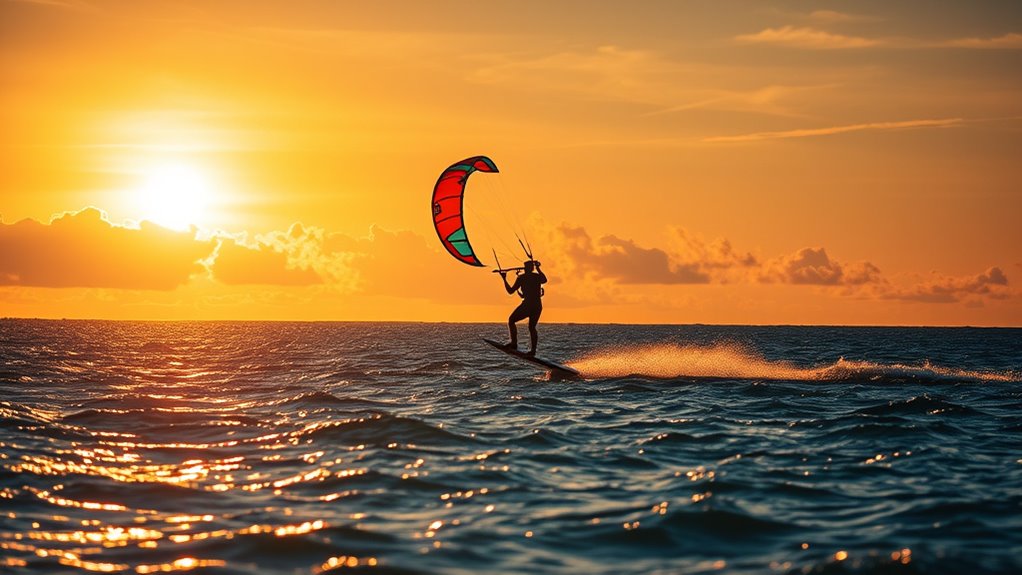
Have you ever wondered how kitefoiling combines the thrill of kitesurfing with the elegance of hydrofoiling? It’s an exhilarating sport that takes you above the surface of the water, providing a unique experience that merges speed and fluidity. As you harness the power of the wind to lift yourself off the water, you’ll quickly find yourself captivated by the smooth ride and the stunning views that come with it. To get started, you’ll need to understand some key elements, such as wing design and essential safety precautions.
The wing design plays a vital role in how efficiently you glide over the water. Kitefoiling uses an intertwined system of a kite and a hydrofoil, which consists of a wing-like structure submerged beneath the water. When you harness the wind with your kite, the force pulls you forward while the hydrofoil lifts you above the surface. This lift is generated by the unique shape of the wing, allowing you to glide smoothly with minimal drag. Depending on your skill level, you might choose different wing designs that vary in size and shape, optimizing your experience for speed or stability.
Now, let’s discuss safety precautions. Like any water sport, kitefoiling comes with its own set of risks, and you’re going to want to prioritize safety. Always wear a helmet and impact vest; these can help protect you from accidents and falls. Before you hit the water, make sure to check the weather conditions and avoid strong winds or storms that could make your session dangerous. It’s also wise to practice in a designated area away from other water users until you feel confident in your abilities. Having a buddy system is a great idea—whether you’re a novice or an expert, having someone nearby can ensure help is available if needed.
As you gain experience, you’ll learn to read the water conditions and how to maneuver your kite and foil effectively. Gradually, you’ll develop a feel for the sport, allowing you to perform tricks and explore new locations. Kitefoiling is not just about flying above the water; it’s about connecting with nature and mastering the elements. So gear up, stay safe, and embrace the thrill of kitefoiling—it’s an adventure you won’t want to miss!
Frequently Asked Questions
What Is the Ideal Wind Speed for Kitefoiling?
The ideal wind speed for kitefoiling typically ranges from 12 to 25 knots. In these wind conditions, you’ll find the perfect balance between control and speed. Your equipment selection plays a vital role too, so make sure your kite size matches the wind strength. If it’s too light, you might struggle; too strong, and it could be overwhelming. Keep an eye on the forecast, and you’ll have an enjoyable session on the water!
How Do I Maintain My Hydrofoil Equipment?
Imagine your hydrofoil as a trusty steed, needing care to gallop smoothly across the waves. To maintain your hydrofoil equipment, regularly inspect for any signs of wear or damage. Rinse it with fresh water after each session to prevent corrosion. Store it in a cool, dry place to enhance equipment durability. Tighten screws and check connections often; keeping everything in top shape guarantees your hydrofoil remains your reliable partner on the water.
Can Beginners Learn Kitefoiling Quickly?
Yes, beginners can learn kitefoiling quickly, especially with the right approach. Focus on equipment selection that suits your skill level; a stable kite and a beginner-friendly hydrofoil can make a big difference. Start with basic techniques before moving on to advanced techniques. Practicing consistently and getting guidance from an experienced instructor will speed up your learning process. Remember, patience and practice are key to mastering this thrilling sport!
What Safety Gear Do I Need for Kitefoiling?
Kitefoiling’s like dancing on water, but you’ve gotta be prepared. For safety gear, you’ll need protective clothing like a wetsuit or impact vest to cushion any falls. A helmet’s essential to protect your head from unexpected bumps. Don’t forget an emergency kit with a whistle, first aid supplies, and a knife to cut the line if needed. Keeping these items handy guarantees you can focus on mastering the waves while staying safe.
How Does Kitefoiling Compare to Traditional Kitesurfing?
Kitefoiling offers a different experience compared to traditional kitesurfing. With its unique foil design, you can glide above the water, reducing drag and allowing for smoother rides in lighter wind conditions. You’ll find that kitefoiling’s ability to perform well in less wind gives you more opportunities to hit the water. Plus, the sensation of flying above the waves is exhilarating, making it a thrilling alternative to traditional kitesurfing.
Conclusion
In summary, kitefoiling isn’t just a thrilling sport; it’s a fascinating blend of technology and nature. Did you know that kitefoilers can reach speeds of up to 35 knots, which is about 40 mph? That’s faster than many traditional sailing boats! With hydrofoils lifting you above the water, you experience a unique sensation of flying across the surface. So, whether you’re a seasoned pro or a curious beginner, kitefoiling offers an exhilarating adventure waiting for you!