
When replacing worn wakeboard bindings, prioritize safety first. Regularly check for cracks, fraying, or damage, especially after exposure to saltwater or sun. Make sure the new bindings fit your board and feet correctly; loose ones may cause instability, while tight ones can be uncomfortable. Follow manufacturer guidelines for installation, securing all screws tightly. Don’t forget to examine them regularly after installation to guarantee they’re still safe. Learn more about the complete process to keep yourself safe on the water.
Key Takeaways
- Inspect bindings regularly for cracks, fraying, or other signs of wear to determine if replacement is necessary.
- Rinse bindings after each session to prevent damage from dirt, salt, and sun exposure.
- Ensure new bindings fit your board and feet properly to maintain stability and comfort.
- Follow manufacturer guidelines for correct installation and secure all fastenings to ensure safety.
- Re-inspect bindings after replacement to confirm all components are secure and functioning properly.
When you realize your wakeboard bindings are worn out or no longer fit comfortably, it’s time to replace them. Worn bindings can not only ruin your ride but also pose serious safety risks. A loose or damaged binding can lead to falls, injuries, or even accidents that could be avoided with proper care. Understanding how to maintain your bindings and recognizing when they’re past their prime is essential for enjoying your time on the water.
First, let’s talk about binding maintenance. Every time you hit the water, your bindings take a beating from the elements. Saltwater, freshwater, and even the sun can degrade the materials over time. Regularly inspect your bindings for any signs of wear, such as cracks, fraying straps, or a compromised base. Keeping them clean is also necessary; rinse them after each session to remove dirt and salt that can cause deterioration. Make it a habit to check your bindings before every ride. If you notice any damage, it might be a sign that you need to replace them sooner than later.
Regularly inspect and clean your bindings to ensure safety and performance; damaged bindings should be replaced promptly.
When replacing your bindings, safety precautions should be your top priority. Always confirm that the new bindings fit your board and your feet correctly. A binding that’s too loose can lead to instability, while one that’s too tight can cause discomfort and restrict movement. To find the right fit, try on different sizes and styles, and don’t hesitate to ask for help from knowledgeable staff at your local shop. Remember, bindings come in various designs, from open toe to closed toe, and each serves different riding styles and preferences. Additionally, consider how color accuracy can affect your overall riding experience, especially in varying light conditions.
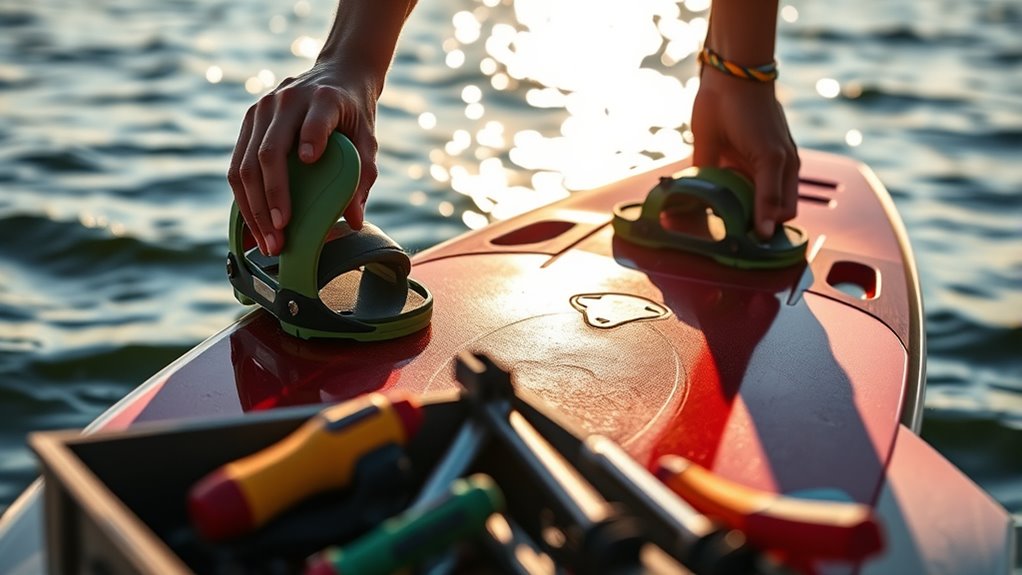
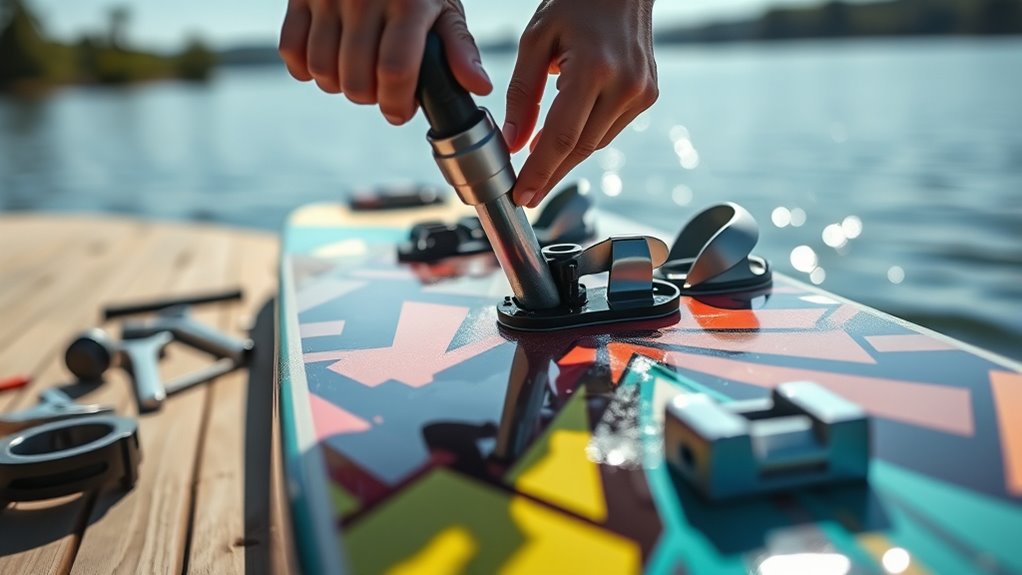
Once you’ve chosen the perfect bindings, make sure they’re installed correctly. Follow the manufacturer’s guidelines for installation, and double-check that all screws and straps are secure. It’s essential to get this right, as improperly installed bindings can lead to dangerous situations on the water. After installation, take a moment to familiarize yourself with how they work. Adjust the straps to ensure they hold your feet snugly without causing discomfort.
Frequently Asked Questions
How Do I Know When My Bindings Are Worn Out?
You’ll know your bindings are worn out when you notice cracks or fraying in the binding material, and they no longer provide a snug fit. If you feel discomfort or lack support while riding, it’s time for a change. Check your warranty coverage, too; it might cover replacements if they wear out prematurely. Always prioritize safety, as worn bindings can affect your performance and increase the risk of injury on the water.
Can I Use Different Brand Bindings on My Wakeboard?
Absolutely, you can use different brand bindings on your wakeboard, but it’s vital to check binding compatibility. Picture yourself soaring across the water, but if your bindings don’t fit right, you might feel more like a fish out of water! Brand differences can affect fit and performance, so make sure the bindings align with your board’s specs. Always prioritize comfort and security for the best ride, no matter the brand.
What Tools Do I Need to Replace Bindings?
To replace your wakeboard bindings, you’ll need a few essential tools: a screwdriver, typically a Phillips head, to remove the screws, and possibly a wrench if your bindings require it. Before starting, take safety precautions by wearing protective eyewear and ensuring your workspace is clean. Having a towel or mat handy can prevent scratches on your board. With the right tools and care, you’ll have those bindings swapped out in no time!
Are There Specific Bindings for Different Riding Styles?
Yes, there are style-specific bindings for different riding preferences. If you’re into freestyle, you’ll want bindings that offer flexibility and ease of movement. For slalom or boat riding, look for stiffer bindings that provide more support. It’s essential to guarantee binding compatibility with your board, as not all bindings fit all boards. Choosing the right bindings can enhance your performance and comfort on the water, so pick wisely based on your riding style!
How Can I Properly Maintain My Wakeboard Bindings?
To keep your wakeboard bindings in tip-top shape, think of it as giving them a little spa treatment. Stick to a maintenance schedule, checking for wear and tear regularly. Clean binding material with mild soap and water, avoiding harsh chemicals that could cause damage. Make sure to dry them properly to prevent mold. Also, inspect the screws and straps; a little attention goes a long way in extending their life!
Conclusion
When it comes to replacing your worn wakeboard bindings, safety should always come first. Did you know that nearly 30% of wakeboarding injuries are linked to equipment failure? By staying proactive and replacing those bindings when they show signs of wear, you’re not just enhancing your performance, but also protecting yourself from potential accidents. So, grab those new bindings and get ready to hit the water with confidence, knowing you’ve made the smart choice for your safety!