
Bio-fouling silently adds drag to your vessel, making your engines work harder and burning more fuel. As organisms like algae and barnacles attach, they create a slimy layer called a biofilm that attracts even larger creatures. This buildup increases resistance, reducing your speed and boosting operating costs. Choosing the right anti-fouling coatings and maintenance strategies can help you combat this hidden issue. Stay tuned to discover effective solutions and ways to minimize this unseen threat.
Key Takeaways
- Bio-fouling forms a slimy biofilm that increases surface roughness, significantly raising vessel drag and fuel consumption.
- The accumulation of marine organisms adds weight and structural strain, further reducing vessel efficiency.
- Untreated bio-fouling can increase drag by up to 40%, costing vessels thousands of dollars in extra fuel annually.
- Anti-fouling coatings with biocides help mitigate biofilm formation and organism attachment, lowering hidden drag costs.
- Regular maintenance and advanced coatings are essential to minimize bio-fouling-related drag and optimize vessel performance.
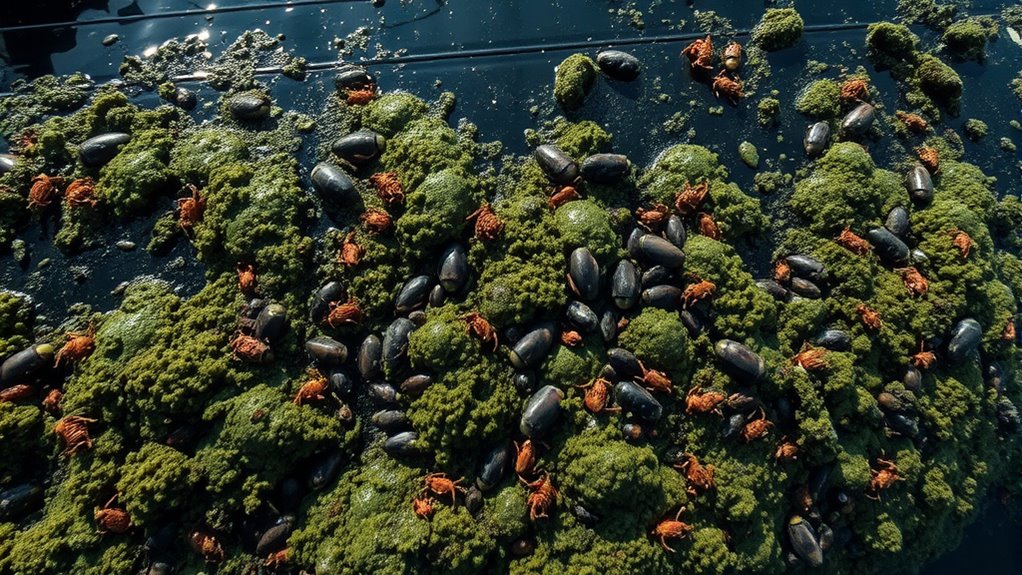
Have you ever wondered why ships and underwater structures become coated with unwanted organisms? It’s mainly due to bio-fouling, a natural process where marine bacteria, algae, barnacles, and other marine life attach themselves to surfaces submerged in water. This buildup isn’t just unsightly; it causes serious issues for vessel performance and maintenance costs. The marine bacteria are often the first to colonize, creating a slimy layer that makes it easier for larger organisms to adhere. Once these microorganisms settle, they form a biofilm, which acts like a magnet for more organisms, accelerating the fouling process.
You might not realize it, but this fouling adds significant drag to ships, making engines work harder and burning more fuel. That extra resistance translates directly into higher operating costs and increased greenhouse gas emissions. The more organisms that attach, the thicker the fouling layer becomes, and the more you have to pay to maintain ideal performance. To combat this, many vessels rely on anti fouling coatings—specialized paints designed to prevent organisms from sticking. These coatings often contain biocides or release active ingredients that deter marine bacteria and other fouling agents from settling.
However, not all anti fouling coatings are created equal. Some are environmentally friendly, using non-toxic substances that slowly leach into the water, while others rely on more aggressive biocides that can harm marine ecosystems. Choosing the right coating depends on your priorities—whether it’s minimizing environmental impact or maximizing long-term protection. Regular maintenance and timely reapplication of these coatings are essential to guarantee their effectiveness. When bio-fouling takes hold, it’s not just about aesthetics; it’s about maintaining fuel efficiency and safety. The added weight and drag can lead to increased emissions, higher fuel costs, and even structural damage over time.
Understanding how marine bacteria initiate the fouling process helps you appreciate the importance of preventative measures. Anti fouling coatings serve as a frontline defense, creating a barrier that discourages bacteria and other organisms from settling. Advances in coating technologies are constantly evolving, offering more sustainable options that still deliver the performance you need. Additionally, penetration testing techniques used in other cybersecurity fields are being adapted to evaluate the integrity of coating applications and ensure their durability against marine conditions. By proactively addressing bio-fouling with the right coatings and maintenance routines, you can save money, reduce your environmental footprint, and keep your vessels running smoothly. In short, controlling bio-fouling is about staying ahead of the problem before it costs you knots in speed and dollars in repairs.
Frequently Asked Questions
How Quickly Does Bio-Fouling Develop on Marine Surfaces?
You might wonder how fast marine growth develops on your vessel. Typically, fouling can start within a few days to a week, depending on water temperature, salinity, and nutrient levels. The fouling timeline varies, but bio-fouling can notably increase drag in just a couple of weeks. Regular cleaning and anti-fouling treatments are essential to slow down this process and maintain peak performance on your marine surfaces.
Can Bio-Fouling Be Completely Prevented?
You might wonder if bio-fouling can be completely prevented. While advances in marine biology and coating durability help reduce it, absolute prevention remains challenging. Regular maintenance, innovative anti-fouling coatings, and diligent monitoring are essential. You can’t eliminate bio-fouling entirely, but you can substantially minimize its impact. Staying proactive ensures your vessel maintains ideal performance, reduces drag, and saves fuel, keeping you ahead in the game despite the persistent nature of marine bio-fouling.
What Are the Environmental Impacts of Anti-Fouling Coatings?
You might wonder about the environmental impacts of anti-fouling coatings. These coatings can harm marine biodiversity by introducing chemical pollution into oceans, affecting non-target species and disrupting ecosystems. While they help reduce bio-fouling, you should consider their long-term effects on marine life. Choosing eco-friendly options and supporting regulations can minimize harm, ensuring healthier oceans and sustainable shipping practices.
How Cost-Effective Are Bio-Fouling Prevention Methods?
You’ll find bio-fouling prevention methods can be quite cost-effective when you do an economic analysis. Implementing proactive maintenance strategies, like coatings or cleaning schedules, reduces drag and fuel costs over time. Although initial investments might seem high, the savings in fuel efficiency and decreased maintenance downtime make these methods worthwhile. By focusing on the long-term benefits, you can maximize your vessel’s performance while minimizing overall operational costs.
Are There Emerging Technologies to Combat Bio-Fouling?
You’re curious about emerging technologies to combat bio-fouling. Advances like nanotechnology coatings are making waves, creating surfaces that resist microbial growth and reduce drag. Additionally, bio-inspired solutions mimic natural defenses, offering eco-friendly, effective methods to prevent fouling. These innovations are promising, helping you maintain vessel efficiency and cut operational costs. Embracing these cutting-edge approaches can give you a significant advantage in managing bio-fouling challenges.
Conclusion
Now that you understand how bio-fouling silently drags down your vessel’s speed and efficiency, you realize it’s like battling an invisible army of tiny, relentless invaders. Ignoring this hidden threat is like sailing through a sea of molasses—slow, frustrating, and energy-draining. Stay vigilant and proactive; your ship’s performance depends on it. Tackling bio-fouling isn’t just maintenance—it’s your secret weapon to slicing through water like a hot knife through butter.