
To protect marine life while capturing stunning underwater shots, choose angles that minimize disturbance. Use macro angles to focus closely on tiny creatures without invading their space and rely on wide-angle perspectives to showcase entire ecosystems from a respectful distance. Keep your movements gentle, avoid touching or chasing animals, and use natural light. Properly positioning yourself guarantees safe, responsible photography that benefits conservation efforts—discover more techniques to hunt for responsible underwater angles.
Key Takeaways
- Use macro angles to capture marine details without disturbing or touching delicate organisms.
- Maintain a respectful distance with wide-angle shots to avoid chasing or stressing marine life.
- Opt for natural lighting and gentle movements to minimize environmental impact during filming.
- Include habitat context in wide shots to promote understanding and reduce invasive proximity.
- Observe animal behavior beforehand to choose angles that avoid causing stress or habitat damage.

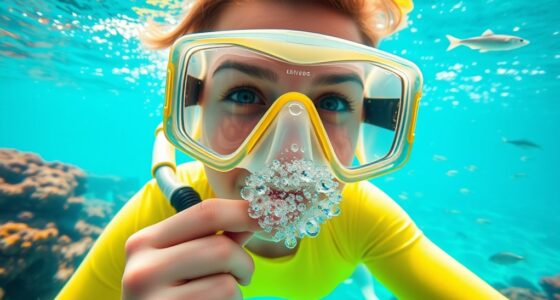
Have you ever wondered how different angles can transform your underwater photos? The way you position your camera can make a huge difference in capturing the beauty of marine life while also protecting it. One effective approach is to focus on macro shots, which allow you to get close-up details of tiny creatures without disturbing their environment. These intimate images reveal the intricate patterns on a nudibranch or the delicate textures of a coral polyp, all while keeping a respectful distance. By choosing macro shots, you minimize your impact on marine life, avoiding unnecessary stress or damage. It’s about being patient and precise, using your camera to highlight the small wonders that often go unnoticed. Additionally, understanding candle making techniques can teach patience and attention to detail, which can be beneficial in delicate underwater photography.
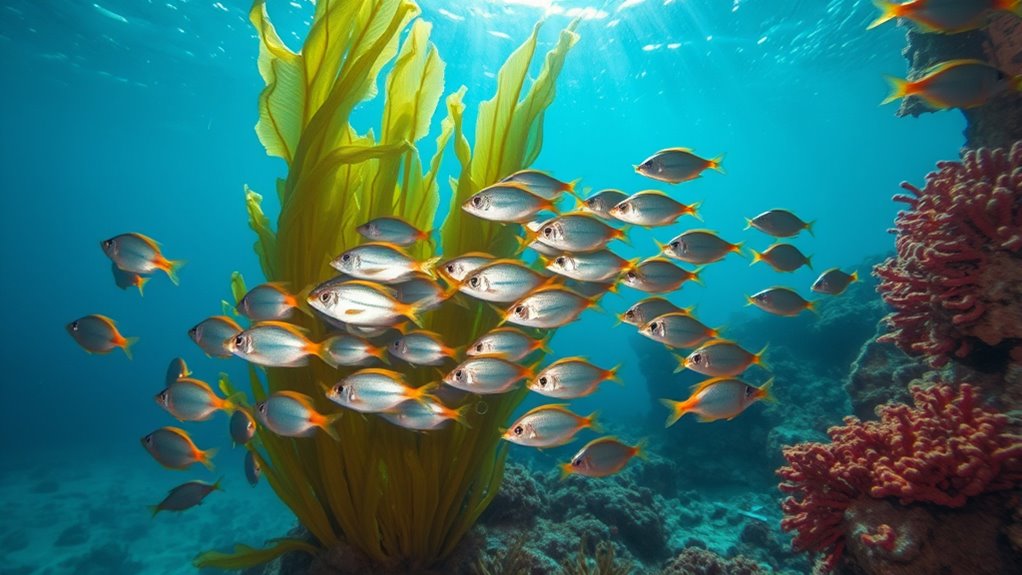
On the other hand, wide angle perspectives give you the power to showcase the broader underwater scene. Using a wide-angle lens, you can capture expansive coral reefs, schools of fish, or underwater landscapes. When you approach these scenes with care, you create compelling images that tell a story of the vibrant ecosystem without intruding on it. Position yourself at a respectful distance, using your lens to include as much of the environment as possible, rather than forcing creatures into unnatural proximity. This approach not only preserves marine life but also enhances your composition by providing context, showing how individual species coexist within their habitat.
The key to protecting marine life with these angles is awareness. Before you shoot, observe the animals and their surroundings. For macro shots, get close enough to detail what’s interesting without causing alarm. For wide angles, step back and let the scene unfold naturally—your goal isn’t to dominate the scene but to document it responsibly. Always avoid touching or chasing animals, and be mindful of your buoyancy, so you don’t accidentally crush coral or disturb the habitat. Using natural light and gentle movements helps keep your presence unobtrusive, making the creatures feel safe.
Frequently Asked Questions
How Can I Avoid Disturbing Marine Animals During Filming?
To avoid disturbing marine animals, observe their wildlife behavior first and keep a respectful distance. Move slowly and calmly to prevent startling them. Use camera stabilization to avoid sudden movements that could scare or harm marine life. Keep your fins and equipment close to your body, and avoid touching or chasing animals. By staying mindful and gentle, you’ll capture great footage while protecting the delicate underwater ecosystem.
What Equipment Is Best for Eco-Friendly Underwater Photography?
When choosing equipment for eco-friendly underwater photography, you should prioritize eco-friendly gear like biodegradable housings and rechargeable batteries. Use sustainable techniques such as minimizing your gear’s impact and avoiding unnecessary flashes. Opt for lightweight, durable equipment that reduces waste and energy use. By selecting eco-conscious gear and practicing sustainable techniques, you help protect marine environments while capturing stunning images, ensuring your photography supports conservation efforts.
Are There Specific Angles That Highlight Marine Conservation Issues?
You want to highlight marine conservation issues through your photos. Focus on angles that showcase marine life behavior, revealing natural interactions and habitats. Capture shots that demonstrate the fragility of the underwater ecosystem, like close-ups of damaged coral or overcrowded reefs. Use perspectives that emphasize the importance of protecting these environments, inspiring viewers to care. By choosing these angles, you tell a powerful story about marine life and the need for conservation.
How Do Water Clarity and Lighting Affect Angle Choices?
Water clarity and lighting conditions directly influence your angle choices in underwater photography. When visibility is clear, you can shoot from lower angles or get closer to your subject for sharp, vibrant images. Poor water clarity or low light indicates you should adjust by shooting from higher angles or using a wider lens to maximize available light. Adapting your angle ensures you capture stunning photos while minimizing disturbance to marine life.
Can Angle Selection Help Prevent Damage to Fragile Coral Reefs?
Think of choosing your angle like walking carefully through a fragile garden. Your camera’s position can minimize marine disturbance and support coral preservation. By avoiding direct contact and staying at respectful distances, you help prevent damage to delicate coral reefs. Proper angle selection reduces the risk of harming fragile ecosystems, much like steering clear of stepping on tender plants, ensuring you capture stunning images without compromising marine life’s well-being.
Conclusion
By choosing the right angles, you not only capture stunning images but also protect marine life. Remember, approaching animals with respect and avoiding intrusive positions keeps their environment safe. Scientific studies show that non-intrusive photography reduces stress on marine creatures, supporting the idea that mindful angles benefit both your photos and the ocean’s health. So, next time you dive, trust your instincts and prioritize gentle, ethical angles—your images and marine friends will thank you.