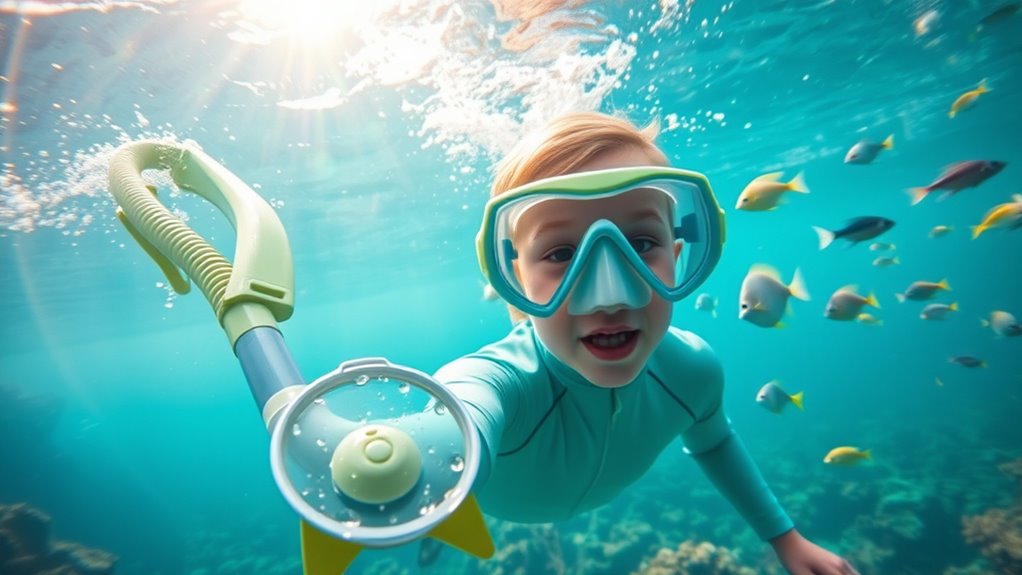

To get started with snorkeling, you need a well-fitting mask, a comfortable snorkel, and fins that give you good propulsion. Make sure your mask seals properly to prevent water entry. Practice breathing slowly and deeply through the snorkel, staying relaxed to avoid panic. Always snorkel with a buddy and be aware of your surroundings for safety. Respect the marine environment by not touching coral or marine life. Stick around to uncover more tips for an enjoyable snorkeling adventure!
Key Takeaways
- Ensure you have well-fitting snorkeling gear, including a mask, snorkel, and fins, to enhance comfort and prevent water leakage.
- Test the mask fit by creating suction with your nose to ensure a proper seal for clear vision while snorkeling.
- Practice deep breathing techniques by inhaling through the mouth and exhaling slowly to promote relaxation and reduce anxiety.
- Always snorkel with a buddy and be aware of local conditions, currents, and tides for a safer experience.
- Respect marine life by avoiding contact with coral and following guidelines to preserve the underwater ecosystem.
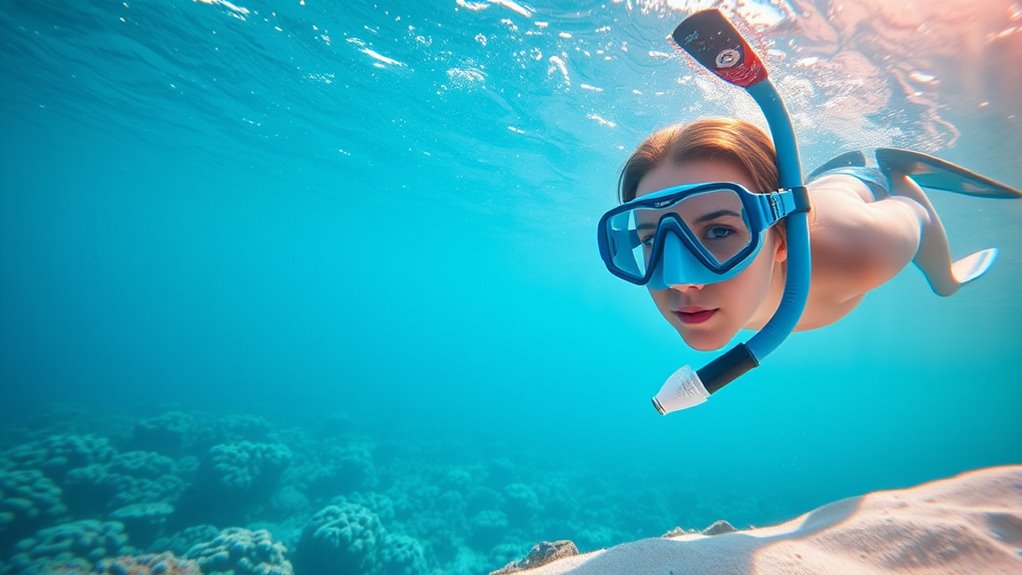
Have you ever wondered what lies beneath the surface of crystal-clear waters? The world of snorkeling opens up a vibrant universe filled with marine life, from colorful fish darting between corals to curious sea turtles gliding gracefully by. To truly enjoy this underwater paradise, you need to grasp a few basics, especially when it comes to gear and breathing techniques.
First things first, your snorkeling gear is essential for a successful experience. You’ll want a well-fitting mask, snorkel, and fins. A mask that seals properly around your face is necessary; otherwise, you’ll find yourself constantly clearing water out of it. When trying on masks, make sure it creates a good seal by inhaling gently through your nose. If it sticks, you’ve got a winner! Your snorkel should be comfortable in your mouth and equipped with a purge valve for easy clearing. Fins come in various styles, so choose ones that feel comfortable and offer good propulsion without tiring you out too quickly.
Your snorkeling adventure starts with the right gear: a snug mask, a comfortable snorkel, and efficient fins for the best experience.
Now, let’s talk about breathing techniques. When you’re snorkeling, you’ll breathe through your snorkel, which can be a bit different from what you’re used to. As you dip beneath the waves, take slow, deep breaths. Inhale through your mouth and exhale gently. This method helps you remain calm and reduces the chances of hyperventilation. Practice this in shallow water before venturing into deeper areas. Remember, you don’t have to hold your breath; just relax and let the water embrace you.
Water safety is another essential aspect to think about. Always snorkel with a buddy, as this guarantees you have someone to assist you in case of an emergency. Familiarize yourself with the area before diving in—watch for currents and tides, and never venture into unfamiliar waters without proper guidance. It’s also wise to wear a life jacket if you’re not a strong swimmer, as it can provide added buoyancy and peace of mind.
As you explore the underwater world, respect marine life. Avoid touching coral or disturbing creatures you encounter; they play an important role in the ecosystem. By following these basic tips, you’ll not only enhance your snorkeling experience but also guarantee your safety and the health of the vibrant marine life around you. So gear up, breathe deep, and dive into the adventure that awaits beneath the waves! Additionally, ensuring that your equipment has proper color accuracy can enhance your underwater visibility and enjoyment of the vibrant marine environment.
Frequently Asked Questions
What Is the Best Time of Year for Snorkeling?
The best time for snorkeling usually falls during the warmer months, which often means late spring to early fall. During these seasons, you’ll enjoy ideal water temperatures, making it comfortable for extended underwater exploration. Locations can vary, so checking local climate patterns helps too. Always consider avoiding stormy seasons to enhance your experience. Overall, timing your trip during the best snorkeling seasons can make a significant difference in your adventure.
Can I Snorkel With Contact Lenses?
Yes, you can snorkel with contact lenses, but it’s important to take into account contact lens safety. If you wear soft lenses, they’re generally fine, but be cautious of saltwater and sand. Hard lenses aren’t recommended since they can be uncomfortable if dislodged. If you’re worried about visibility, consider snorkeling with glasses instead. Always have a backup plan, like prescription goggles, to ensure you enjoy your underwater adventure without any issues.
How Do I Prevent Seasickness While Snorkeling?
To prevent seasickness while snorkeling, start by choosing a calm day for your adventure. Use calming techniques like taking deep breaths and focusing on the horizon. Ginger candies or wristbands can also help ease motion sickness. Stay hydrated and avoid heavy meals before snorkeling. If you feel queasy, take breaks and float on your back to stabilize your body. Remember, staying relaxed and confident makes a huge difference in enjoying your snorkeling experience.
What Should I Do if I Encounter Marine Life?
If you encounter marine life, stay calm and observe from a respectful distance. Think of it like watching a wildlife documentary—you’re a guest in their world. Remember, marine life safety is essential; avoid touching or chasing animals. Instead, let them go about their business while you appreciate their beauty. If an animal approaches you, remain still and enjoy the moment, but never provoke or corner them. Respectful observation enhances your experience and protects marine habitats.
Are There Age Restrictions for Snorkeling?
There aren’t strict age restrictions for snorkeling, but it’s vital to take into account each individual’s comfort and ability. Generally, kids as young as five can start, especially with adult supervision. Beginners of any age should be comfortable in the water and wear proper gear. Always choose beginner-friendly spots to ensure safety and enjoyment. So, if you’re contemplating taking your child snorkeling, just ensure they’re ready and excited for the adventure!
Conclusion
As you glide through the water like a bird taking flight, remember that your snorkeling gear is more than just equipment; it’s your gateway to a vibrant underwater world. Mastering your breath is akin to learning the rhythm of the ocean’s waves—each inhale and exhale connects you to the life beneath the surface. So, embrace the adventure, trust your skills, and let the sea reveal its treasures to you. Your journey has just begun; plunge in and explore!