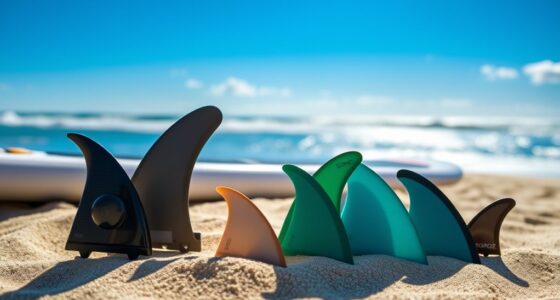
To keep your stand-up paddleboard in great shape, rinse it with fresh water after each session and use a soft sponge for gentle cleaning. Store it in a cool, dry place, away from sunlight, using padded bags or wall racks to prevent damage. Always inspect for dings or mold before use and make small repairs promptly. Following these tips will extend the life of your board, and you’ll discover even more ways to care for it.
Key Takeaways
- Rinse your paddleboard with fresh water after each use to remove salt, sand, and debris and prevent surface wear.
- Store the board in a cool, dry place, away from direct sunlight, using padded bags or wall racks for protection.
- Ensure the board is completely dry before storage to prevent mold and mildew growth in humid conditions.
- Conduct quick inspections for dings, scratches, and structural integrity before each use to maintain safety and performance.
- Promptly address minor repairs and follow recommended maintenance practices to keep your paddleboard in peak condition.

Whether you’re a weekend warrior or a seasoned pro, keeping your stand-up paddleboard (SUP) in top shape is essential for ideal performance and longevity. One of the most important aspects of maintenance is paddleboard cleaning. After each session on the water, you need to take a few minutes to rinse your board with fresh water. Saltwater, sand, and debris can wear down the board’s surface and affect its performance. Use a soft sponge or cloth to gently scrub away any stubborn grime. Avoid harsh chemicals or abrasive materials, as they can damage the board’s finish. Keeping your SUP clean not only enhances its appearance but also extends its lifespan.
Once you’ve tackled paddleboard cleaning, it’s time to think about storage solutions. Properly storing your board can prevent warping and damage over time. Ideally, you should store your SUP in a cool, dry place, away from direct sunlight. UV rays can degrade the materials and cause fading, which is something you definitely want to avoid. If possible, consider using a padded board bag for additional protection, especially if you plan to transport it frequently. Hanging your paddleboard on a wall rack is also a great option, as it keeps the board off the ground and reduces the risk of accidental knocks.
Proper storage of your paddleboard is crucial to prevent damage and ensure longevity. Keep it cool, dry, and out of direct sunlight.
If you live in a humid environment, make sure to check your board for any signs of mold or mildew. These can develop in the crevices if moisture gets trapped. To tackle this issue, ensure your board is completely dry before putting it away. You might even want to leave it out for a few hours after cleaning to allow it to air out thoroughly.
When you’re ready to hit the water again, give your board a quick inspection to ensure everything’s in working order. Check for any dings or scratches that could compromise your safety. If you find any damage, it’s best to address it right away. A small repair now can save you from larger issues down the road. Regular maintenance and seasonal checklists can help streamline this process and keep your paddleboard in peak condition.
Frequently Asked Questions
Can I Use My Paddleboard in Saltwater?
Yes, you can use your paddleboard in saltwater, but you need to be cautious. Saltwater can cause corrosion, so it’s crucial to rinse your board with freshwater after each use. This helps prevent buildup and damage. Make sure to also check for any signs of wear or corrosion regularly. By maintaining your board properly, you’ll prolong its life and enjoy many more days out on the water without worry!
How Do I Store My Paddleboard During Winter?
You can store your paddleboard indoors during winter for the best protection. Don’t worry about the hassle; with a little planning, you’ll keep it safe from harsh conditions. Make sure to clean and dry it thoroughly before storage, and consider a protective cover to shield it from dust and debris. If you have space, lay it flat or use vertical storage to save room. Your paddleboard will be ready when warmer days return!
What Should I Do if My Paddleboard Gets a Dent?
If your paddleboard gets a dent, don’t panic! You can often fix it with some simple repair techniques. Start by warming the area with a hairdryer to soften the material. Then, use a suction cup or your hands to gently pull the dent out. If needed, apply a patch or epoxy to seal any cracks. Always follow up with a thorough inspection to make sure it’s water-tight and ready for your next adventure!
Is It Safe to Repair a Paddleboard Myself?
Yes, it’s generally safe to repair your paddleboard yourself if you’re comfortable with DIY repairs. Many users successfully tackle minor issues, but remember that improper fixes can lead to bigger problems. If you’re unsure or if the damage is extensive, consider professional repair services. They’ll ensure your board’s integrity and safety, giving you peace of mind for your next outing. Just weigh your skills against the repair needed before diving in!
How Often Should I Inspect My Paddleboard for Damage?
You should inspect your paddleboard for damage at least once a month, or more frequently if you use it often. Bring along inspection tools like a flashlight and a pressure gauge to check for any leaks or cracks in the paddleboard material. Look closely for signs of wear, especially in high-stress areas. Regular inspections help you catch issues early, ensuring your paddleboard stays in great shape for your next adventure.
Conclusion
By taking the time to properly maintain and care for your stand-up paddleboard, you’re ensuring many enjoyable adventures on the water. Regular cleaning, storage, and inspections can keep your board in top shape for years to come. So, why not invest a little effort now to enhance your paddleboarding experience later? With just a few simple steps, you’ll be ready to hit the waves with confidence, knowing your board is well cared for and ready to perform.