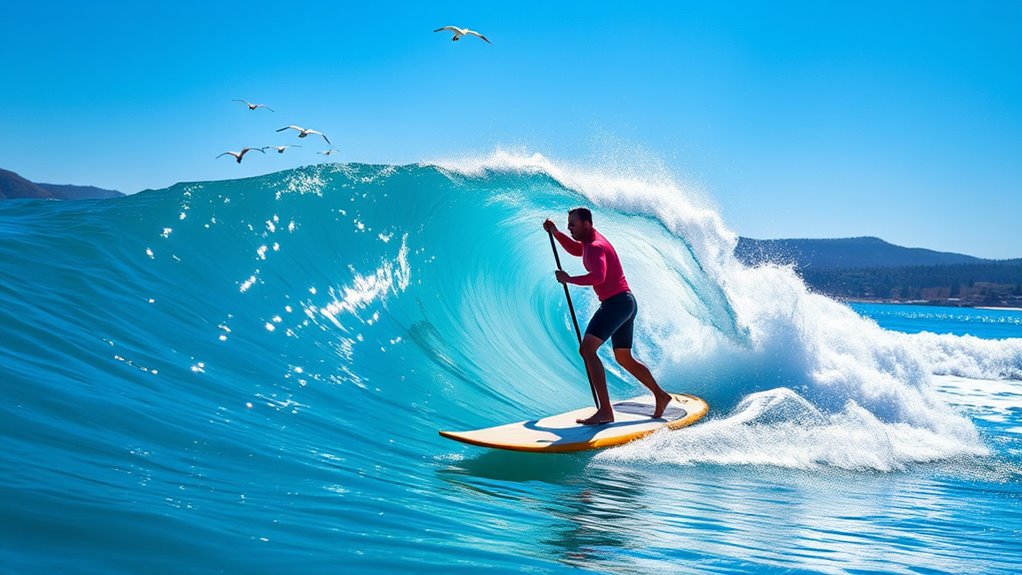

SUP surfing lets you catch waves on a paddleboard, providing an exhilarating mix of stability and excitement. You’ll enjoy improved balance and paddle techniques, making it suitable for everyone. As you paddle out, remember to be mindful of your surroundings and read the waves for the best riding experience. Lean into the wave and adjust your paddle to maintain control, maximizing your speed and maneuverability. There’s so much more to explore about this unique surfing style!
Key Takeaways
- SUP surfing offers stability and versatility, enhancing your ability to catch waves with confidence.
- Master efficient paddle techniques to improve your speed and control for optimal wave catching.
- Position yourself correctly by reading wave patterns to maximize your chances of riding a wave.
- Lean into the wave and adjust your paddle for improved balance and maneuverability while riding.
- Enjoy a unique perspective and exhilarating experience on the water while fostering a responsible surfing community.

Have you ever wondered how stand-up paddleboarding (SUP) can transform your surfing experience? SUP offers a unique blend of stability and versatility that traditional surfing often lacks. When you hit the waves with a paddleboard, you’re not just riding; you’re engaging with the water in a whole new way. This method allows you to explore different wave conditions while improving your balance and paddle techniques, making it an excellent choice for both beginners and seasoned surfers alike.
Stand-up paddleboarding revolutionizes your surfing journey, blending stability with versatility for an unparalleled experience on the waves.
As you paddle out, your awareness of wave safety becomes essential. SUP surfing requires you to be mindful of your surroundings, especially when steering through crowded surf spots. Understanding how to read the waves and knowing where to position yourself can help you avoid collisions. You’ll quickly learn to identify the right moments to paddle into a wave and when to let it pass. This awareness not only enhances your surfing experience but also promotes a sense of camaraderie among fellow surfers, as everyone shares the ocean space responsibly.
When it comes to paddle techniques, mastering your strokes is vital. A strong, efficient stroke allows you to maneuver your board effectively, whether you’re paddling out through breaking waves or positioning yourself for the perfect ride. Focus on a long, smooth stroke that engages your core, rather than just your arms. This technique gives you better control and speed, making it easier to catch waves. Practicing your paddle strokes in flat water can markedly improve your performance when you’re out in the surf.
When you catch a wave on your paddleboard, the feeling is exhilarating. You’ll find that the extra height and stability of the board give you a unique perspective on the wave, allowing for a different kind of ride. Leaning into the wave and adjusting your paddle for balance can make all the difference. Remember, the goal is to maintain your center of gravity and keep your body aligned with the board to maximize your speed and control.
Frequently Asked Questions
What Gear Do I Need for SUP Surfing?
For SUP surfing, you’ll need a suitable paddleboard, which is typically shorter and wider than a regular paddleboard. Don’t forget a paddle that’s the right length for you. A leash is essential for safety, and a personal flotation device is often required. You should also invest in surfboard maintenance supplies to keep your board in top shape. Finally, practice your paddleboarding techniques to improve your balance and wave-catching skills!
Is SUP Surfing Suitable for Beginners?
Absolutely, SUP surfing is suitable for beginners! Think of it like learning to dance on water; you’ll need to master balance techniques and wave selection. Start with small, gentle waves to build your confidence and skills. As you practice, you’ll find your rhythm and improve your stability on the board. So grab your paddle, embrace the adventure, and let the ocean guide you through this exhilarating experience!
How Do I Choose the Right Paddleboard?
Choosing the right paddleboard involves considering your skill level, purpose, and size preferences. Look for stability and durability, especially if you’re a beginner. Don’t forget paddleboard maintenance; regular cleaning and checking for damage will extend its life. When choosing paddleboard fins, think about your intended use—larger fins offer stability, while smaller ones enhance speed and maneuverability. Test different options to find the best fit for your paddling style and experience.
Can I SUP Surf in All Types of Waves?
Sure, you can totally SUP surf in all types of waves—if you enjoy a thrilling game of chance! Wave conditions play a vital role, and not every paddleboard type is designed for chaos. Some boards excel in smaller, mellow waves, while others tackle larger swells like pros. You’ll need to match your paddleboard type to the conditions to make certain a safer, more enjoyable experience. So, pick wisely and embrace the adventure!
What Are the Safety Measures for SUP Surfing?
To stay safe while SUP surfing, always check weather conditions before heading out. Look for strong winds, storms, or changing tides that could impact your ride. Familiarize yourself with local regulations regarding SUP surfing, as some areas have specific rules to follow. Wear a personal flotation device, and consider using a leash to keep your board close. Finally, surf with a buddy whenever possible to enhance safety and enjoyment.
Conclusion
In summary, SUP surfing isn’t just a fun way to ride waves; it’s also a rapidly growing sport. Did you know that participation in stand-up paddleboarding has increased by over 100% in the last five years? This surge reflects not only its popularity but also the community and connection it fosters among water enthusiasts. So, grab your paddleboard, hit the waves, and join in on this fantastic adventure that’s capturing hearts around the globe!