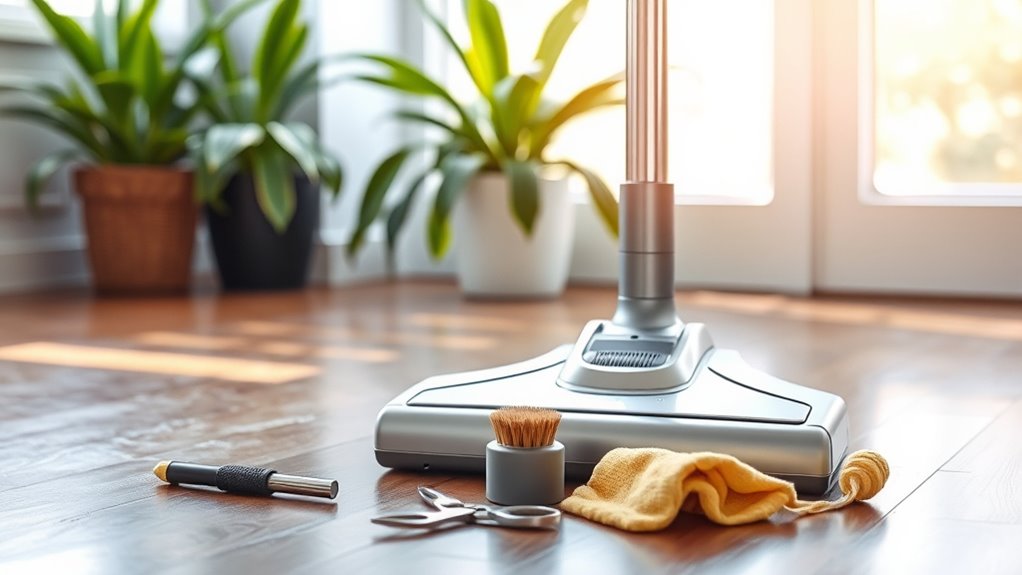

To maintain and clean your vacuum cleaner, regularly check and clean the filters to enhance airflow and efficiency. Inspect the brush roll for tangled hair and debris, removing any build-up. Keep the cord wrapped neatly to prevent damage, and check the hose for clogs that can affect suction. By following these steps, you’ll guarantee your vacuum runs smoothly and lasts longer. There’s even more you can do to optimize its performance, so let’s explore further.
Key Takeaways
- Regularly check and clean or replace the vacuum filter to ensure optimal airflow and efficiency.
- Inspect and clean the brush roll to remove tangles and improve dirt pickup effectiveness.
- Maintain the cord by wrapping it neatly and checking for signs of wear or damage.
- Regularly inspect the hose for clogs and clear any debris to restore proper suction.
- Perform routine maintenance to prolong the vacuum’s lifespan and maintain consistent cleaning quality.

While it might seem tedious, regularly maintaining and cleaning your vacuum cleaner can extend its lifespan and improve its performance. You rely on your vacuum to keep your home clean, so it’s vital to verify it’s in top shape. One of the most important aspects of vacuum maintenance is the vacuum filter. Neglecting this component can lead to reduced suction power and even damage to the motor over time.
Start by checking your vacuum filter regularly. Depending on the model, you may need to clean or replace it every few months. If your vacuum has a washable filter, rinse it under warm water, and let it dry completely before reinstalling it. This simple task can greatly enhance your vacuum’s efficiency. If your vacuum uses a disposable filter, make sure to replace it as recommended by the manufacturer. Keeping your filter clean will improve airflow and ensure your vacuum operates at peak performance.
Regularly checking and maintaining your vacuum filter enhances efficiency and ensures peak performance for a cleaner home.
Another critical area to focus on is the vacuum’s brush roll. Hair and debris can get tangled in the bristles, which can impede your vacuum’s ability to pick up dirt. Periodically inspect the brush roll for any build-up, and use scissors or a seam ripper to remove stubborn tangles. This maintenance step can dramatically improve the cleaning effectiveness of your vacuum.
As you care for your vacuum, don’t overlook the importance of cord storage. Proper cord management will prevent damage and make your vacuum easier to use. When you’re done vacuuming, wrap the cord neatly around the designated hooks or storage area. Avoid wrapping it too tightly, as this can cause wear and tear. If your vacuum doesn’t have built-in cord storage, consider using a cord wrap or a simple twist tie to keep it organized.
Additionally, check the vacuum hose for clogs or blockages. A blocked hose can lead to inefficient cleaning and strain on the motor. If you notice a significant drop in suction, inspect the hose and clear any debris. You can use a broomstick or a flexible cleaning brush to help dislodge stubborn clogs. Regularly maintaining your vacuum, similar to how you would ensure your home cinema projector has color accuracy, will help you achieve optimal performance in your cleaning tasks.
Frequently Asked Questions
How Often Should I Replace My Vacuum Cleaner Filter?
You should replace your vacuum cleaner filter every 3 to 6 months, depending on usage. Keep an eye out for filter replacement indicators, like reduced suction power or increased dust release. If you notice these signs, it’s time for a change. Regularly checking the vacuum filter lifespan helps maintain peak performance and keeps your air clean. Staying on top of this will ensure your vacuum runs efficiently for longer.
Can I Wash My Vacuum Cleaner Bag?
You can’t wash your vacuum cleaner bag. Instead, you should focus on vacuum bag disposal and replace the bag according to your bag replacement schedule. Washing can damage the bag and reduce its effectiveness. If the bag’s reusable, check the manufacturer’s instructions for proper cleaning methods. Regularly replacing the bag ensures peak performance and keeps your vacuum running smoothly, improving its lifespan and efficiency.
What Should I Do if My Vacuum Overheats?
If your vacuum overheats, turn it off immediately and unplug it. Let it cool down for at least 30 minutes before inspecting it for clogs or debris. Clean or replace the filter and empty the dustbin to improve airflow. Regular maintenance can help prevent motor burnout, so check for blockages often. If the problem persists, consider taking it to a professional for repairs to guarantee safe and efficient operation.
Are There Specific Cleaning Solutions for Vacuum Maintenance?
You can’t help but wonder if there’s a magic solution hiding somewhere, right? While there aren’t specific cleaning solutions designed just for your vacuum, using mild soap and water works wonders for general maintenance. Just remember to avoid harsh chemicals that could damage the components. Regularly emptying the dust container and checking the filters are key maintenance tips, ensuring your vacuum runs smoothly and efficiently for all your vacuum cleaning needs.
How Can I Tell if My Vacuum Needs Repairs?
You can tell your vacuum needs repairs if you notice vacuum cord issues, like fraying or no power when plugged in. Listen for unusual sounds, too; that could indicate brush roller problems. If the brush roller isn’t spinning or picking up debris effectively, it’s a sign of trouble. Regularly check for clogs in the hose or filters, as these can also hinder performance and signal that it’s time for repairs.
Conclusion
Keeping your vacuum cleaner in top shape is like nurturing a loyal friend; it pays off with clean floors and fresh air. By regularly emptying the canister, checking the filters, and clearing any clogs, you guarantee your trusty companion is always ready to tackle dirt and debris. Remember, a little maintenance goes a long way, so don’t let neglect turn your vacuum into a dusty relic. Treat it well, and it’ll serve you faithfully for years to come!