Learning to fly on a wingfoil is an exhilarating experience that offers a unique sense of freedom. You’ll feel the wind as you balance and control your gear above the water. Start with the right wing size and assess the wind for ideal conditions. Keep your knees bent and maintain a low center of gravity to stay balanced. Each flight teaches you something new, making it easier and more enjoyable. There’s so much more to discover about mastering your wingfoil skills.
Key Takeaways
- Start with the right wing size and board volume for your skill level and weight to ensure stability and buoyancy during initial flights.
- Assess weather conditions, aiming for moderate winds between 12-20 knots for optimal balance and control while flying.
- Position the wing correctly to catch the wind, maintaining a low center of gravity by bending your knees slightly for better stability.
- Focus on gentle weight shifts to steer and control speed, as early attempts may involve wobbling or falling.
- Embrace falls and wobbles as part of the learning process, as practice will naturally enhance your confidence and skill over time.
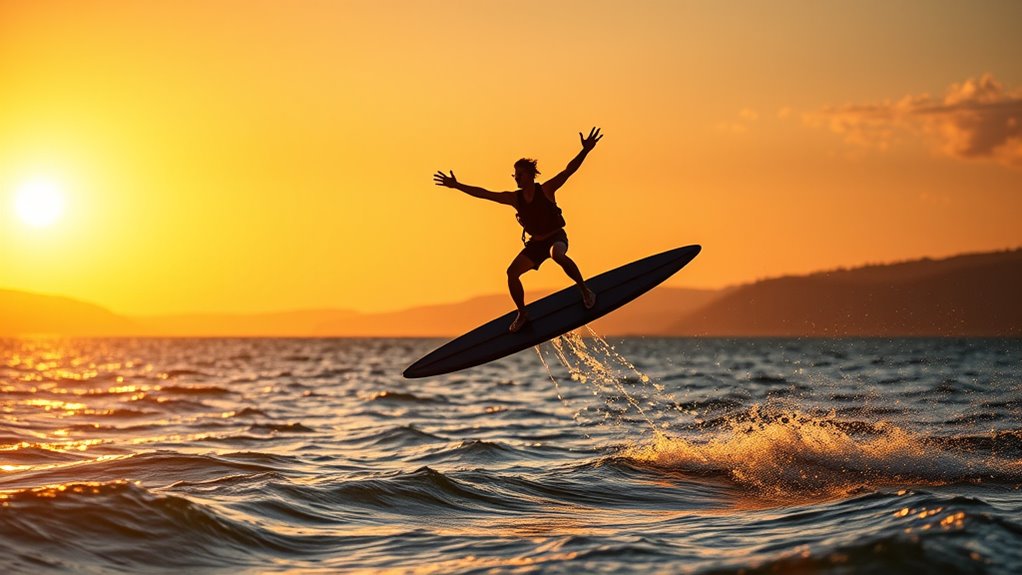
As you take your first flights on a wingfoil, you’ll discover a thrilling blend of freedom and excitement that’s hard to match. The moment you lift off the water, there’s an exhilarating rush that comes from gliding above the surface, with the wind in your face and the feeling of weightlessness beneath your feet. But before you can enjoy this sensation, you’ll need to get familiar with your wingfoil gear and the best weather conditions for your initial flights.
Getting your gear sorted is essential. You’ll want to ensure that you have the right wing size and board for your skill level and the wind conditions. For beginners, a larger wing can provide more lift and stability, making it easier to get off the water. Check that your board is the right volume to support your weight; if it’s too small, you might struggle to stay afloat. Once you’ve got your setup ready, it’s time to assess the weather conditions. Look for a day with moderate winds—ideally between 12 to 20 knots—because that range will help you find your balance without overwhelming you.
As you head out to the water, remember that the wind is your ally. Position your wing so it catches the breeze just right. You’ll feel the pull as it lifts you. Focus on maintaining a low center of gravity by bending your knees slightly. Keeping your weight balanced over the board is crucial. If you lean too far back or forward, you might lose control, so stay centered.
Once you’re up and flying, the sense of balance becomes your best friend. You’ll learn to shift your weight gently to steer and control your speed. It’s a dance of sorts, and in those early moments, you may wobble or even fall. Don’t let that discourage you; it’s all part of the learning process. Each attempt teaches you something new about how to handle your wingfoil gear and adapt to the varying weather conditions. As you progress, you might also find inspiration from emerging trends in the water sports industry that can enhance your experience.
As you practice, you’ll find that the balance between wing and board is subtle yet indispensable. Take your time, soak in the experience, and enjoy the ride. With each flight, you’ll grow more confident, and soon, the thrill of wingfoiling will feel as natural as walking. So embrace those first flights; they’re just the beginning of an incredible journey on the water.
Frequently Asked Questions
What Are the Best Conditions for Learning to Wingfoil?
The best conditions for learning to wingfoil are steady, moderate winds between 10 to 20 knots. You’ll want to choose equipment that matches your skill level, like a larger wing and board for better stability. Flat water helps you focus on balance without worrying about waves. Always check the wind conditions before heading out, and remember to practice in safe areas to build your confidence and skills effectively.
How Does Wingfoil Compare to Traditional Windsurfing?
Wingfoiling offers a unique experience compared to traditional windsurfing, with studies showing it can reduce equipment maintenance by up to 50%. You’ll find wingfoiling provides more freedom for aerial maneuvers, allowing you to soar above the water with less drag. While both sports require skill, wingfoiling’s lightweight setup and versatility make it easier to learn and enjoy. So, if you’re looking for a fresh challenge, wingfoiling might just be your next adventure!
What Safety Gear Is Recommended for Beginners?
For beginners, wearing protective gear is essential. A well-fitted helmet and impact vest can prevent injuries during falls. Don’t forget about wrist guards to protect your wrists, as they’re vulnerable during learning phases. You should also carry emergency equipment like a whistle and a signaling device to call for help if needed. It’s all about ensuring your safety while you’re out there, so gear up before hitting the water!
How Much Does a Beginner’s Wingfoil Setup Cost?
Are you ready to immerse yourself in wingfoiling? A beginner’s wingfoil setup typically costs between $1,500 and $3,000. This includes essential wingfoil equipment like the board, foil, and wing. Don’t forget about additional beginner gear, such as a safety leash and a wetsuit, which can add to your total. Investing in quality gear is vital for your comfort and safety, so consider your options carefully before making a decision.
Can I Wingfoil in Flat Water or Only in Waves?
You can definitely wingfoil in flat water! In fact, flat water is often the best environment for beginners to practice balance and control. It’s less intimidating than waves and allows you to focus on your technique. Once you’re comfortable, you can switch to wave riding, which adds excitement and challenge. So, start in flat water to build your skills, then enjoy the thrill of riding those waves when you’re ready!
Conclusion
As you undertake your wingfoiling journey, remember that over 80% of beginners find their balance within the first few sessions. With each flight, you’ll not only gain confidence but also connect with the exhilarating freedom of gliding above the water. So, embrace the learning curve and celebrate your progress—every little achievement counts. Soon enough, you’ll be soaring like a pro, feeling that rush of wind and water beneath you. Keep flying!