
When traveling with wingfoil equipment, check your airline’s baggage policies to avoid surprises. Use a quality travel bag designed for wingfoils and pack heavier items at the bottom for balance. Don’t forget to cushion fragile parts with clothes or bubble wrap. Insurance is a smart choice for peace of mind. Inspect your gear right away upon arrival and document any damage for claims. With some smart planning, you can make certain a smooth travel experience and set yourself up for fun on the water.
Key Takeaways
- Check your airline’s baggage policies for sports equipment to avoid unexpected fees and ensure compliance.
- Use a padded travel bag designed for wingfoils to protect your gear during transport.
- Pack heavier items at the bottom and incorporate cushioning materials to minimize damage risks.
- Inspect your equipment immediately upon arrival and report any damage to the airline without delay.
- Consider specialized insurance for your wingfoil to cover theft, loss, or damage while traveling.
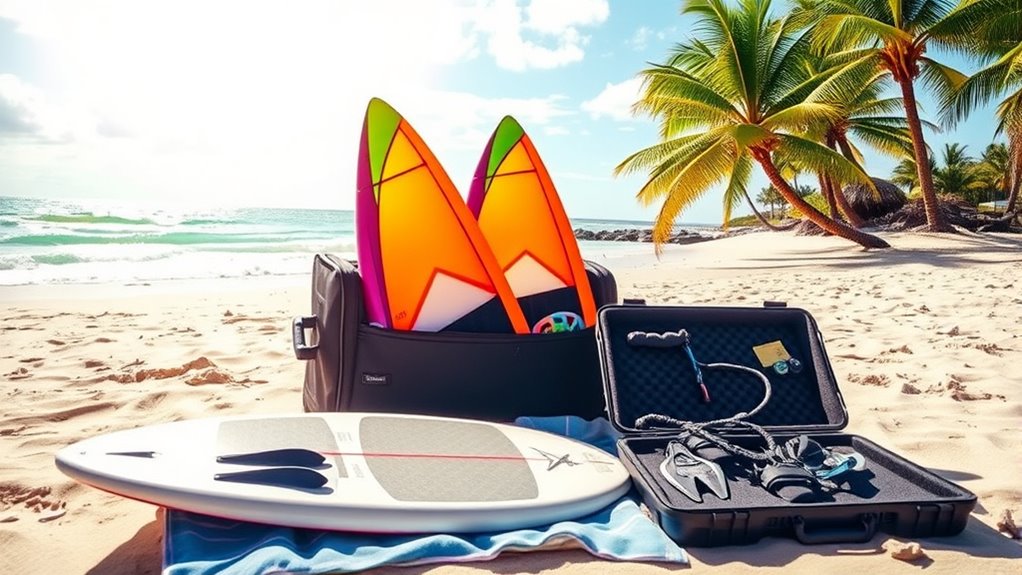
When you’re ready to hit the road with your wingfoil equipment, planning ahead can make all the difference. You want your gear to arrive in one piece, and that starts with understanding airline baggage policies. Every airline has its own rules regarding sports equipment, and knowing these can save you time and money. Some airlines might charge hefty fees for oversized or overweight bags, while others might have a more lenient approach. It’s vital to check the baggage limits on your chosen airline before you pack. This way, you can adjust your packing strategy to avoid surprises at the airport.
Once you’re clear on the baggage policies, it’s time to consider how you’ll pack your wingfoil gear. A good quality travel bag is a must. Look for bags specifically designed for wingfoils, as they provide the necessary protection. When packing, lay out all your equipment and think about the order in which you’ll need to access it. Keep heavier items at the bottom and lighter items on top to maintain balance. Don’t forget to use padding, such as clothes or bubble wrap, to cushion fragile pieces like your board and wing. This extra care can prevent damage during transit.
Consider a quality travel bag for your wingfoil gear, packing heavier items first and using padding for protection during transit.
Additionally, you should think about equipment insurance. Accidents happen, and having insurance can provide peace of mind. Before you travel, check if your existing home or renter’s insurance covers your gear. If not, look into specialized sports equipment insurance that can cover theft, loss, or damage while you’re away. Knowing that your valuable equipment is protected allows you to focus on enjoying your trip rather than worrying about what might go wrong.
Once you arrive at your destination, it’s essential to inspect your gear immediately. Look for any signs of damage and report them to your airline right away. Document everything with photos if necessary, as this can help with any insurance claims later. You’ve invested time and money into your wingfoil equipment, so taking these extra steps can guarantee you get the most out of your adventure.
Moreover, developing a relationship with your inner wisdom can guide you in making thoughtful decisions about your travel plans and gear management.
With careful planning and the right mindset, you can travel with confidence, ready to hit the water as soon as you land. So, pack smart, stay informed, and enjoy the thrill of wingfoiling wherever the wind takes you!
Frequently Asked Questions
Can I Carry My Wingfoil Equipment on a Budget Airline?
Yes, you can carry your wingfoil equipment on a budget airline, but it’s essential to check their baggage policies first. Many budget airlines have strict limits on size and weight, so be prepared to pack efficiently. Consider investing in equipment insurance to protect your gear, as damage can occur during travel. Always double-check your airline’s policies to avoid unexpected fees and guarantee a smooth journey with your gear.
What Size Bag Is Ideal for Wingfoil Equipment?
Did you know that a well-packed gear bag can save you up to 20% on airline fees? For wingfoil equipment, aim for a bag around 150 liters. This size considers your board, wings, and other essentials while ensuring it fits in most airline dimensions. Make sure to check specific weight limits too. A properly sized bag not only protects your gear but also keeps your travel hassle-free. Happy travels!
How Do I Protect My Board During Transport?
To protect your board during transport, use board padding and invest in a protective case. Make sure the padding covers all edges and surfaces to absorb shocks and prevent scratches. A well-fitted protective case adds an extra layer of security against impacts. If you can, keep the case in a stable position during travel to minimize movement. With these precautions, your board will stay safe and ready for action when you arrive at your destination.
Are There Specific Customs Regulations for Wingfoil Gear?
When you’re flying with your wingfoil gear, you’ll need to check customs regulations specific to your destination. Often, you’ll have to declare your equipment, but they usually don’t consider it prohibited items. Just make sure you list everything accurately. It’s a coincidence that many travelers overlook this step, leading to delays. So, keep your customs declarations handy, and you’ll sail through the process smoothly, enjoying your adventure without unexpected hiccups.
Can I Rent Wingfoil Equipment at My Destination?
Yes, you can rent wingfoil equipment at your destination! Many beach resorts and watersport shops offer wingfoil rental services, so you should find gear availability quite easily. Just check online or call ahead to confirm what’s in stock. Renting not only saves you the hassle of transporting your own gear, but it also lets you try different equipment. Enjoy the freedom of wingfoiling without the weight of your own gear!
Conclusion
Traveling with wingfoil gear might seem intimidating, but it’s easier than you think! By following our packing and transport tips, you can guarantee your equipment stays safe and secure. Don’t let the fear of damage hold you back from chasing those perfect waves. With the right approach, you’ll be ready to hit the water wherever you go. So, gear up and embrace the adventure—your next wingfoiling experience awaits!