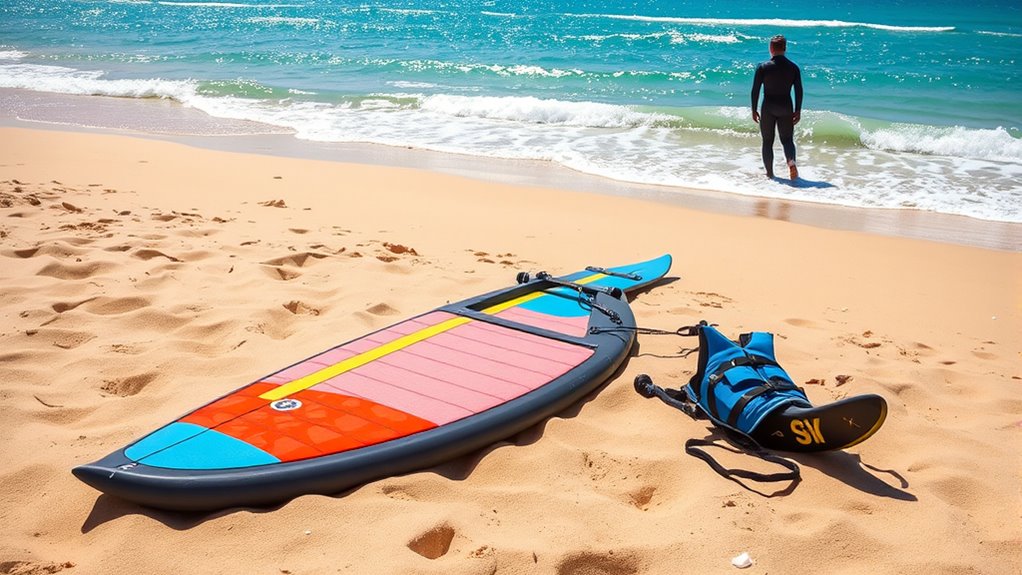

To get started with wingsurfing, you’ll need a suitable wing based on your skill level, weight, and wind conditions, along with a board. Make sure to wear safety gear like a life jacket, helmet, and wetsuit. Practice in open areas to focus on balancing and controlling the wing. Before heading out, double-check your gear for proper setup. By following these basics, you’ll enhance your experience on the water and can discover more tips for success.
Key Takeaways
- Choose the right wing size based on your skill level, weight, and wind conditions for optimal performance.
- Ensure you have essential safety gear including a life jacket, helmet, and wetsuit for protection.
- Practice in an open, obstacle-free area to focus on balance and wing control before advancing.
- Regularly check and tune your gear for security and performance to enhance your experience.
- Stay informed about local water and wind conditions to safely enjoy wingsurfing.
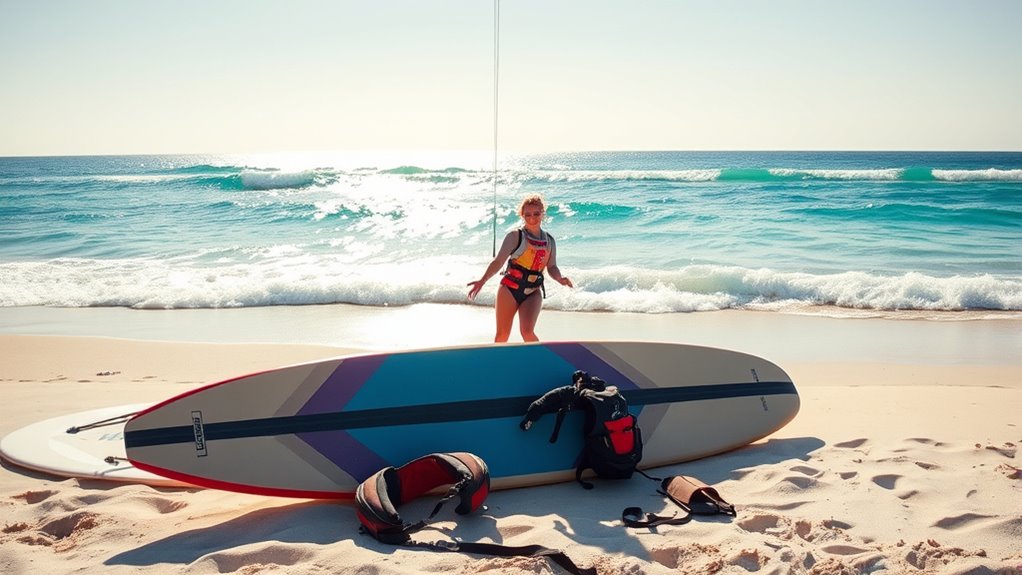
Wingsurfing Basics
Have you ever wondered how to ride the wind and waves with just a wing and a board? Wingsurfing is an exhilarating sport that combines elements of windsurfing and kitesurfing, allowing you to harness the power of the wind in a unique way. If you’re ready to get started, understanding the essentials of your wing setup and safety gear is essential.
First off, let’s talk about the wing setup. The right wing can make all the difference in your experience on the water. Typically, you’ll want to choose a wing based on your skill level, weight, and the wind conditions you’ll be facing. For beginners, a larger wing provides more lift and stability, making it easier to get up and riding. As you progress, you can experiment with smaller wings that allow for greater speed and maneuverability.
Choosing the right wing based on your skill level and wind conditions is crucial for an enjoyable wingsurfing experience.
When setting up your wing, make sure it’s properly inflated and all the lines are free of tangles. Attach it securely to your board using the designated straps. A good practice is to double-check that everything’s tight and secure before you hit the water. This preparation will help you avoid potential mishaps once you’re out there.
Now, let’s move on to safety gear. Wingsurfing can be incredibly fun, but it’s vital to prioritize your safety. Start with a life jacket or buoyancy aid, especially if you’re new to the sport or unfamiliar with the water conditions. This gear can keep you afloat should you fall. A helmet is also a smart choice, as it protects your head from any unexpected impacts.
Don’t forget other protective gear like impact vests and wetsuits. An impact vest can cushion any falls, while a wetsuit keeps you warm in cooler waters. Additionally, always check the local regulations and conditions before heading out. Wind speed and water quality can drastically affect your safety and enjoyment.
Once you’re geared up and your wing setup is ready, it’s time to hit the water. Start in a safe, open area where you can practice without obstacles. Focus on balancing your weight on the board and using the wing to catch the wind. With practice, you’ll find yourself gliding effortlessly across the waves. Proper tuning of your gear is crucial for optimal performance and safety.
Wingsurfing isn’t just about the gear; it’s about connecting with the wind and water. So gear up, stay safe, and enjoy the ride!
Frequently Asked Questions
What Is the Best Age to Start Wingsurfing?
The best age to start wingsurfing really depends on individual skill and comfort level, but many beginners find ages 12 to 15 ideal. At this stage, you’re generally more coordinated and physically capable. Keep in mind age considerations like maturity and ability to follow safety guidelines. To ease into it, focus on beginner tips like practicing on a calm day and gradually building your confidence. Just remember, it’s all about having fun while learning!
Can I Wingsurf in Any Water Conditions?
You can wingsurf in a variety of water conditions, but it’s vital to take into account wind strength. In fact, studies show that about 70% of wingsurfers prefer conditions with steady winds of 15-25 knots for an ideal experience. Choppy or rough waters can make it more challenging, especially for beginners. Always check the forecast and adjust your plans based on both the wind and water conditions to guarantee a safe and enjoyable session.
How Do I Choose the Right Wingsurfing Location?
To select the right wingsurfing location, you’ll want to take into account local wind conditions and water accessibility. Look for spots where the wind consistently blows at your skill level and check forecasts to guarantee ideal conditions. Make sure the water’s easy to access, with minimal obstacles and safe entry points. Popular beaches or lakes with designated areas for wingsurfing can be great choices, as they often offer better safety and community support.
What Safety Gear Do I Need for Wingsurfing?
For wingsurfing, you’ll need essential safety gear to keep you protected. Start with a life jacket, as it’ll help you stay buoyant in the water. A helmet is also vital; it shields your head from potential impacts while you’re learning to navigate. Don’t forget to wear a wetsuit for warmth and protection against abrasions. With the right gear, you’ll feel more confident and secure while enjoying the thrill of wingsurfing.
How Long Does It Take to Learn Wingsurfing?
Learning wingsurfing can feel like catching the wind in your sails. Typically, you’ll find that training duration varies, but many people start feeling comfortable after a few sessions. Skill progression depends on your prior experience, balance, and dedication. With regular practice, you might be gliding across the water in just a couple of weeks! Remember, the more time you invest, the quicker you’ll be soaring like a bird in the sky.
Conclusion
As you glide across the shimmering water, the wind fills your wing, lifting you into a dance with the waves. The thrill of wingsurfing is just a heartbeat away, inviting you to embrace the adventure. With the right gear and a sprinkle of determination, you’ll carve your own path under the sun. So, grab your wing, feel the breeze on your face, and let the ocean become your playground. Your wings await—let’s soar!