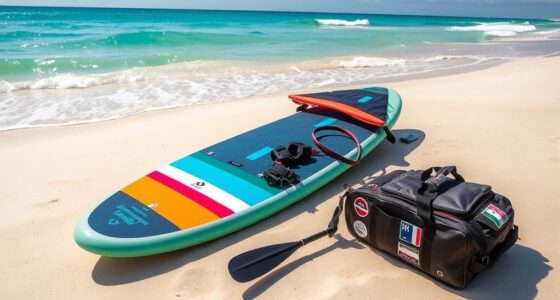

When comparing wingsurfing to windsurfing and kiteboarding, you’ll find wingsurfing offers the best of both worlds. It features a lightweight wing for easy handling and enhances your experience with intuitive, accessible learning. Unlike windsurfing’s complexity and kiteboarding’s intricate setup, wingsurfing gear is simpler and portable. Foiling allows you to glide effortlessly, making it exciting in lighter winds. Each sport has its thrills, but wingsurfing stands out for its unique blend. There’s much more to explore about these water sports!
Key Takeaways
- Wingsurfing combines elements of windsurfing and kiteboarding, offering enhanced versatility and ease of learning for all skill levels.
- Foiling in wingsurfing allows riders to glide effortlessly over water, providing a unique experience that traditional windsurfing cannot match.
- Wingsurfing gear is simpler and requires less maintenance compared to the intricate setups of windsurfing and kiteboarding.
- The portability of wingsurfing equipment makes it ideal for travel, allowing for easy experimentation with different wing sizes and board types.
- Wingsurfing delivers an exhilarating sensation of flying over water while promoting continuous progression in skills.
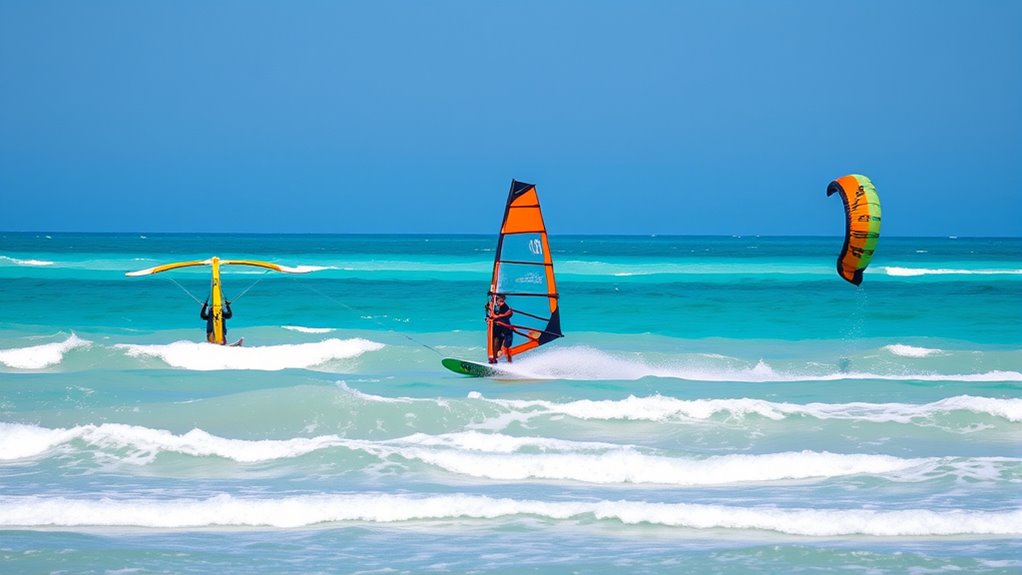
As you explore the world of wind-powered sports, you might wonder how wingsurfing stacks up against windsurfing and kiteboarding. Each sport has its unique characteristics and appeals, but wingsurfing has gained significant traction in recent years due to its versatility and ease of learning. While windsurfing relies on a board and a sail, and kiteboarding employs a board and a large kite, wingsurfing combines elements of both, using a handheld wing for propulsion. This innovative approach allows for a more intuitive experience, making it accessible for beginners and seasoned riders alike.
One of the most exciting aspects of wingsurfing is the potential for foil progression. When you shift from traditional boards to foils, you open up a whole new world of performance and excitement. The sensation of flying above the water is exhilarating, and you’ll find yourself gliding effortlessly over the waves, similar to kiteboarding but with a more manageable setup. Foiling in wingsurfing allows you to ride in lighter winds, enabling you to maximize your time on the water. This is a significant advantage over windsurfing, where you’re often restricted to stronger winds and more challenging conditions.
Gear maintenance is vital in any wind-powered sport, but it can be particularly straightforward in wingsurfing. With fewer components compared to windsurfing and kiteboarding, you’ll find that maintaining your wing and board is relatively simple. Regular inspection for wear and tear, especially around the seams and leading edges, is essential to guarantee your gear remains in top condition. Unlike kiteboarding, which involves intricate lines and a larger kite, wingsurfing gear is often less complex, which can save you time and money in the long run.
You might also appreciate the portability of wingsurfing gear. Unlike windsurfing rigs that can be cumbersome to transport, wingsurfing wings are lightweight and easy to pack. This feature makes it an appealing choice for traveling enthusiasts. As you progress in your skills, you’ll likely enjoy experimenting with different wing sizes and board types, allowing you to tailor your experience to your preferences. Additionally, many riders find that the under-deck storage solutions for wingsurfing gear help keep their equipment organized and protected during transport.
Ultimately, wingsurfing, windsurfing, and kiteboarding each offer their distinct thrills. However, wingsurfing stands out for its accessibility, ease of maintenance, and the sheer joy of foiling. Whichever sport you choose, you’re in for an adventure that’s sure to leave you craving more time on the water.
Frequently Asked Questions
What Gear Do I Need to Start Wingsurfing?
To start wingsurfing, you’ll need a wingsurf wing, a board, and a mast. Choose a wing size that matches your skill level and wind conditions. You should also invest in a harness for better control and comfort. Safety gear, including a life jacket and a helmet, is essential to protect yourself while riding. Don’t forget a wetsuit if you’re in cooler waters; it’ll keep you warm and safe during your sessions.
Is Wingsurfing Suitable for Beginners?
Yes, wingsurfing is suitable for beginners! Its beginner friendliness makes it an excellent choice for those new to water sports. You’ll find that the learning curve is manageable, allowing for quick skill progression. With the right gear and some practice, you can easily pick up the basics. Plus, the ability to control the wing and board separately helps build confidence as you advance your skills on the water. Enjoy the ride!
How Does the Learning Curve Compare Among the Three Sports?
The learning curve in these sports is like a winding road, each twist offering unique challenges. Wingsurfing might feel more intuitive for beginners, allowing quicker skill development and fun on the water. Windsurfing demands more balance and technique, while kiteboarding requires mastering control of the kite first. Safety considerations are essential in all three, but you’ll find that wingsurfing often provides a gentler introduction to the wind-driven world. Enjoy the ride!
What Are the Best Conditions for Wingsurfing?
The best conditions for wingsurfing are typically steady winds between 10 to 25 knots and water temperatures that feel comfortable for you. Ideally, you’ll want a warm day with minimal chop on the water, as this makes it easier to maintain balance and control. Clear skies help too, as they often indicate stable wind patterns. When you find these conditions, you’re in for an exhilarating wingsurfing experience!
Can I Use the Same Board for All Three Sports?
You can’t really use the same board for all three sports. While board versatility is tempting, each sport has unique requirements. Wingsurfing, windsurfing, and kiteboarding demand different shapes and sizes to perform ideally. If you’re looking for gear compatibility, you might find a multi-use board, but it’ll likely compromise your performance in one of the disciplines. It’s best to invest in specific boards tailored to each sport for the best experience on the water.
Conclusion
In the end, whether you’re gliding like a bird with wingsurfing, carving through waves with windsurfing, or dancing with the wind on a kiteboard, each sport offers its own thrill. You’ll find freedom on the water, letting the breeze carry your worries away. So grab your gear, embrace the elements, and let the waves be your playground. After all, life’s too short not to chase the wind in whichever way makes your heart soar!