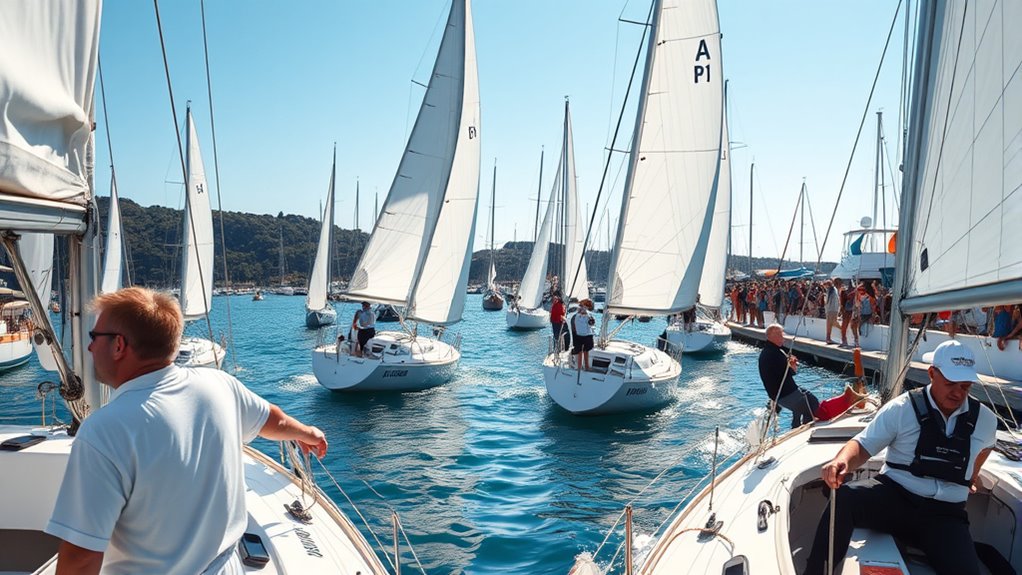

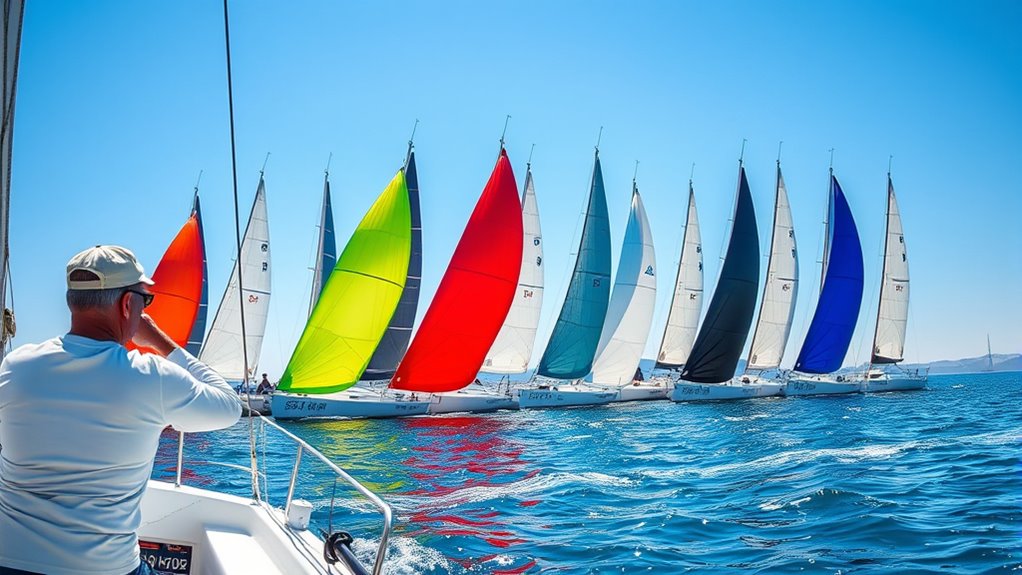
In race sailing, mastering starting strategies and rules is vital for success. Arrive early to secure a prime position on the starting line and be aware of wind direction to choose the best spot. Know the rules of right of way and penalties to avoid disqualification. Practice boat handling maneuvers to maintain speed and communication among the crew. Staying informed on race regulations guarantees your compliance and competitive edge. There’s much more to explore about this exciting sport!
Key Takeaways
- Arrive early at the starting line to secure a favorable position based on wind assessments.
- Monitor wind direction and strength to determine optimal sailing strategies at the start.
- Execute precise maneuvers like tacking and gybing to maintain speed and control during the race.
- Communicate clearly with your crew to synchronize actions and optimize performance.
- Familiarize yourself with racing rules to avoid penalties and understand right of way situations.
Have you ever wondered what it takes to compete in a sailing race? The excitement, the wind in your hair, and the thrill of maneuvering your boat against others can be exhilarating. But before you hit the starting line, you need to grasp some key race sailing basics, especially when it comes to starting strategies and rules. Mastering these elements can make all the difference in your performance.
To begin, let’s talk about wind tactics. Understanding how to read the wind is essential. You’ll need to assess the wind’s direction and strength, as well as how it shifts around the course. This knowledge helps you choose the best spot to start. If you’re on the correct side of the starting line when the horn blows, you’ll gain an advantage right from the beginning. Always keep an eye on the wind patterns and adjust your strategy accordingly. Are you sailing upwind, downwind, or on a reach? Each situation demands a specific approach, and knowing how to adapt your tactics will set you apart from the competition. Additionally, coastal zones are affected by wave action which can impact sailing conditions.
Understanding wind tactics is crucial for sailing success; assess its direction and strength to gain a competitive edge at the start.
Next up is boat handling. You’ve got to be precise with your maneuvers. As the countdown to the start begins, practice your timing. You don’t want to be early and risk being disqualified. Instead, focus on getting your boat into the right position as the horn approaches. Good boat handling includes knowing when to accelerate and when to slow down. Tacking and gybing should feel second nature. You’ll want to minimize any mistakes during these critical moments.
Another essential aspect is your crew communication. If you’re not sailing solo, you and your crew need to be in sync. Clear commands will help you execute maneuvers efficiently, whether it’s adjusting sails or steering the boat. Miscommunication can lead to costly errors, especially as the other boats are vying for the best positions.
Finally, familiarize yourself with the rules of racing. Know the penalties for fouling another boat and understand the right of way. The Racing Rules of Sailing can seem intimidating, but knowing them inside and out will protect you from unexpected disqualifications.
In essence, competing in a sailing race is about mastering wind tactics and boat handling. With practice and dedication, you’ll soon find yourself navigating the waters with confidence, ready to take on the competition and enjoy the thrill of the race.

Acdet 45 LBS Electric Boat Anchor Winch, Saltwater Electric Anchor Winch w/Wireless Remote Control & 98.42ft of Pre-Wound Anchor Rope 12V Marine Windlass Anchor Winch,Black
【High Quality】This electric anchor winch is is made of engineering-plastics with injection molding technology and adopts a pure...
As an affiliate, we earn on qualifying purchases.
Frequently Asked Questions
What Equipment Do I Need for Race Sailing?
For race sailing, you’ll need essential equipment like a well-maintained sailboat, safety gear, and navigation tools. Don’t forget your life jacket, harness, and first-aid kit to guarantee safety while racing. A compass and GPS will help you navigate the course effectively. Make sure to have a VHF radio for communication and tools for sail adjustments. With the right gear, you can focus on racing and enjoy the thrill of competition!
How Do I Choose the Right Sailboat for Racing?
Choosing the right sailboat for racing is like picking the finest blade for a knight; it must suit your skill and purpose. Consider sailboat types like dinghies for agility or keelboats for stability. Each racing classification demands different strengths, so assess your goals and experience. Test a few vessels, feel their response, and trust your instincts. The right sailboat will become an extension of you, guiding you to victory on the water.
What Are Common Mistakes Beginners Make in Race Sailing?
Common mistakes beginners make in race sailing include neglecting sailing etiquette and poor boat handling techniques. You might forget to keep clear of other boats or misjudge wind shifts, disrupting your race. Failing to practice proper sail trim can lead to slow speeds. Additionally, not understanding the importance of starting line positioning can cost you valuable time. Focus on mastering these aspects, and you’ll see significant improvements in your racing performance.
How Do Weather Conditions Affect Race Sailing Strategies?
Weather conditions considerably impact your race sailing strategies. You’ll want to pay close attention to wind patterns, as shifts can dictate your course and sail settings. Additionally, tide influence can change the water’s flow, affecting your speed and maneuvering options. Adapting to these elements, you can optimize your tactics and gain an advantage over competitors. Always stay alert to forecast changes to make informed decisions during your race.
Where Can I Find Local Sailing Clubs or Races?
You can find local sailing clubs and races by checking online resources like the American Sailing Association’s website or local community centers. They often list sailing club locations and local race calendars. Don’t forget to visit social media groups dedicated to sailing in your area; they’re treasure troves of information. You might even stumble upon an unexpected event or meet fellow enthusiasts ready to share their passion for sailing!

Cygrd Electric Anchor Winch, 25 LBS Marine Windlass, 12V with Remote Control, 100ft Rope, Easy to Operate, Black
POWERFUL MOTOR: 12V electric gear motor provides smooth, efficient operation with rugged all-steel gears for enhanced durability and...
As an affiliate, we earn on qualifying purchases.
Conclusion
As you glide across the shimmering water, the wind fills your sails and the thrill of the race ignites your spirit. Remember, mastering starting strategies and rules isn’t just about winning; it’s about that exhilarating moment when you catch the breeze and leave the shoreline behind. Embrace the challenge, feel the salty spray on your face, and let the rhythm of the waves guide you. Your journey in race sailing is just beginning—set your course and sail forth!

Electric Anchor Winch, 35 lbs Heavy Duty Boat Electric Anchor Winch 12V Free Fall Saltwater Marine Boat Electric Anchor Winch w/Wireless Remote Control for Fishing Boats & Motorboats (Black)
【Build to Last】Boat electric anchor winch is made of ABS, 45 steel, PP and 316 stainless steel with...
As an affiliate, we earn on qualifying purchases.

Electric Anchor Winch, 45 lbs Heavy Duty Boat Electric Anchor Winch 12V Free Fall Saltwater Marine Boat Electric Anchor Winch w/Wireless Remote Control for Fishing Boats & Motorboats (Black)
【Build to Last】Boat electric anchor winch is made of high-quality plastic and iron with a painted surface for...
As an affiliate, we earn on qualifying purchases.