
When operating a hovercraft on water and land, prioritize safety by following emergency procedures and performing pre-trip checks. Guarantee life jackets and a first-aid kit are accessible, and keep communication devices ready. Stay aware of your surroundings, avoiding obstacles and other vessels. Regular maintenance checks help detect issues early. Adjust your operation based on weather changes and stay vigilant. There’s a lot more to learn about ensuring safe hovercraft operation in various conditions.
Key Takeaways
- Always conduct pre-trip checks to ensure the hovercraft is mechanically sound and all safety gear is functional before operating on water or land.
- Maintain situational awareness by observing surroundings for obstacles, wildlife, and other vessels to prevent accidents during operation.
- Keep communication devices charged and familiarize yourself with emergency contact information for local services in case of an emergency.
- Follow safety protocols by ensuring life jackets are accessible and worn by all passengers while operating on water.
- Adapt to changing environmental conditions promptly, adjusting speed and maneuverability as needed to maintain safety on varying terrains.
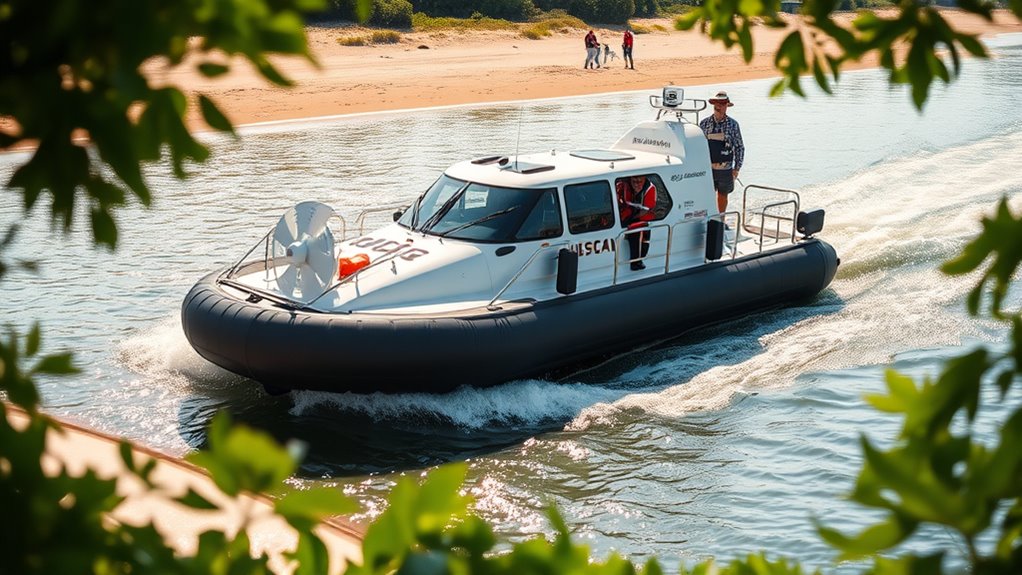
When you’re gliding over water or land in a hovercraft, safety should be your top priority. Knowing the right emergency procedures can make all the difference in a crisis. Before you even think about taking off, familiarize yourself with these protocols. It’s essential to have a clear plan for what to do in case of an unexpected situation, whether it’s a mechanical failure or an environmental hazard. Make sure you’ve got a first-aid kit onboard, and that you know how to use it. Keep a life jacket readily accessible for everyone onboard, and ensure everyone knows how to properly wear it.
Safety is paramount when operating a hovercraft; familiarize yourself with emergency procedures and ensure proper safety gear is accessible.
Before every trip, you should conduct thorough checks following your maintenance protocols. This means regularly inspecting the hovercraft’s engine, fans, and skirts to ensure everything’s functioning well. Look for any signs of wear and tear, and don’t ignore any strange noises or vibrations during operation. If something seems off, don’t hesitate to address it before heading out. Remember, a well-maintained hovercraft is key to a safe ride.
During operation, always be aware of your surroundings. Keep an eye out for other vessels, wildlife, or obstacles in your path. Hovercrafts can maneuver over different terrains, but that doesn’t mean you should become complacent. Maintain a safe distance from other watercraft and be cautious in crowded areas. If you encounter a sudden change in weather, like high winds or storms, know how to execute your emergency procedures quickly.
It’s also a good idea to keep your communication devices charged and within reach. If you find yourself in trouble, being able to call for help can save lives. Before you set out, check that your radio is operational and that you know how to use it. Familiarize yourself with local emergency services and their contact information, so you can reach them if necessary. Additionally, ensure that you understand the importance of conducting thorough checks on your hovercraft to prevent accidents and ensure safety during operation.
Frequently Asked Questions
What Is the Maximum Weight Capacity of a Hovercraft?
The maximum weight capacity of a hovercraft varies by model, but most hovercraft have weight limits ranging from 1,000 to 10,000 pounds. When considering your options, pay attention to the load capacity specified by the manufacturer. It’s essential to stay within these limits to guarantee peak performance and safety. Always check the specifications before operating, so you can enjoy a smooth ride without risking damage or accidents.
Can Hovercraft Operate in Extreme Weather Conditions?
Absolutely, hovercraft can operate in extreme weather conditions, like a superhero defying the odds. Their weather resilience allows them to glide over rough waters and uneven terrain, making them ideal for challenging environments. You should always prioritize emergency preparedness when steering through harsh conditions, ensuring your hovercraft’s equipment is up to par. By doing so, you’ll enhance your safety and increase your hovercraft’s performance, no matter what Mother Nature throws your way.
How Often Should Hovercraft Maintenance Be Performed?
You should perform hovercraft maintenance regularly, ideally every 100 hours of operation or at least once a year. This guarantees your hovercraft design remains efficient and safe. Create a maintenance checklist that includes inspecting the skirt, engine, and fuel system. Don’t forget to check the electrical systems and perform routine cleaning. By staying on top of maintenance, you’ll prolong the life of your hovercraft and enhance its performance on any surface.
Are Hovercraft Suitable for Commercial Use?
Yes, hovercraft can be suitable for commercial use, but you need to contemplate navigation challenges and safety regulations. They excel in areas where traditional vehicles struggle, like marshes or ice-covered waters. However, you’ll need to guarantee compliance with local safety regulations to operate them legally and safely. Regular training for operators is vital to handle potential navigation challenges effectively while maximizing their commercial benefits. Always prioritize safety in your operations.
What Types of Hovercraft Are Available for Recreational Use?
You’ll find a variety of hovercraft designed for recreational use, from small personal models to larger, family-sized options. Isn’t it ironic that something meant for fun requires a focus on safety? These hovercraft come with features like comfortable seating and easy maneuverability, all while ensuring recreational safety. Whether you’re gliding over water or cruising on land, the right hovercraft design can make your adventures unforgettable—just remember, safety should always come first!
Conclusion
In the world of hovercraft, safety isn’t just a guideline; it’s your lifeline. As you glide effortlessly over water and land, remember that vigilance is your compass. With every turn of the throttle, you dance with the elements, so keep your wits about you. By respecting the craft and the environment, you’ll not only protect yourself but also guarantee that this thrilling ride continues for generations to come. Stay safe, and let adventure be your guide!