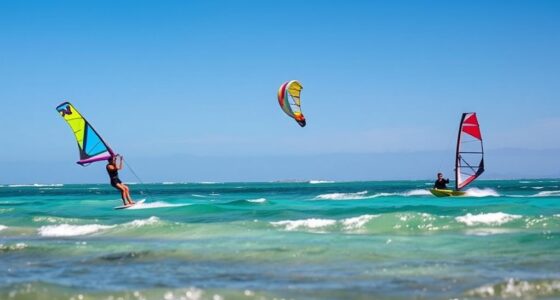
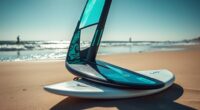
When choosing wingfoil equipment, focus on lightweight and durable materials. For boards, EPS foam with fiberglass is beginner-friendly, while carbon fiber offers advanced performance. Beginners should opt for aluminum foils for affordability, while carbon foils provide better agility as you progress. Larger wings assist with lift and control for new riders, while smaller ones enhance speed for advanced users. Selecting the right gear can markedly impact your experience and skills on the water. Discover more tips to enhance your choices!

Get sports gear delivered free with Prime
- Fast, free delivery on millions of items
- Prime Video, Amazon Music and more included
- Member-only deals all year
Key Takeaways
- Select boards made from lightweight materials like EPS foam with fiberglass or carbon fiber for optimal performance and ease of use.
- Consider aluminum foils for budget-friendly durability, while carbon foils provide superior performance for advanced riders.
- Choose larger wings for easier lift and control, which are beneficial for beginners learning to balance and maneuver.
- Start with mid-range equipment to assess commitment, allowing for skill development before investing in high-end gear.
- Ensure compatibility between board, foil, and wing materials to enhance performance and overall water experience.
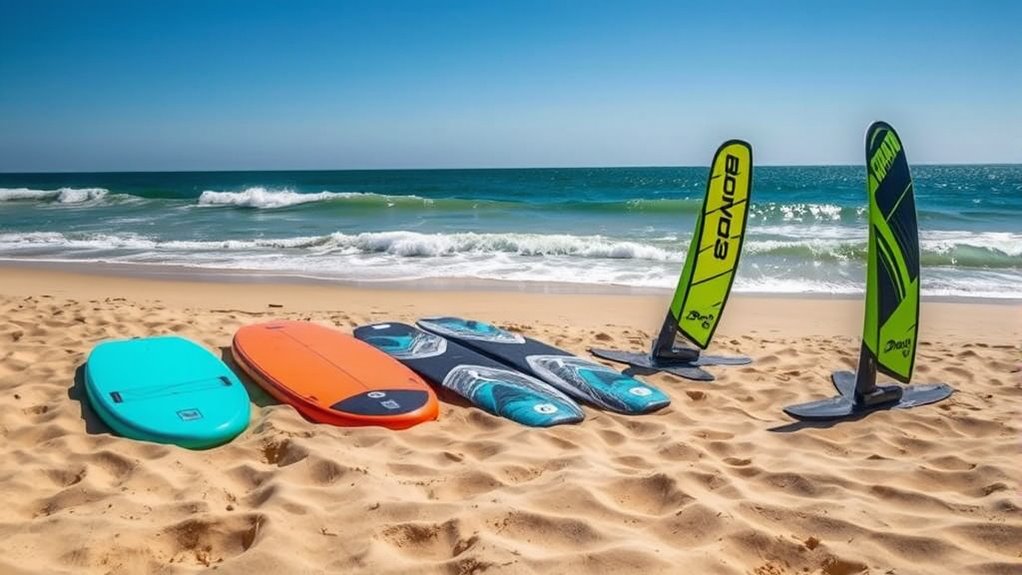
When you’re ready to plunge into wingfoiling, choosing the right equipment can seem overwhelming. With so many options available, it’s vital to focus on what’ll suit your needs best. You’ll want to consider material selection, budget considerations, and how each piece of gear works together to enhance your experience on the water.
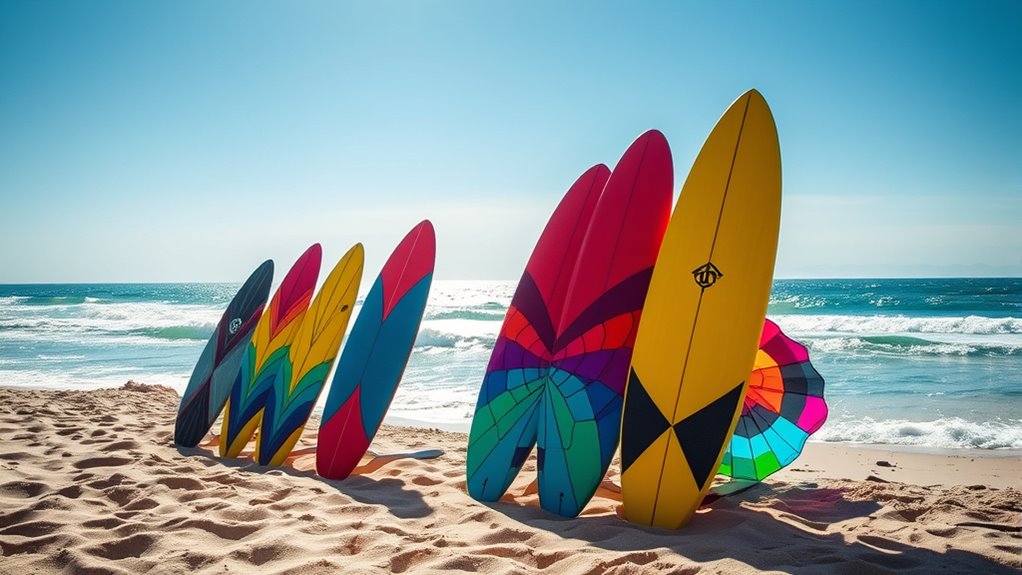
First off, think about the materials used in the boards, foils, and wings. Each material has its pros and cons. For instance, boards made from EPS foam with fiberglass or carbon fiber are lightweight and offer excellent performance. If you’re just starting, you might not need the latest carbon models, which can be pricey. Instead, a durable construction with a good balance of weight and strength might be more suitable for your level. As you progress, you can always upgrade for better performance.
Consider the materials of your gear; durable options provide a balance of weight and strength, ideal for beginners.
Next, let’s talk about foils. The choice of foil can greatly affect your experience. Aluminum foils are generally more affordable and can withstand the wear and tear of learning. If you’re on a tighter budget, an aluminum option is a solid choice. As you gain experience and want to enhance your skills, consider investing in a carbon foil. They’re lighter and provide better performance, but they come at a higher price point. So, it’s wise to evaluate how much you’re willing to spend now versus later.
Wings are another essential part of your setup. Material selection is key here as well; wings made from durable fabrics resist wear and tear, especially if you’re learning in rougher conditions. Look for wings with a good balance of size and power. Larger wings provide more lift and are easier to control for beginners, but they can be cumbersome. As you get more comfortable, you might find you prefer a smaller wing that offers greater speed and maneuverability.
Finally, budget considerations can’t be overlooked. Set a budget that reflects your commitment to the sport. If you’re unsure about how often you’ll wingfoil, it may be better to start with mid-range equipment. Once you’re confident in your skills and dedicated to the sport, you can invest in higher-end gear. Remember, the right equipment can make a big difference in your enjoyment and progression in wingfoiling, so take the time to choose wisely. Additionally, understanding the risks associated with gold investments can help you make informed financial decisions when considering gear purchases.
wingfoil board lightweight fiberglass
As an affiliate, we earn on qualifying purchases.
As an affiliate, we earn on qualifying purchases.
Frequently Asked Questions
What Size Wing Is Best for Beginners?
For beginners, a wing size between 4 to 6 meters is usually best. When considering wing size, think about your weight, wind conditions, and skill level. A larger wing offers more lift, making it easier to get up on the foil and stable in light winds. Look for beginner wing features like a larger surface area and a stable design to help you learn and progress confidently. You’ll appreciate the extra support as you start!
How Do I Maintain My Wingfoil Equipment?
To keep your wingfoil equipment in top shape, think of it like a beloved pet that needs care. Regular cleaning is essential—rinse off saltwater and sand after each use. Store your gear in a cool, dry place, avoiding direct sunlight to prevent damage. Check for any signs of wear and tear during maintenance, and replace parts as needed. Treat your equipment well, and it’ll reward you with countless enjoyable sessions on the water!
Can I Use Kiteboarding Gear for Wingfoiling?
Yes, you can use kiteboarding gear for wingfoiling, but with some considerations. Kiteboarding compatibility can vary, so check your gear’s specifications. While wings offer versatility in different conditions, the performance might not match dedicated wingfoil equipment. Your kiteboard can work, but a shorter board typically enhances maneuverability. Ultimately, experimenting with your kite gear can be a fun way to explore wingfoiling, but investing in specific equipment is often worthwhile for ideal performance.
What Safety Gear Do I Need for Wingfoiling?
When you hit the water, safety’s your best friend! For wingfoiling, you need a reliable helmet for head protection, just like a knight wears armor in battle. A leash is equally important; it keeps your wing close, preventing it from drifting away like a wayward ship. Don’t forget a buoyancy aid or impact vest for extra protection. With the right gear, you’ll ride the waves with confidence and peace of mind.
How Do Weather Conditions Affect Wingfoiling Performance?
Weather conditions critically impact your wingfoiling performance. Wind speed is vital; too little won’t get you off the water, while too much can make controlling your foil difficult. You’ll find that ideal wind speeds enhance your ride, allowing for more speed and maneuverability. Additionally, water temperature affects your comfort and gear choice. Colder water may require thicker wetsuits, while warmer conditions let you enjoy your session without heavy gear.
Conclusion
In conclusion, selecting the right wingfoil equipment is essential for an enjoyable experience on the water. With the right board, foil, and wing, you’ll open your full potential and have a blast gliding over waves. So, why settle for anything less than the perfect setup that matches your style and skill level? By investing time in your choices, you’ll guarantee every session is exhilarating and fulfilling. Get ready to soar and make unforgettable memories!
Halloween Picks
halloween
As an affiliate, we earn on qualifying purchases.