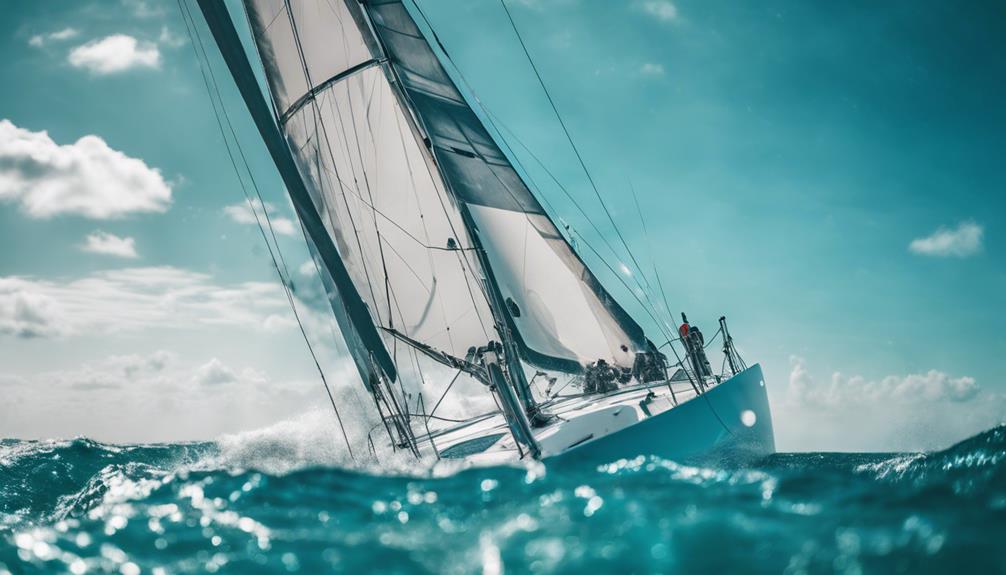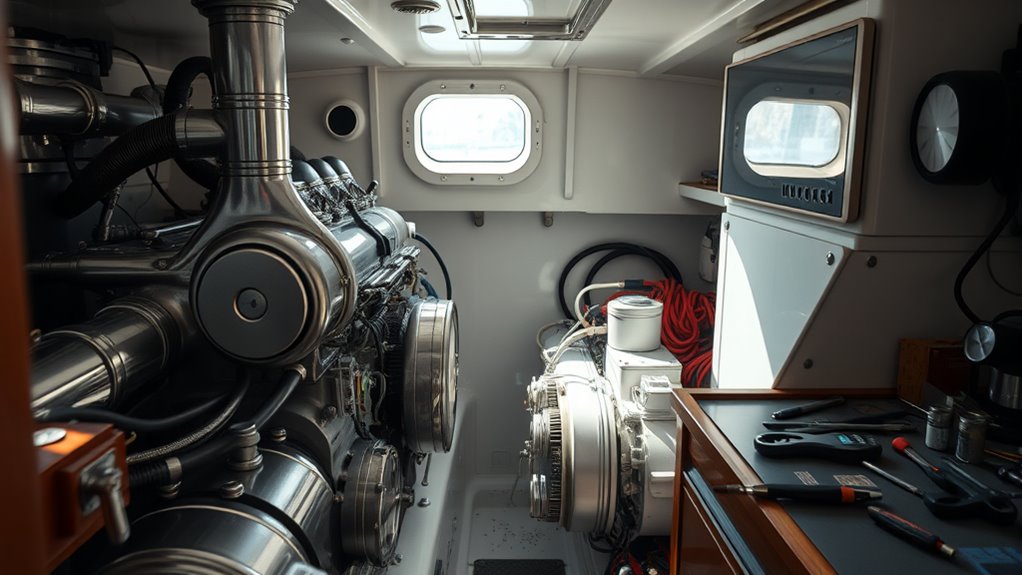

Maintaining your sailboat engine—whether diesel or electric—is vital for safe sailing. Diesel engines require regular checks on oil, fuel filters, and coolant to avoid serious issues. Meanwhile, electric engines offer a sustainable choice, but they need careful monitoring of battery health. Establishing a maintenance schedule and conducting routine inspections can help detect problems early, enhancing performance and longevity. Curious about specific maintenance tips for each engine type? There’s so much more to explore.

Get sports gear delivered free — and shop member deals
- Fast, free delivery on millions of items
- Access to Prime Big Deal Days deals on October 6–7
- Prime Video, Amazon Music and more included
Key Takeaways
- Regular maintenance checks are crucial for both diesel and electric engines to prevent breakdowns and ensure reliability on the water.
- Diesel engines require inspections for oil, fuel filters, and coolant to maintain efficiency and durability over time.
- Electric engines depend on battery health; monitoring battery levels and ensuring charging systems function properly is essential.
- Keeping a maintenance log helps track completed tasks and identify small issues before they escalate into costly repairs.
- Consult qualified technicians for complex maintenance tasks to ensure proper care and enhance the overall performance of your sailboat engine.
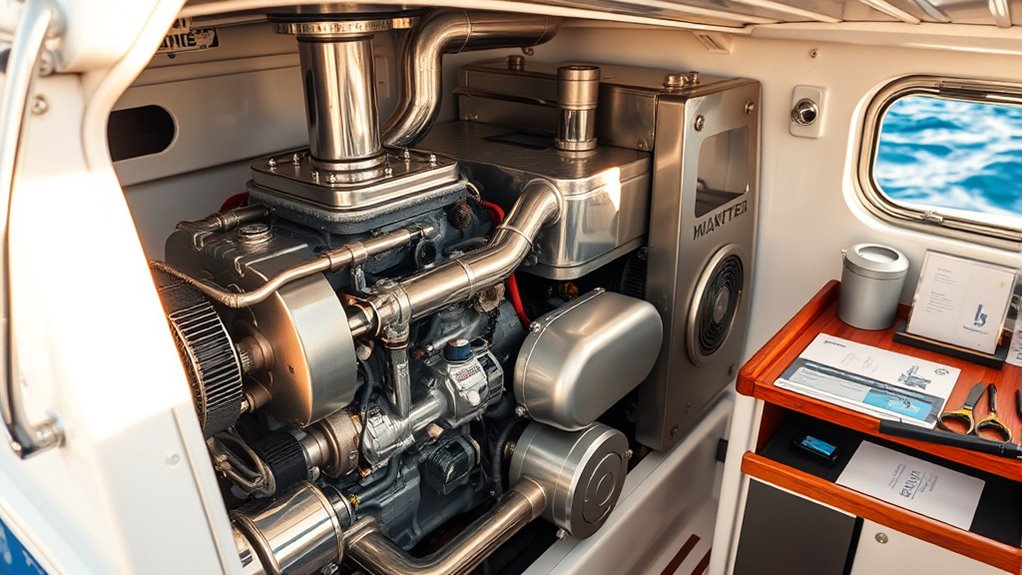
When you’re out on the water, how important is your sailboat engine? It’s crucial for your safety and enjoyment. Whether you’re steering through a calm bay or battling choppy waves, a reliable engine ensures you can maneuver with confidence. Sailboat engines, whether diesel or electric, provide the marine propulsion you need when the wind isn’t in your favor. Understanding the basics of engine maintenance can make all the difference in your sailing experience.
Your sailboat engine is vital for safety and enjoyment, ensuring confidence on the water when the wind is calm or choppy.
First off, let’s talk about diesel engines. They’ve been the traditional choice for many sailors due to their durability and efficiency. However, they require consistent maintenance. You need to check the oil regularly, as well as the fuel filters and coolant levels. Neglecting these elements can lead to serious problems. It’s a good idea to develop a routine that includes inspecting the engine before each trip. Make sure everything’s clean and functioning correctly; this can prevent breakdowns that could leave you stranded at sea.
Now, if you’re considering electric engines, you’re opting for a cleaner, quieter alternative. They’re becoming increasingly popular among sailors looking for sustainable options. However, just like diesel engines, they also need attention. Battery levels should be monitored closely, and you should ensure that the charging system is working efficiently. Electric engines can offer great marine propulsion, but their reliance on battery performance means you should be proactive about maintaining them.
Consider investing in a reliable maintenance schedule. Regular check-ups can help you catch small issues before they escalate into major repairs. Whether you choose a diesel or electric engine, staying on top of engine maintenance will prolong its life and enhance your sailing adventures. You might want to keep a log of your maintenance tasks; this way, you’ll have a clear record of what’s been done and what needs attention. Additionally, regular vacuuming can help maintain the cleanliness of your engine’s surroundings, preventing dirt accumulation that can affect performance.
Additionally, don’t hesitate to consult with professionals if you’re unsure about any maintenance tasks. A qualified technician can provide insights that can save you time and money down the road.
Ultimately, a well-maintained engine is your best friend on the water. It not only guarantees your safety but also enhances your overall sailing experience. So, take the time to prioritize engine maintenance, and enjoy every moment on your sailboat.
As an affiliate, we earn on qualifying purchases.
Frequently Asked Questions
How Do I Choose Between Diesel and Electric Sailboat Engines?
When choosing between diesel and electric sailboat engines, consider your sailing habits and the importance of battery technology. If you sail long distances, diesel might be more reliable. However, if you prefer eco-friendliness and quieter operation, an electric engine could suit you better. You might also think about engine conversion if you want to switch later. Evaluate your budget, maintenance preferences, and the availability of charging options to make the best choice.
What Are the Average Costs of Diesel vs. Electric Engine Maintenance?
When you look at the cost comparison of diesel versus electric engine maintenance, diesel engines typically incur higher costs due to more frequent maintenance needs. You’ll find that they require regular oil changes, fuel filter replacements, and more extensive inspections. On the other hand, electric engines generally have lower maintenance frequency and costs, primarily needing occasional battery checks and cooling system maintenance. Overall, electric options can save you money in the long run.
How Can I Improve Fuel Efficiency in Diesel Engines?
You can improve fuel efficiency in diesel engines by using fuel additives that enhance combustion and reduce carbon buildup. Regular engine tuning is vital too; it guarantees peak performance by adjusting the fuel-air mixture and timing. Keep your engine well-maintained, change filters regularly, and check for leaks. Additionally, monitoring your sailing habits, like reducing speed and weight, can also help maximize fuel efficiency while you’re out on the water.
What Are the Environmental Impacts of Diesel vs. Electric Engines?
Diesel engines can markedly harm the environment through emissions, while electric engines promote emission reduction. If you switch to electric, you can utilize renewable energy sources, minimizing your carbon footprint. Some might think diesel’s efficiency outweighs its negatives, but the long-term benefits of cleaner energy are undeniable. By choosing electric, you’re not just sailing; you’re sailing towards a greener future, ensuring cleaner oceans and air for generations to come.
How Long Do Diesel and Electric Sailboat Engines Typically Last?
Diesel engines typically last around 5,000 to 10,000 hours with proper maintenance, while electric engines can last even longer, often exceeding 15,000 hours. Your maintenance frequency plays a vital role in determining engine lifespan; regular check-ups and upkeep can substantially extend the life of both types. Staying on top of maintenance guarantees you get the most out of your engine and enjoy smooth sailing for years to come.
Conclusion
In the world of sailboat engines, whether you choose diesel or electric, maintaining your engine is key to smooth sailing. Think of your engine as the heartbeat of your vessel; it needs care and attention to keep the rhythm of your adventures alive. By staying proactive with maintenance, you guarantee that you’re always prepared to catch the wind and embrace the open water. So, keep your engine humming, and let your sailing dreams take flight!
NFL season / tailgating Picks
team gear
As an affiliate, we earn on qualifying purchases.