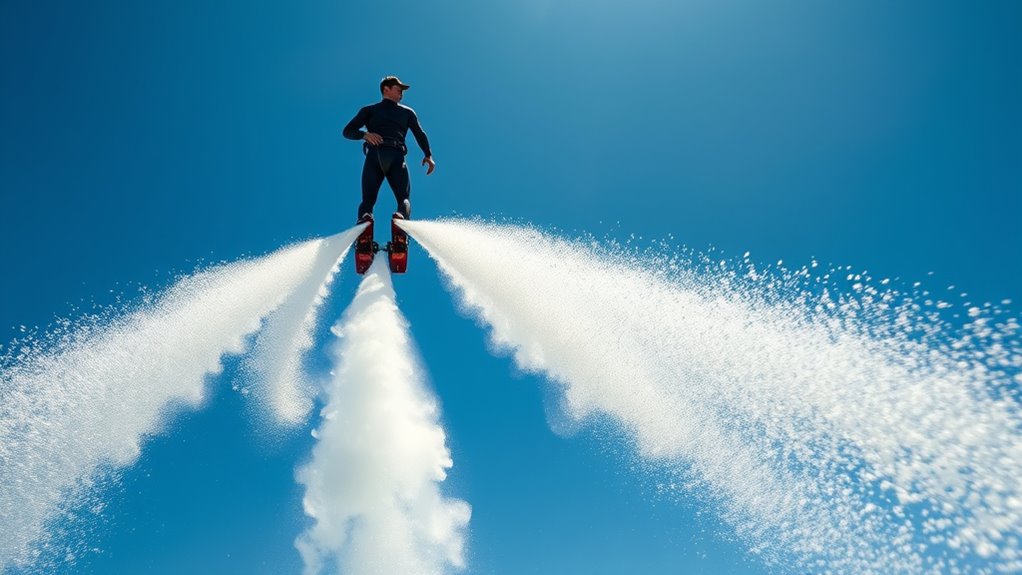

In hydroflight, lift and thrust come from high-pressure water jets. Thrust is created when water is expelled at high speed through nozzles, pushing you upward. Lift happens when these jets interact with surfaces and angles, providing support and stability in the air. Adjusting water pressure and body positioning controls your flight path. If you keep exploring, you’ll uncover how these forces work together to keep you soaring smoothly through the air.

Get sports gear delivered free — and shop member deals
- Fast, free delivery on millions of items
- Access to Prime Big Deal Days deals on October 6–7
- Prime Video, Amazon Music and more included
Key Takeaways
- Thrust in hydroflight is generated by high-pressure water jets acting as reaction forces when expelled through nozzles.
- Lift results from water jets interacting with surfaces or the water surface, producing upward force.
- Increasing water pressure enhances both thrust and lift, enabling higher altitude and faster movement.
- Adjusting jet angles and body positioning manipulates lift and stability during flight.
- The balance of thrust and lift forces allows for controlled, sustained hydroflight maneuvers.

Hydroflight combines water propulsion and physics principles to allow individuals to soar above the water’s surface. When you step onto a hydroflight device, you quickly realize that water acts as both a propellant and a lift mechanism. The core physics revolve around water propulsion—where high-pressure water jets generate thrust—and lift dynamics, which keep you elevated in the air. Understanding how these forces work together helps you grasp just how these devices let you fly.
Water propulsion is the driving force behind hydroflight. When you activate the system, a powerful pump pushes water through a nozzle at high speed. This high-velocity jet of water creates a reaction force that propels you upward and forward. Think of it like a rocket engine, but instead of burning fuel, it uses pressurized water. The faster the water exits the nozzle, the greater the thrust you experience. This thrust not only moves you through the air but also counteracts gravity, allowing you to stay aloft. The key is regulating the water flow — increasing it boosts thrust, making you rise higher, while decreasing it allows for descent.
Lift dynamics come into play once you’re in the air. As the water jet hits the ground or the water surface, it generates an upward force that counters your weight. The shape of your hydroflight device, combined with the angle and pressure of the water jets, influences how effectively this lift is generated. When you adjust your body position or the angle of the jets, you’re effectively manipulating these lift forces. For example, leaning back or tilting your body can change the direction of the water jets, impacting how much lift you get and how stable your flight feels. The main goal is to balance the thrust from water propulsion with the lift forces to maintain altitude and control your movements.
Controlling both water propulsion and lift dynamics requires a keen understanding of physics. Small adjustments to the water pressure or body positioning can drastically change your flight path. If you want to go higher, you increase water flow, which boosts thrust and lift. To descend or land smoothly, you reduce the water pressure, decreasing thrust and lift. Skilled hydroflight enthusiasts learn to coordinate these changes seamlessly, allowing for smooth ascents, dives, and even tricks.
In essence, hydroflight is a fascinating interplay of water propulsion and lift dynamics. Thrust generated by high-pressure water jets provides the force needed to lift you off the water, while the physics of lift ensures you stay aloft and maneuver through the air. The balance of forces is crucial to maintaining stable flight and executing tricks with confidence. By understanding these principles, you can better appreciate the technical marvel that lets you fly above the water with confidence and control.
Top picks for "physic hydroflight explain"
As an affiliate, we earn on qualifying purchases.
Frequently Asked Questions
How Do Hydroflight Devices Differ From Traditional Jet Propulsion Systems?
You notice that hydroflight devices use water jet propulsion, which relies on fluid dynamics to generate lift and thrust. Unlike traditional jet engines that burn fuel to produce power, hydroflight gadgets redirect water at high pressure to propel you upward and forward. This method is more environmentally friendly and safer, as it operates with water instead of combustion, making hydroflight devices unique in their reliance on fluid dynamics principles for movement.
What Safety Measures Are Essential During Hydroflight Activities?
During hydroflight activities, you should always wear protective gear like a helmet, life jacket, and wetsuit to prevent injuries. Make sure you’re familiar with emergency procedures, such as knowing how to shut off the device and safely land if something goes wrong. Always follow safety instructions, stay aware of your surroundings, and never hydroflight alone. Proper safety measures help make certain you have fun while staying safe.
Can Hydroflight Technology Be Adapted for Space Exploration?
You might wonder if hydroflight technology can be adapted for space exploration. By leveraging spacecraft water propulsion, you could develop extraterrestrial hydroflight systems that utilize local water sources or ice. This innovation could enable movement and exploration on moons or planets with water, transforming how you approach extraterrestrial travel. Adapting hydroflight principles allows you to harness fluid dynamics in space, opening new horizons for exploration beyond Earth.
What Materials Are Used to Construct Hydroflight Equipment?
You’ll find that hydroflight equipment is built with specialized materials designed for durability and safety. Common hydroflight materials include high-strength plastics, lightweight aluminum, and corrosion-resistant composites. These materials guarantee construction durability, allowing equipment to withstand frequent use and exposure to water. When selecting materials, manufacturers prioritize strength, corrosion resistance, and weight, ensuring your hydroflight experience remains safe, reliable, and enjoyable without compromising performance.
How Does Water Temperature Affect Hydroflight Performance?
Water temperature directly impacts your hydroflight performance through temperature effects on water viscosity. When the water’s warmer, it becomes less viscous, allowing for smoother, more efficient thrust and lift. Conversely, colder water increases viscosity, making it harder to maneuver and potentially reducing your flight control. Understanding these temperature effects helps you adjust your techniques, ensuring peak performance whether you’re flying in hot or cold water conditions.
Conclusion
Now that you understand how lift and thrust propel you through the water, imagine what’s possible when mastering these forces. Will you push your limits and unseal new heights? The secrets of hydroflight are within your reach, but the true challenge lies ahead. With each jump and maneuver, you’re on the verge of discovering something incredible. Are you ready to take that leap and see just how far you can go? The next wave of adventure is waiting.
NFL season / tailgating Picks
team gear
As an affiliate, we earn on qualifying purchases.