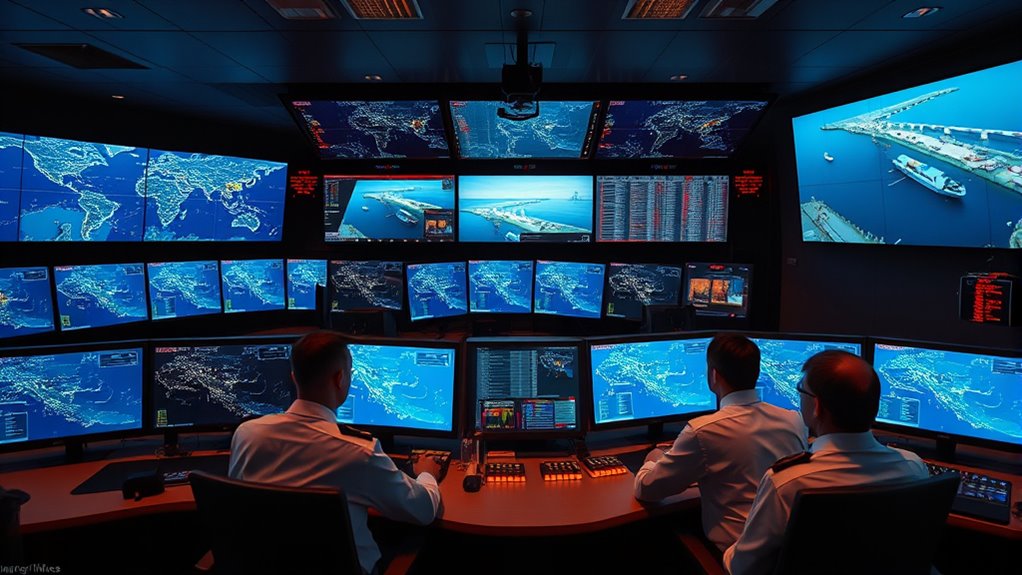

To communicate effectively with maritime traffic control, you should use clear, calm speech, identify your vessel with its name and call sign first, and keep your messages concise. Always listen carefully to instructions, repeat critical details to confirm understanding, and be alert to visual or signal cues like lights or flags. Using established protocols like the International Code of Signals guarantees clarity. Mastering these practices will help you navigate safely and coordinate smoothly in busy waterways.

Get sports gear delivered free — and shop member deals
- Fast, free delivery on millions of items
- Access to Prime Big Deal Days deals on October 6–7
- Prime Video, Amazon Music and more included
Key Takeaways
- Use a calm, clear voice and identify your vessel with name and call sign before communicating.
- Keep messages concise, relevant, and confirm understanding of instructions when necessary.
- Follow established radio etiquette, including listening actively and respecting traffic control commands.
- Recognize and interpret signals such as visual, light, or sound signals, and confirm their meaning with traffic control.
- Maintain professionalism and discipline to reduce misunderstandings and ensure safe vessel navigation in busy waterways.
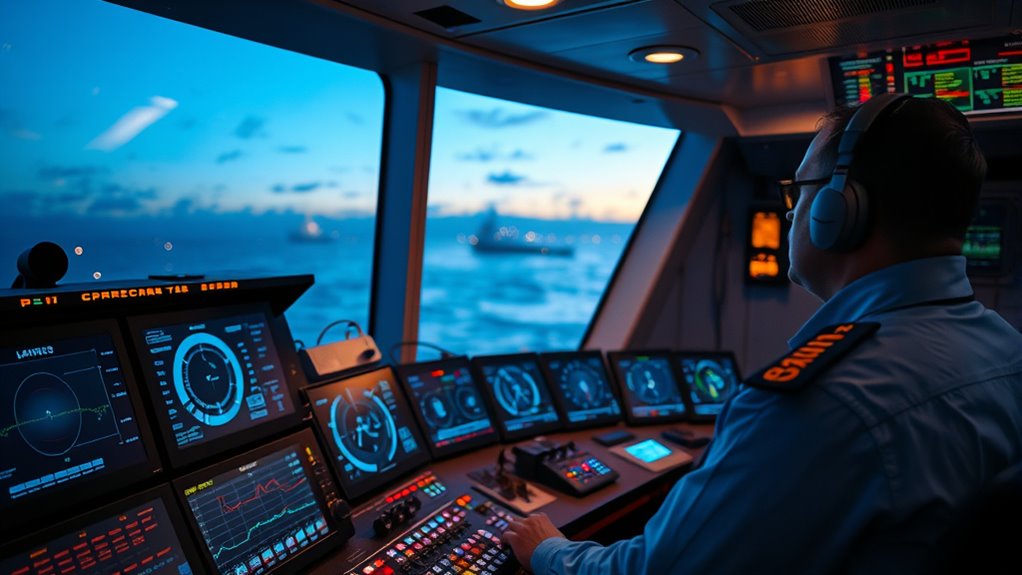
Effective communication with maritime traffic control is essential for ensuring safety and efficiency at sea. When you’re navigating busy waterways or approaching ports, clear and professional exchanges with traffic control authorities prevent accidents and streamline vessel movements. One of the most important aspects of this communication is adhering to proper radio etiquette. This means using a calm, clear voice, speaking at a steady pace, and avoiding unnecessary chatter. Always identify yourself with your vessel’s name and call sign before transmitting, and listen carefully for instructions. Keep your messages concise and relevant, and confirm understanding by repeating critical instructions when necessary. This disciplined approach minimizes the risk of miscommunication, especially in noisy or congested radio channels.
Clear radio communication and proper signals ensure safe, efficient navigation at sea.
In addition to radio etiquette, understanding signal systems plays a crucial role in maritime communication. Signal systems include visual signals, light signals, and sound signals, all designed to convey specific messages, especially when radio communication isn’t possible. You should be familiar with the International Code of Signals, which uses flags, lights, or sounds to communicate important information quickly. For example, a specific flag or light pattern can indicate distress, navigational restrictions, or a vessel’s intentions. When approaching ports or navigating narrow channels, you might also encounter signal systems like the semaphore or flashing light signals, which require specific knowledge to interpret correctly. Proper signal recognition is essential for safe navigation and effective communication in all maritime scenarios.
Using these signal systems effectively means recognizing the appropriate signals and knowing how to respond. For instance, if you see a red flag or light, it could indicate danger or a vessel at anchor, prompting you to alter your course or speed. Conversely, a green signal might mean the vessel is safe to proceed. It’s vital to keep a current understanding of these signals and ensure your crew is trained to recognize and respond to them accurately. When communicating with traffic control, always confirm that your signals align with the instructions or information you receive. Misinterpreting signals can lead to dangerous situations, so precision and attentiveness are vital.
In practice, combining proper radio etiquette with a thorough understanding of signal systems ensures seamless, safe exchanges with maritime traffic control. By maintaining professionalism on the radio, listening actively, and respecting visual or sound signals, you help create a safer environment for everyone at sea. Your commitment to these protocols reduces the chance of misunderstandings, enhances coordination, and ultimately supports the safe navigation of your vessel through complex maritime environments.
marine radio communication device
As an affiliate, we earn on qualifying purchases.
As an affiliate, we earn on qualifying purchases.
Frequently Asked Questions
How Are Emergency Distress Signals Handled in Maritime Communication Protocols?
When you need to send an emergency distress signal, you follow specific distress signal procedures outlined in emergency communication protocols. You should use recognized signals like MAYDAY or SOS, guaranteeing clarity and urgency. Activate the appropriate radio channels immediately, maintain steady transmission, and provide essential details about your location and situation. These protocols ensure your distress call is prioritized and responded to swiftly, increasing your chances of rescue and safety at sea.
What Are the Latest Technological Advancements in Maritime Traffic Control Communication?
Oh, the irony isn’t lost when you realize maritime traffic control now relies on outdated methods. Today, satellite tracking keeps vessels precisely monitored, reducing accidents, while AI integration helps manage traffic flow more efficiently. These advancements mean you get real-time updates and smarter navigation, making the seas safer and more predictable. So, while the technology evolves, it’s all about making your maritime experience smoother and more secure than ever.
How Do International Regulations Influence Local Maritime Communication Procedures?
International regulations shape how you conduct maritime communication by emphasizing maritime sovereignty and regulatory harmonization. These rules make sure your procedures align with global standards, promoting safety and efficiency. You follow protocols that respect national sovereignty while harmonizing with international frameworks like IMO guidelines. This balance helps you communicate effectively with maritime traffic control, maintaining safety, compliance, and smooth operations across maritime borders, ultimately supporting secure and coordinated global shipping activities.
What Training Is Required for Maritime Personnel in Communication Protocol Compliance?
Mastering maritime language and honing communication skills are vital for maritime personnel. You need to undergo specialized training that covers international standards, radio procedures, and emergency communication protocols. This training guarantees you can communicate clearly, confidently, and correctly in all maritime situations. Regular refreshers and practical drills keep your skills sharp. By staying well-trained, you help maintain safety, efficiency, and seamless communication with maritime traffic control and other vessels.
How Is Cyber Security Managed Within Maritime Traffic Communication Systems?
You manage cybersecurity in maritime traffic communication systems by implementing robust measures like cyber threat detection to identify potential attacks early. You also follow strict encryption standards to protect sensitive data and guarantee secure communication channels. Regular updates and staff training help you stay ahead of emerging threats, safeguarding vessel and port operations from cyber disruptions and maintaining effective, secure maritime communication networks.
Conclusion
In the vast ocean of communication, your words are the lighthouse guiding ships safely through fog and storm. Clear protocols serve as the steady heartbeat, ensuring every vessel hears the same rhythm, avoiding chaos. As you navigate these channels, remember each message is a beacon, symbolizing trust and safety. Stay consistent, stay vigilant, for in this symphony of signals, your clarity keeps the maritime world afloat and secure.
Halloween Picks
halloween
As an affiliate, we earn on qualifying purchases.