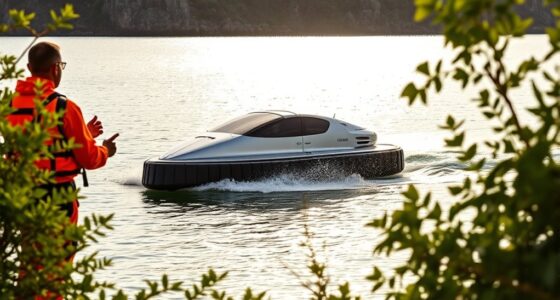
To prevent carb icing when hovercrafting in cold weather, keep your fuel system clean and free of water contamination, and use cold-weather fuel additives to lower freezing points. Topping off your tank reduces condensation, and ensuring proper airflow helps maintain engine temperatures. If you notice engine sputtering or power drops, apply carb heat or increase airflow to melt any ice. Continuing will teach you more vital tips to stay safe in chilly conditions.
Listen free for 30 days with Audible
Thousands of audiobooks and originals — cancel anytime.
As an affiliate, we earn on qualifying purchases.
Key Takeaways
- Ensure fuel system is clean and free of water contamination before cold-weather hovercrafting.
- Use cold-weather fuel additives to lower the moisture freezing point and prevent ice formation.
- Keep fuel tanks topped off to minimize condensation that can lead to carb icing.
- Regularly inspect and maintain the carburetor and carb heat system for proper operation.
- Increase airflow and apply carb heat promptly if signs of icing, like sputtering or power loss, appear during operation.
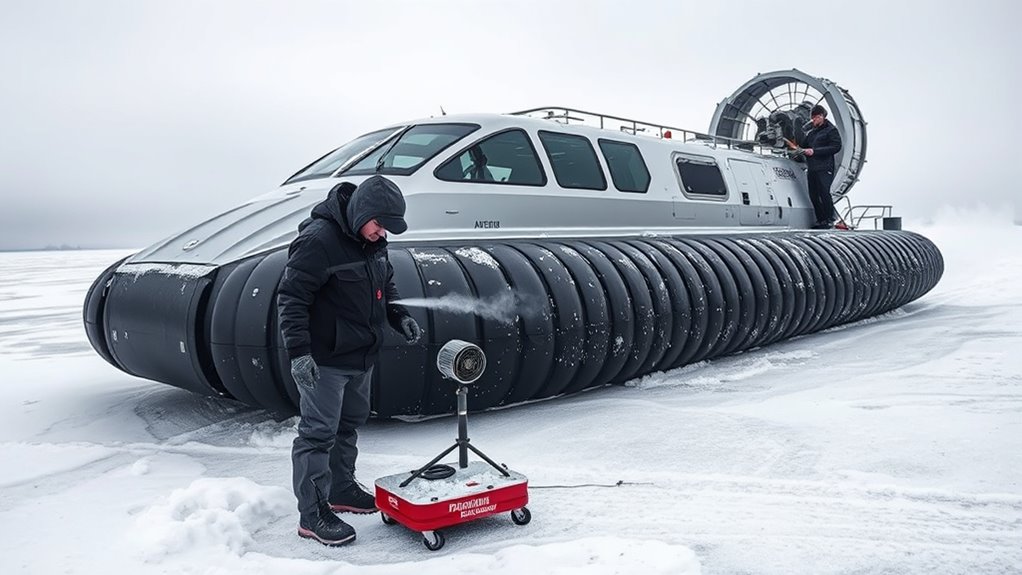
Cold-weather hovercrafting offers a unique adventure that lets you glide effortlessly over snow and ice, regardless of freezing temperatures. But dealing with carb icing is a critical concern that can disrupt your experience or even endanger your safety. To prevent carb icing, you need to stay vigilant and take proactive steps, especially when operating in cold conditions. One effective approach involves careful fuel management. Since carb icing is caused by moisture in the air freezing inside the carburetor, managing your fuel intake can make a significant difference. Always confirm your fuel system is clean and free of water contamination, as water promotes ice formation. Consider using fuel additives designed for cold weather to lower the freezing point of moisture in your fuel. Additionally, keeping your fuel tank topped off reduces the chance of condensation forming inside, which can lead to ice buildup. It’s wise to plan your fuel stops effectively so you always have access to fresh, clean fuel, especially during extended trips. Proper airflow management can also help prevent the formation of carb ice by maintaining consistent engine temperatures.
Alongside fuel management, your safety gear plays an essential role in preventing carb icing from turning into a major problem. Wearing appropriate cold-weather gear isn’t just about comfort; it’s about safety. Insulating your hands and body helps you maintain better control of the hovercraft, especially when you need to troubleshoot or adjust components. Carry a reliable, portable heat source—such as a hand warmer or heat packs—that can be used to warm the carburetor area if you suspect icing is forming. Some hovercraft models come with carb heat systems, so knowing how to operate these correctly is indispensable. Be sure to include tools like screwdrivers, pliers, and spare parts in your safety kit, so you can quickly address any issues without delay. It’s also important to carry a handheld radio or communication device to call for assistance if you encounter carb icing that you can’t resolve on your own.
Being prepared with the right safety gear and managing your fuel intelligently helps you stay ahead of carb icing problems. Keep a close eye on engine performance; if you notice sputtering, rough running, or a drop in power, these could be signs of carb icing. In such cases, applying carb heat or increasing airflow over the carburetor can help melt the ice. Regular maintenance, including checking your fuel system and carburetor for signs of ice or water contamination, is essential before every flight. By combining smart fuel management with appropriate safety gear, you’ll reduce the risk of carb icing, ensuring your cold-weather hovercrafting adventure remains safe, smooth, and enjoyable.
cold weather hovercraft fuel additive
As an affiliate, we earn on qualifying purchases.
As an affiliate, we earn on qualifying purchases.
Frequently Asked Questions
How Do I Identify Early Signs of Carb Icing While Hovercrafting?
You can spot early signs of carb icing by paying attention to your engine’s behavior. If you notice a decrease in engine power, rough running, or sputtering, it might be carb icing. Keep an eye on your fuel mixture and engine temperature; if they seem off or the engine is running cooler than usual, it’s a sign. Respond quickly by using carb heat to melt the ice and restore performance.
What Are the Best Anti-Icing Additives for Hovercraft Engines?
You should use fuel stabilizers and ethanol treatments to prevent carb icing in hovercraft engines. These additives help reduce moisture buildup, which contributes to icing. By treating your fuel with quality ethanol treatments, you guarantee consistent combustion and minimize ice formation. Always choose additives designed for cold-weather conditions and follow the manufacturer’s instructions to keep your engine running smoothly, especially in freezing environments.
Can Carb Icing Occur on Warm Days in Cold Environments?
Carb icing can occur even on warm days if the ambient temperature is low and humidity levels are high. You might not expect it, but moisture in the air can freeze inside the carburetor, causing blockages. Always monitor the conditions, especially during early mornings or damp days, and watch for signs of icing, like engine hesitation or rough running, so you can take preventive measures promptly.
How Often Should I Perform Maintenance to Prevent Carb Icing?
You wonder how often you should perform maintenance to prevent carb icing. Establishing a consistent maintenance schedule and inspection frequency is key. Regularly check your carburetor before each hovercraft outing, especially in cold weather. Clean and inspect it weekly during heavy use, and perform thorough inspections monthly. By staying proactive and disciplined with your maintenance routine, you’ll reduce the risk of carb icing and keep your hovercraft running smoothly.
Are There Specific Hovercraft Models More Resistant to Carb Icing?
You might find that some hovercraft models are better at resisting carb icing due to enhanced features like improved hovercraft insulation and efficient engine cooling systems. These design elements help regulate temperature and reduce the likelihood of ice formation in the carburetor. When choosing a hovercraft, look for models with advanced insulation and cooling mechanisms, as they offer better protection against carb icing, especially in colder conditions.
Conclusion
When you understand the signs of carb icing, when you regularly check your intake, and when you use proper anti-icing measures, you keep your hovercraft running smoothly. When you stay vigilant, when you prepare ahead, and when you respond quickly, you prevent carb ice from causing problems. By staying informed, staying cautious, and staying proactive, you guarantee safe, reliable hovercrafting even in cold weather. With these steps, you keep control, confidence, and comfort in every cold-weather ride.
NFL season / tailgating Picks
team gear
As an affiliate, we earn on qualifying purchases.