To design inclusive aqua classes for mobility-impaired participants, focus on using adaptive equipment like waterproof wheelchairs and flotation devices that suit individual needs. Guarantee your facility has accessible entry points and enough space for safe movement. Train staff to assist confidently and communicate effectively. Adapt exercises to accommodate different mobility levels, prioritize safety, and foster an encouraging environment. Keep exploring how you can further create a welcoming, adaptable space that empowers everyone to participate confidently.

Get sports gear delivered free with Prime
- Fast, free delivery on millions of items
- Prime Video, Amazon Music and more included
- Member-only deals all year
Key Takeaways
- Incorporate adaptive equipment tailored to individual mobility levels to enhance safety and independence.
- Ensure staff are trained in inclusive practices, emergency response, and effective communication.
- Design accessible aquatic spaces with ramps, hoists, and sufficient room for equipment and movement.
- Offer exercise modifications, such as seated or supported activities, to accommodate diverse abilities.
- Foster a welcoming environment through ongoing communication, encouragement, and patience with participants.
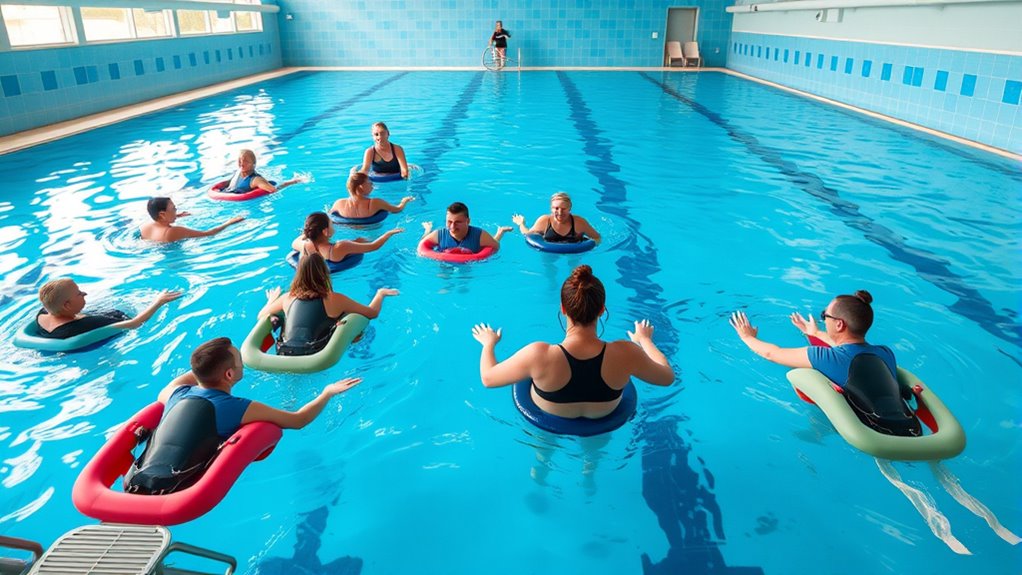
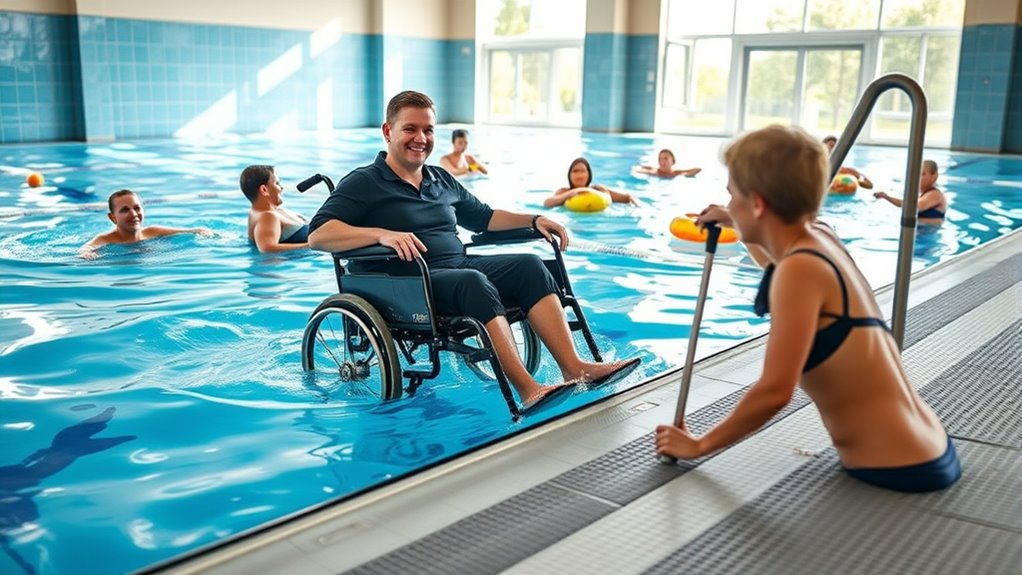
Inclusive aqua classes are transforming the way people with mobility impairments experience water-based exercise. When designing such programs, your focus should be on creating an environment that promotes accessibility, safety, and engagement. One key element is the use of adaptive equipment, which can range from waterproof wheelchairs to flotation devices tailored to individual needs. These tools help participants move comfortably and confidently through the water, ensuring that everyone can participate regardless of their level of mobility. Selecting the right adaptive equipment requires understanding each participant’s abilities and limitations, so you can provide options that support their independence while minimizing discomfort or risk.
Equally important is staff training. Your team needs to be well-versed in handling various mobility challenges and knowledgeable about inclusive practices. Proper training ensures staff can assist participants effectively and confidently, whether it’s helping with adaptive equipment, guiding movements, or managing emergency situations. Training should also cover sensitivity and communication skills, so your staff can foster a welcoming environment where participants feel respected and supported. When staff are equipped with the right knowledge and skills, they can adapt the class structure to meet diverse needs, making the experience both safe and enjoyable for everyone involved.
Staff training in inclusive water exercise fosters confidence, safety, and a welcoming environment for all participants.
Creating an inclusive aqua class begins with careful planning of the physical space. You’ll want to ensure the pool has accessible entry points, such as ramps or hoists, and enough space for adaptive equipment to be used comfortably without crowding. Clear signage and easy-to-reach safety equipment also contribute to a secure environment. As you design your class, consider how to modify exercises to accommodate different mobility levels. For example, some participants may need seated exercises, while others can stand or use assistive devices for support. Offering a variety of options allows each individual to choose what works best for their comfort and ability.
Communication plays a pivotal role in inclusive water classes. Always check in with participants about their needs and preferences, and encourage feedback to continually improve the experience. Your approach should emphasize encouragement and patience, creating a space where participants feel empowered rather than limited. By integrating adaptive equipment and prioritizing staff training, you set a strong foundation for success. These elements ensure your aqua classes are genuinely inclusive, enabling every participant to enjoy the physical and mental benefits of water exercise in a safe, supportive environment.
waterproof wheelchair for aquatic exercise
As an affiliate, we earn on qualifying purchases.
As an affiliate, we earn on qualifying purchases.
Frequently Asked Questions
How Do I Assess Individual Mobility Needs Before Starting Classes?
To assess individual mobility needs, you should start with thorough assessment methods and mobility evaluations. Meet with participants to discuss their medical history and current abilities. Observe their movements during simple exercises or in everyday activities. Use checklists or questionnaires to gather detailed information. This approach helps you tailor your aqua classes effectively, ensuring safety and comfort. Always update assessments regularly to adapt to participants’ evolving needs.
What Equipment Options Are Best for Different Impairments?
You might think equipment is limiting, but adaptive equipment and assistive devices can transform your classes. For different impairments, consider waterproof wheelchairs, pool noodles, hand paddles, or flotation belts. These tools support mobility and safety, enabling participants to engage comfortably. By selecting the right adaptive equipment, you create an inclusive environment where everyone can participate and benefit from the water’s therapeutic properties.
How Can Instructors Ensure Safety During Complex Movements?
You can guarantee safety during complex movements by leveraging water resistance to slow down actions and prevent falls. Make sure to adjust buoyancy by providing support devices or guiding participants carefully. Keep a close eye on their form, offer clear instructions, and encourage gradual progress. Always stay alert, maintain proper supervision, and be ready to assist promptly, ensuring a safe environment where participants feel confident to challenge themselves.
What Accommodations Are Necessary for Participants With Sensory Impairments?
Did you know that nearly 15% of the world’s population lives with some form of sensory impairment? To accommodate them, you should incorporate sensory-friendly modifications like gentle lighting, reduced noise, and clear, simple instructions. Use tactile cueing to guide participants safely through movements, ensuring they feel confident and included. These adjustments help create a supportive environment where everyone can enjoy the benefits of aqua exercise comfortably and safely.
How to Adapt Class Pacing for Diverse Mobility Levels?
You should adapt the class pacing by using flexible timing and clear instructions, ensuring everyone stays engaged. Incorporate adaptive techniques like slower movements or chair-based options for those with limited mobility. Use motivational strategies such as positive reinforcement and personalized encouragement to keep participants motivated. By adjusting the pace and providing support, you create an inclusive environment where all participants feel comfortable and can benefit from the session.
Conclusion
As you craft inclusive aqua classes, remember each participant is a unique ripple in a vast pond. Your efforts create a safe harbor where confidence blooms like a resilient lily. By embracing adaptability, you transform the pool into a symbol of hope and unity, breaking down barriers one gentle wave at a time. Your dedication turns water into a mirror reflecting strength, empowering everyone to navigate life’s currents with courage and grace.
NFL season / tailgating Picks
team gear
As an affiliate, we earn on qualifying purchases.