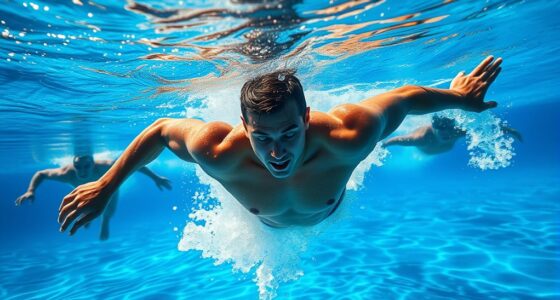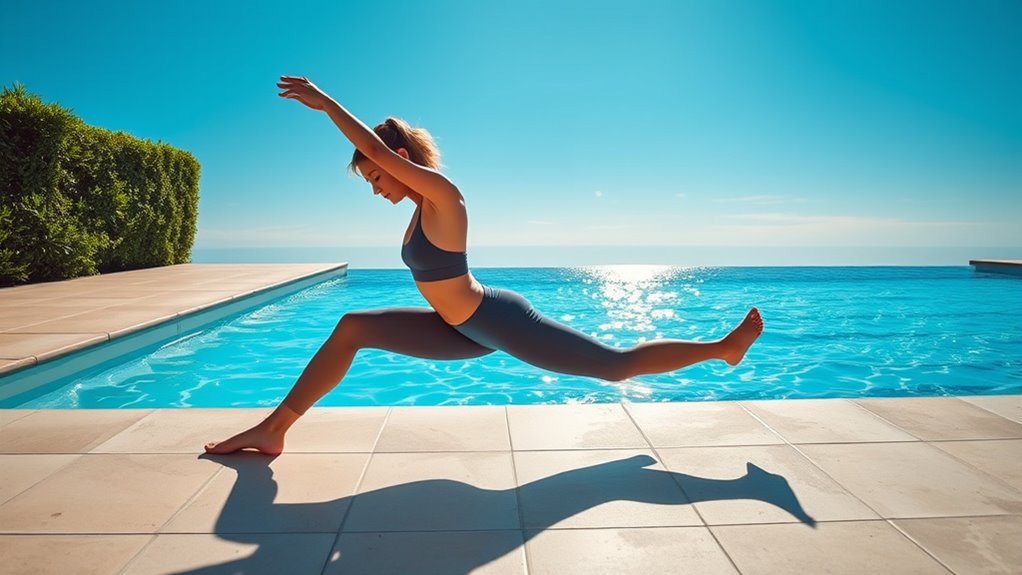

After your workout, focus on gentle, controlled poolside stretches to boost flexibility and speed recovery. Target major muscles like your shoulders, back, hips, and legs with static holds of 20-30 seconds, avoiding bouncing. Stay well-hydrated before, during, and after your session to keep muscles pliable and reduce soreness. Creating a calm environment and maintaining consistency make your stretching routine more effective. Continue exploring these techniques to maximize your post-workout benefits and enjoy better mobility.
Key Takeaways
- Focus on gentle, controlled stretches targeting major muscle groups like legs, hips, shoulders, and back to enhance flexibility.
- Hold each stretch for 20-30 seconds with deep breathing, avoiding bouncing to prevent muscle strain.
- Incorporate poolside stretches such as hamstring reaches, quad pulls against the wall, and seated back stretches for maximal relaxation.
- Maintain proper hydration before, during, and after stretching to improve muscle pliability and recovery.
- Create a calm, relaxing environment with stable support to promote effective stretching and faster muscle recovery.
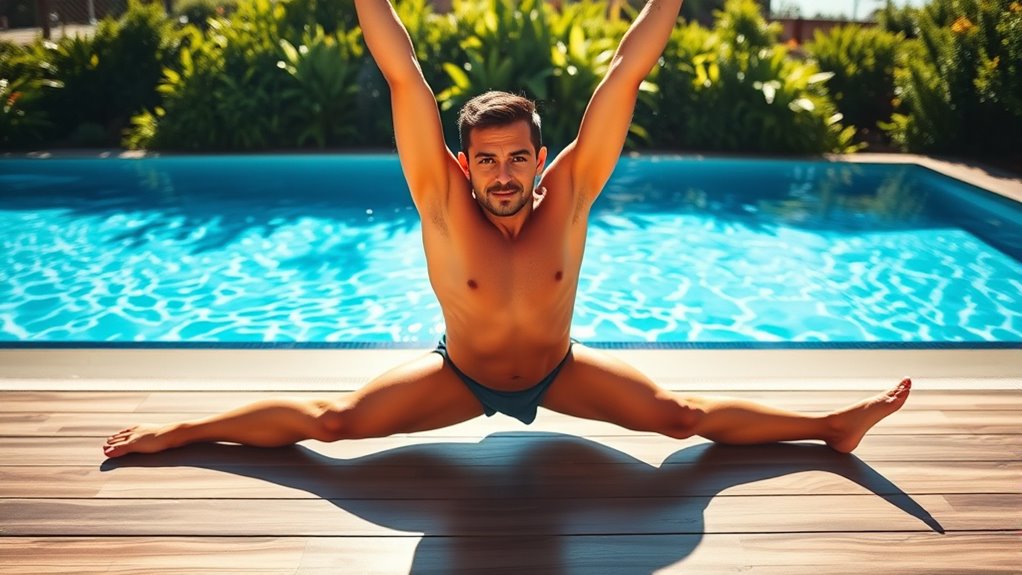
After a workout, stretching is an essential step that helps your body recover and prevents stiffness. When you take the time to stretch properly, you promote better muscle recovery, reduce soreness, and set yourself up for your next swim or workout session. But stretching isn’t just about touching your toes or holding a pose — it’s about doing it thoughtfully, especially when you’re near the poolside, where the relaxing environment encourages you to focus on your body’s needs. To maximize benefits, remember to incorporate hydration tips into your routine. Proper hydration is key because it supports muscle function and recovery. Drinking water before, during, and after your session helps replace fluids lost through sweat, ensuring your muscles stay lubricated and less prone to cramping or stiffness. When you’re well-hydrated, your muscles are more pliable, making stretching more effective and reducing the risk of injury.
As you finish your workout, start with gentle stretches that target the major muscle groups you’ve used — your legs, hips, back, shoulders, and arms. Keep each stretch steady and hold for about 20 to 30 seconds, breathing deeply to help relax your muscles further. Focus on slow, controlled movements rather than bouncing, which can cause strain. When stretching poolside, use the environment to your advantage; lean against the poolside wall for balance or hold onto a sturdy surface if needed. This stability allows you to deepen stretches safely and effectively. For instance, hamstring stretches can be done with one foot elevated on the pool ledge, and gentle back stretches can be performed while seated on the deck, reaching towards your toes.
Incorporating specific post-workout stretches that promote muscle recovery can make a significant difference. For example, quad stretches help loosen tight front thigh muscles, which often get tight during swimming or running. Shoulder stretches target the upper body, especially after laps or pool exercises that involve arm movement. Remember, consistency is key — make stretching a part of your routine, and over time, you’ll notice improved flexibility and reduced muscle soreness. Keep in mind that hydration and proper stretching go hand in hand; when your muscles are well-hydrated, they respond better to stretching, enhancing the overall recovery process. Additionally, understanding the importance of contrast ratio can help you appreciate how different lighting and environment settings influence your poolside stretching experience, creating a more relaxing atmosphere. By paying attention to these details, you’ll not only recover faster but also prepare your body for your next poolside workout, making each session more effective and more enjoyable.

Trideer Stretching Strap Yoga Strap Physical Therapy for Home Workout, Exercise, Pilates and Gymnastics, 10 Loops Non-Elastic Stretch Bands with Aesthetic Packaging for Women & Men (Black)
Long Lasting Premium Quality: Made of sturdy polypropylene, this tough yoga strap stands out in a crowd by…
As an affiliate, we earn on qualifying purchases.
As an affiliate, we earn on qualifying purchases.
Frequently Asked Questions
How Long Should I Hold Each Stretch After Swimming?
You should hold each stretch for about 15 to 30 seconds, as this is the ideal stretch duration to improve flexibility without risking injury. Focus on maintaining a steady, comfortable hold time to allow your muscles to relax and lengthen effectively. Repeat each stretch 2-3 times if needed. Remember, consistency is key, so develop a routine that includes these hold times for the best results after swimming.
Can Stretching Improve My Swimming Speed?
Ever wondered if stretching can boost your swimming speed? It definitely can! By improving your dynamic flexibility, you move more efficiently through the water. Stretching also aids muscle recovery, reducing stiffness and preventing injuries. When you incorporate targeted stretches into your routine, you enhance your range of motion and streamline your strokes. So, yes, consistent stretching helps you swim faster by optimizing your muscles and promoting better performance.
Is It Better to Stretch Before or After Swimming?
You should prioritize a pre swim warmup to prepare your muscles and reduce injury risk. Stretching before swimming increases flexibility and blood flow, making your workout more effective. After swimming, focus on a post swim cooldown to relax your muscles and prevent stiffness. Incorporate gentle stretching during the cooldown to enhance flexibility and recovery, ensuring you stay comfortable and ready for your next swim session.
Are There Specific Stretches for Preventing Shoulder Injuries?
To prevent shoulder injuries, focus on stretches that improve shoulder mobility. You should incorporate gentle arm circles, cross-body shoulder stretches, and doorway stretches into your routine. These exercises strengthen the shoulder muscles and enhance flexibility, reducing injury risk. Consistently practicing shoulder mobility exercises helps keep your shoulders healthy and resilient, especially if you swim frequently. Remember, proper stretching is key to injury prevention and maintaining ideal shoulder function.
How Often Should I Incorporate Stretching Into My Routine?
Imagine you’re preparing for a swim meet; incorporating stretching into your routine helps build dynamic flexibility and promotes mental relaxation. To see benefits, stretch at least 3-4 times a week, focusing on post-workout routines and gentle sessions on rest days. Consistent stretching enhances your performance, prevents injuries, and keeps your mind calm. Make it a habit, and you’ll notice increased flexibility and a clearer mental state over time.
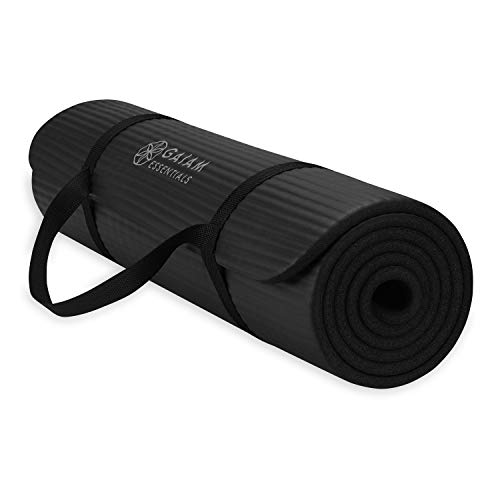
Gaiam Essentials Thick Yoga Mat Fitness & Exercise Mat with Easy-Cinch Carrier Strap, Black, 72"L X 24"W X 2/5 Inch Thick
Extra-Thick Cushioning for Joint Comfort : Made with 10mm (2/5") high-density NBR foam, this mat delivers plush cushioning…
As an affiliate, we earn on qualifying purchases.
As an affiliate, we earn on qualifying purchases.
Conclusion
Now, picture yourself lounging poolside, the sun warming your skin as you gently stretch your tired muscles. Feel the cool breeze as each movement releases tension, leaving you refreshed and flexible. Incorporate these routines after your workout to transform your poolside moments into a soothing escape. With every stretch, you’re not just improving your flexibility—you’re nurturing your body and mind, turning every dip and stretch into a blissful, rejuvenating experience.
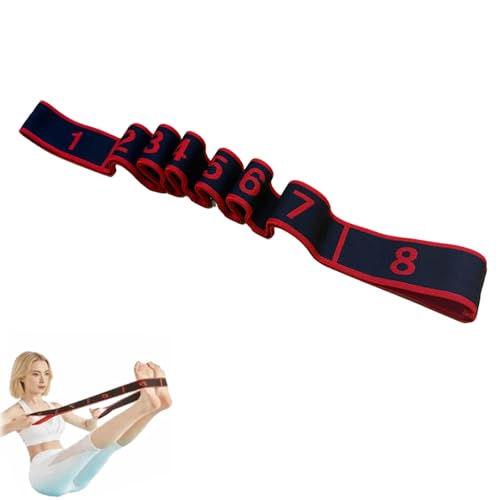
Fitness Resistance Band for Stretching and Yoga, Number Stretch Resistance Band with Clear Markings, 8-Section Elastic Training Bands (1PCS)
【Versatile Resistance Band】Perfect for yoga, Pilates, stretching, and fitness training. This band helps improve flexibility, strength, and mobility…
As an affiliate, we earn on qualifying purchases.
As an affiliate, we earn on qualifying purchases.

GoSports Outdoor Portable Poolside Chair – Adult Foldable Flip Seat for Pool, Beach, Tailgating & Stadium – Durable Plastic with Back Support
ULTIMATE POOLSIDE COMFORT: Crafted with a specially engineered contoured seat to prevent sliding for a superior lounging experience;…
As an affiliate, we earn on qualifying purchases.
As an affiliate, we earn on qualifying purchases.