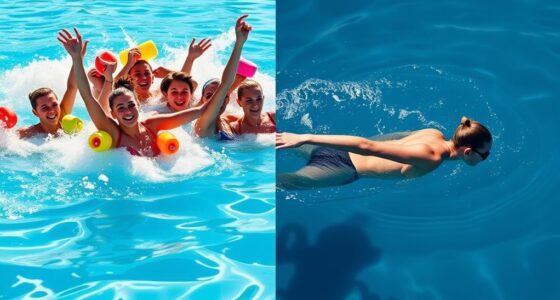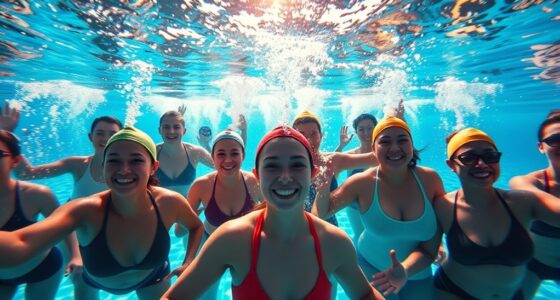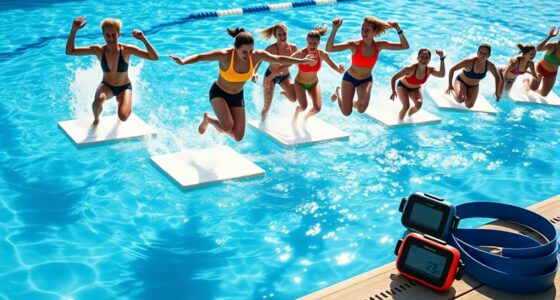

Water workouts build stronger muscles thanks to hydrostatic pressure. This pressure enhances muscle engagement, making your workouts more effective than land exercises. Water’s resistance challenges your muscles, requiring greater effort and promoting strength and endurance. Plus, it provides joint support, reducing the risk of injury, so you can push your limits safely. The cooling effect of water lets you focus on form while enjoying longer workouts. Keep exploring to discover more about maximizing your strength training in water.
Key Takeaways
- Hydrostatic pressure enhances muscle engagement, leading to greater strength gains compared to traditional land-based exercises.
- Water resistance requires increased effort, fully challenging muscles and promoting improved tone and endurance.
- The buoyancy provided by water reduces joint stress, lowering injury risk and allowing safer workouts.
- Water’s cooling effect regulates body temperature, enabling longer, more comfortable exercise sessions focused on form and technique.
- Hydrostatic pressure engages underused muscles, enhancing overall muscle-building efforts and fostering motivation for consistent participation in water workouts.

When you step into the water for a workout, you might not realize how hydrostatic pressure can enhance your exercise experience. This unique property of water creates an environment that not only supports your body but also increases the effectiveness of your workouts. As you move through the water, you experience aqua resistance, which plays an essential role in muscle engagement. Unlike traditional workouts on land, the resistance provided by water challenges your muscles in a way that can lead to greater strength gains.
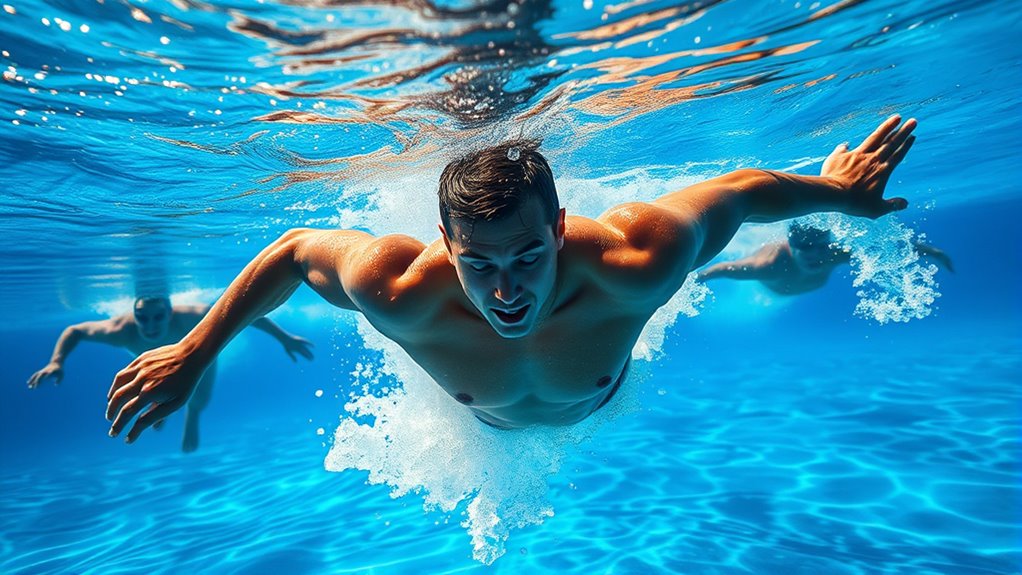
Hydrostatic pressure in water workouts enhances muscle engagement and boosts strength gains, transforming your exercise experience.
As you plunge into your routine, you’ll notice that each movement requires more effort than it would on solid ground. This resistance forces your muscles to work harder, engaging them more fully throughout your exercises. Whether you’re jogging in place, performing squats, or executing arm strokes, the water’s resistance compels your muscles to adapt, promoting strength and endurance. You’ll find that the effort you exert in the water translates to improved muscle tone and overall fitness.
Hydrostatic pressure also offers a unique advantage by providing a supportive environment for your joints. This means you can push your limits without the same risk of injury you’d face on land. As you strengthen your muscles, you’re also protecting your joints, allowing you to maintain an active lifestyle for longer. The buoyancy of the water reduces impact stress while maintaining muscle engagement, making it an ideal setting for both rehabilitation and fitness.
Moreover, the cooling effect of water helps to regulate your body temperature, allowing you to work out longer without overheating. You can focus on your form and technique rather than being distracted by discomfort. This combination of aqua resistance and hydrostatic pressure not only enhances your workout but also makes the experience more enjoyable. You might even find yourself looking forward to your water workouts as a revitalizing change from your usual routine.
Incorporating hydrostatic pressure into your fitness regimen can profoundly elevate your muscle-building efforts. It encourages you to engage muscles that might not get as much attention during land-based workouts. Additionally, the principles of the Law of Attraction can play a role in your motivation and mindset, further enhancing your overall experience. So, next time you step into the water, remember that you’re not just exercising—you’re harnessing the power of hydrostatic pressure to build stronger, more resilient muscles. With each stroke, kick, or squat, you’re enhancing your fitness and well-being.

Pool Paddle Water Aerobics Equipment | Adjustable Resistance Pool Exercise Equipment for Adults, Swim Paddles Water Weights Dumbbells for Aquatic Exercise, Aqua Weights for Men & Women Workout Gear
10 Resistance Settings: Easily adjust your water weights for pool exercise to your ideal resistance by simply turning…
As an affiliate, we earn on qualifying purchases.
As an affiliate, we earn on qualifying purchases.
Frequently Asked Questions
How Often Should I Do Water Workouts for Optimal Results?
For ideal results, aim to do water workouts three to five times a week. This frequency allows you to effectively harness water resistance, helping to build muscle strength and endurance. Each session should last at least 30 minutes, incorporating various exercises to target different muscle groups. Remember, consistency is key, so find a schedule that works for you and stick with it. You’ll see improvements in your strength and overall fitness before you know it!
Are Water Workouts Suitable for All Fitness Levels?
Absolutely, water workouts are suitable for all fitness levels! Whether you’re a beginner or an advanced athlete, aquatic fitness offers adjustable water resistance that helps you build strength without the impact on joints. You can modify exercises to match your capabilities, making it easy to progress at your own pace. Plus, the buoyancy of water supports your body, allowing for a safe and effective workout environment for everyone. Immerse yourself and enjoy!
Can Water Workouts Help With Injury Rehabilitation?
Yes, water workouts can definitely help with injury rehabilitation. Aquatic therapy provides a low-impact environment that reduces strain on your joints while allowing you to strengthen muscles. You can perform a variety of exercises to regain mobility and flexibility, which aids in recovery. Plus, the resistance of water promotes muscle engagement, enhancing your overall strength. Incorporating these workouts not only helps you heal but also plays a vital role in injury prevention for the future.
What Equipment Is Recommended for Water Workouts?
Did you know that water workouts can increase muscle strength by up to 50% compared to land exercises? For effective aquatic resistance, consider using water dumbbells, kickboards, or resistance bands. These tools enhance your water aerobics by creating more resistance, helping you build strength while minimizing impact on your joints. Also, don’t forget about flotation belts for support during deeper water workouts—you’ll find them invaluable for stability and improved technique!
How Do Water Workouts Compare to Land Workouts for Muscle Building?
Water workouts often provide a unique advantage over land workouts for muscle building. The water resistance forces you to engage more muscle activation, challenging your body in ways that land workouts can’t. You’ll find that the buoyancy reduces joint strain, allowing for more repetitions without discomfort. This combination can lead to increased strength and endurance. Plus, the cooling effect of water helps you push harder, making your workouts both effective and enjoyable.

BEAMNOVA Hydrostatic Test Pump 3.17 Gallon Hydraulic Manual Water Pipe Leakage Pressure Tester Kit with Gauge Tank
Working Pressure: 0-50 Bar / 5 MPA / 726 PSI. Flow Volume: 45 ML. Tank Volume: 3.17 Gallon…
As an affiliate, we earn on qualifying purchases.
As an affiliate, we earn on qualifying purchases.
Conclusion
In the calm of water, you find resistance; while floating, you’re fighting against gravity. This paradox strengthens your muscles in ways that land workouts can’t. Each stroke through the liquid environment builds not just physical strength but also resilience. You learn to adapt and push through, transforming effort into power. So, as you glide through your water workouts, remember: the gentle embrace of water challenges you to rise stronger, proving that softness can indeed forge strength.

3 PCs Swimming Ankle Strap with 1 Pair Earplug, Rubber Pulling Ankle Band Aquatic Resistance Belt for Swimming Training Legs Resistance Strength Exercise
What You Will Get: The swimming ankle strap kit includes 3 PCS black, red, green ankle straps and…
As an affiliate, we earn on qualifying purchases.
As an affiliate, we earn on qualifying purchases.

FitsT4 Sports Aqua Gloves Webbed Paddle Swim Gloves Fitness Water Aerobics and Swimming Resistance Training Gloves for Men Women Children Purple M
【Size Reminder】 Measure your palm width, the small water gloves for women with small hands & youth &…
As an affiliate, we earn on qualifying purchases.
As an affiliate, we earn on qualifying purchases.