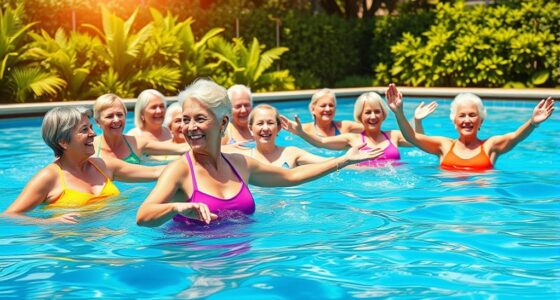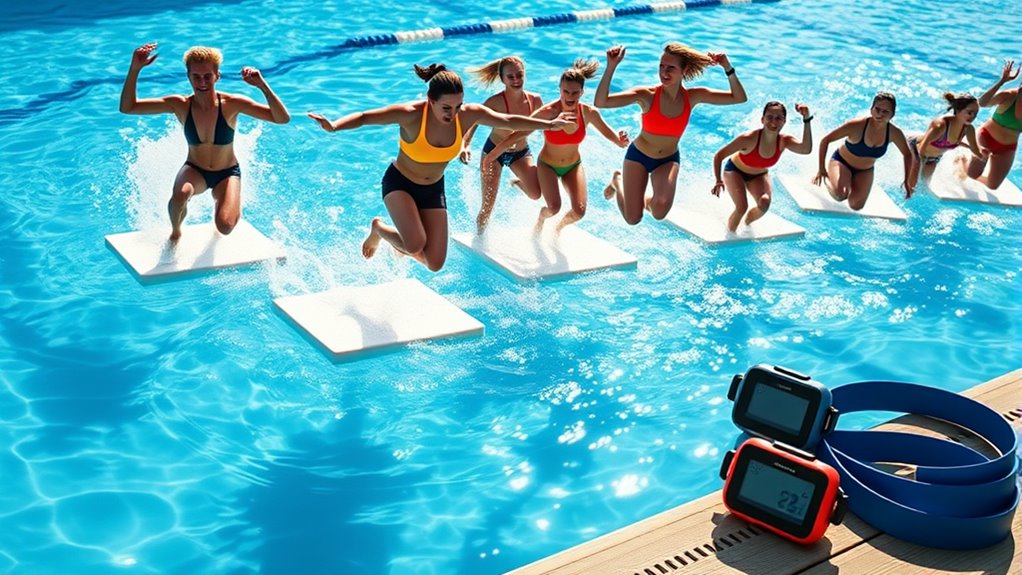

Creating low-impact HIIT circuits in the pool is effective and gentle on your joints. Focus on exercises that utilize water resistance, like water jogging, kicks, or arm circles, alternating fast efforts with recovery periods. Use tools like water weights or kickboards for added challenge. The buoyancy reduces joint stress, allowing safe intensity progression. Stay mindful of proper form and listen to your body—exploring these strategies further can help you maximize your workouts safely.
Key Takeaways
- Incorporate alternating high-intensity water movements with gentle recovery phases to maximize benefits and prevent joint strain.
- Use resistance tools like water weights or kickboards to increase muscle engagement without high-impact stress.
- Focus on full-range, low-impact exercises such as water jogging, leg lifts, and arm circles for safe intensity progression.
- Leverage water’s buoyancy to reduce joint load, allowing longer, safer workout intervals and quicker recovery.
- Monitor effort levels and adjust exercise speed or resistance to ensure safety, proper form, and injury prevention.
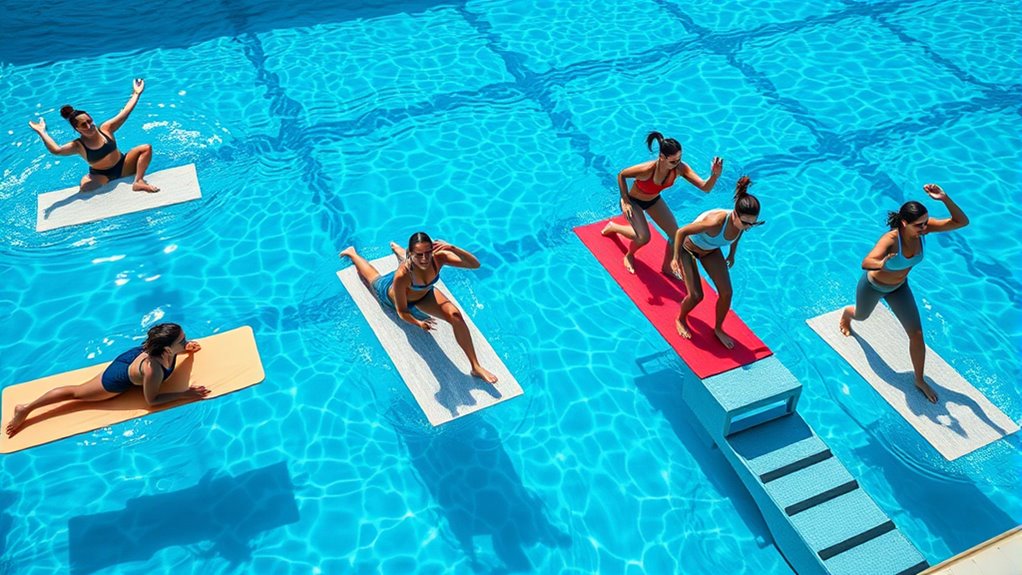
Exercising in the pool offers a low-impact way to boost your fitness without putting stress on your joints. This makes it an ideal environment for high-intensity interval training (HIIT), especially if you’re looking to avoid injury or manage existing joint issues. The key advantage lies in water resistance, which naturally slows down your movements, allowing you to work hard without risking the strain that comes with high-impact exercises on land. As you move through different circuits, you’ll notice how water provides uniform resistance that challenges your muscles effectively, helping you build strength and endurance while minimizing the risk of injury.
Pool workouts provide low-impact, joint-friendly resistance that builds strength and endurance safely.
When creating your low-impact HIIT circuits in the pool, focus on exercises that maximize water resistance without overloading your joints. For example, alternating between fast-paced leg kicks, arm pulls, and torso twists can give you a thorough workout. Water resistance forces your muscles to work harder, but because the resistance is consistent and gentle, you can push yourself without risking the overstress that often accompanies high-impact land workouts. This balance makes it easier to maintain proper form and reduce the likelihood of strains or sprains, promoting injury prevention.
Incorporate intervals of high-intensity movements with recovery phases to optimize your workout. For instance, you might sprint across the pool for 20-30 seconds, then gently jog or walk during the recovery period. The water’s buoyancy supports your body, reducing impact on your joints and making it easier to recover quickly. This cycle of exertion and recovery keeps your heart rate elevated while keeping your joints protected. You can also add in resistance tools like water weights or kickboards to increase the challenge during the high-intensity phases, further engaging your muscles without adding impact stress.
Remember to listen to your body as you progress through your circuits. Since water resistance provides a controlled form of resistance training, you can gauge the intensity based on how your muscles feel and how your joints respond. It’s a great way to sustain consistent effort over time without the setbacks caused by injury or overuse. The buoyant environment encourages a full range of motion, helping improve flexibility and joint health over time, which is crucial for injury prevention. Additionally, understanding the contrast ratio of your workout environment can help optimize visual focus and safety during your exercises.
Ultimately, designing low-impact HIIT circuits in the pool allows you to work intensely while safeguarding your joints. The water’s natural resistance challenges your muscles, and its supportive properties help prevent injuries, making it an effective and sustainable way to boost your fitness without the risks associated with high-impact land exercises.
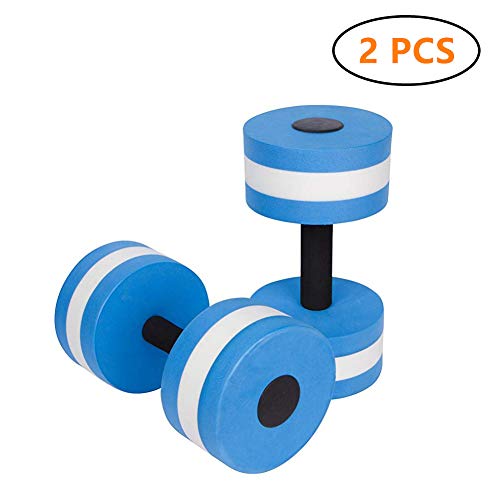
BigBoss Sports Aquatic Exercise Dumbbells Aqua Fitness Barbells Exercise Hand Bars – Set of 2 – for Water Aerobics…
Material:Eva foam. Dimension: 10.8 x 6 x 6 inch / 27.5 x 15 x15 cm.Weight:4.5oz.Recommended for ages 14…
As an affiliate, we earn on qualifying purchases.
As an affiliate, we earn on qualifying purchases.
Frequently Asked Questions
Can Beginners Safely Perform Pool HIIT Workouts?
You might wonder if beginners can safely perform pool HIIT workouts. The answer is yes, if you prioritize water safety and start with beginner modifications. Always stay close to the pool edge, wear appropriate gear, and listen to your body. By easing into the intensity and following safety guidelines, you can enjoy the benefits of high-intensity training while minimizing risks. Just take it slow and focus on proper technique.
What Equipment Is Necessary for Pool HIIT Circuits?
Imagine you’re doing a high-intensity workout in the pool; all you need is some aquatic gear like water dumbbells or resistance gloves. These tools utilize water resistance to challenge your muscles while keeping impact low. Typically, minimal equipment is necessary—just your gear and a pool. This setup guarantees you get an effective HIIT circuit, leveraging water’s resistance for a safe, low-impact workout that’s perfect for all fitness levels.
How Often Should I Do Pool HIIT Sessions Weekly?
You should aim for 2 to 3 pool HIIT sessions weekly to maximize water resistance and cardiovascular benefits without overtraining. Consistent workouts help improve endurance, boost heart health, and build strength while being gentle on your joints. Listen to your body, and adjust frequency if needed. Incorporate variety to keep your routine engaging and make sure you’re giving your muscles enough time to recover between sessions.
Are There Age Restrictions for Pool-Based HIIT Exercises?
Did you know that water resistance makes aquatic exercises suitable for all ages? When considering age restrictions for pool-based HIIT exercises, it’s important to prioritize aquatic safety and consult with your healthcare provider. Water resistance benefits everyone, but older adults or those with health concerns should start slowly and guarantee proper supervision. Age isn’t a barrier, but safety and individual fitness levels are key to enjoying effective, low-impact workouts.
How Can I Modify Exercises for Injury Prevention?
To prevent injuries during pool workouts, focus on modification techniques like reducing range of motion, lowering intensity, and using supportive equipment. You should listen to your body and avoid pushing through pain. Incorporate proper warm-ups and cool-downs, and gradually increase exercise difficulty. These modification techniques help guarantee injury prevention by minimizing strain and allowing your body to adapt safely to your aquatic routine.

Sunlite Sports Swimming Kickboard, Training Aid Float for Swimming and Pool Exercise, Boogie Board Workout Equipment, EVA Material Swim Buoy, Multiple Sizes for Adults and Children
[HIGH-QUALITY MATERIAL]: Made of premium EVA compressed foam, the Sunlite Sports Swimming Kickboard is built with remarkable durability…
As an affiliate, we earn on qualifying purchases.
As an affiliate, we earn on qualifying purchases.
Conclusion
Now that you’ve mastered these low-impact pool HIIT circuits, you’re practically swimming with the strength of a mermaid and the stamina of a marathon runner—without any joint pain! Imagine turning your pool into a secret weapon that transforms you into a fitness superhero overnight. So immerse yourself, push yourself, and watch your body become a powerhouse of energy and vitality—faster than you ever thought possible. Get ready to make waves in your fitness game!

3 PCs Swimming Ankle Strap with 1 Pair Earplug, Rubber Pulling Ankle Band Aquatic Resistance Belt for Swimming Training Legs Resistance Strength Exercise
What You Will Get: The swimming ankle strap kit includes 3 PCS black, red, green ankle straps and…
As an affiliate, we earn on qualifying purchases.
As an affiliate, we earn on qualifying purchases.

Pool Paddle Water Aerobics Equipment | Adjustable Resistance Pool Exercise Equipment for Adults, Swim Paddles Water Weights Dumbbells for Aquatic Exercise, Aqua Weights for Men & Women Workout Gear
10 Resistance Settings: Easily adjust your water weights for pool exercise to your ideal resistance by simply turning…
As an affiliate, we earn on qualifying purchases.
As an affiliate, we earn on qualifying purchases.