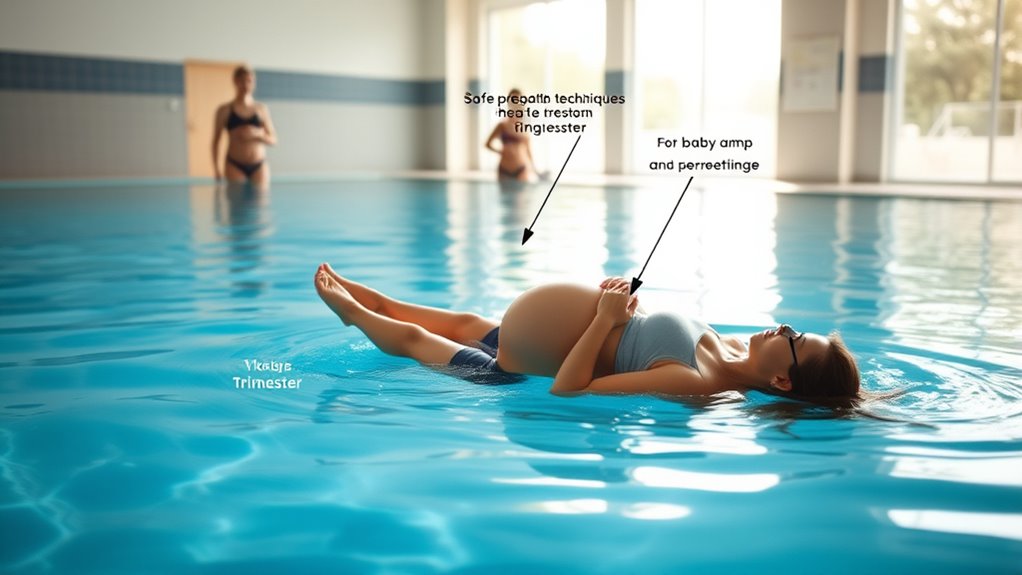

During aqua prenatal classes, you should always keep water temperature between 83°F and 87°F to prevent overheating. In the first trimester, focus on gentle exercises that help with morning sickness and improve circulation, avoiding high-impact moves. As your pregnancy progresses, modify routines to emphasize stability, flexibility, and low-impact movements, avoiding jumping or deep bending. Staying hydrated and listening to your body are key—continue exploring safe practices for each stage to guarantee a healthy, comfortable experience.
Key Takeaways
- Maintain water temperature between 83°F and 87°F to prevent overheating and ensure safety during all trimesters.
- Focus on low-impact, gentle exercises, avoiding jumping, quick twists, or deep bends that strain the abdomen.
- Monitor hydration and avoid overheating by drinking fluids and recognizing signs of fatigue or discomfort.
- Communicate pregnancy stage and concerns with instructors to tailor exercises safely throughout pregnancy.
- Prioritize water support to move freely, but always listen to your body to prevent overexertion or imbalance.
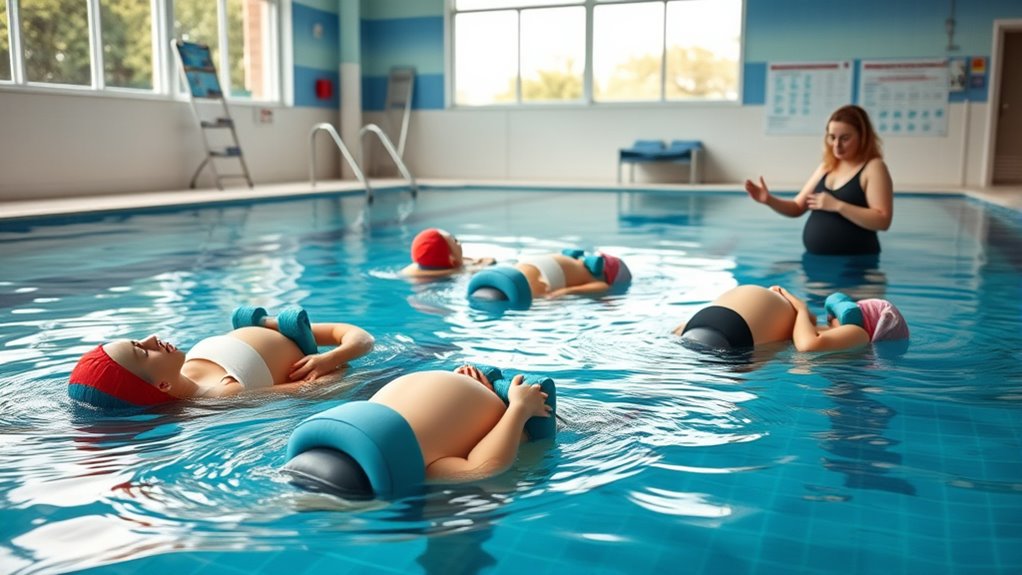
Aqua prenatal classes offer a unique way to stay active and comfortable during pregnancy by combining gentle water exercises with prenatal care. When you participate in these classes, it’s essential to prioritize safety, especially concerning exercise safety and water temperature. The water’s temperature plays a key role in guaranteeing a safe and enjoyable experience. Ideally, the pool should be maintained between 83°F to 87°F (28°C to 31°C). Temperatures higher than this can cause overheating, which isn’t safe during pregnancy, while cooler water helps you feel comfortable and reduces the risk of dizziness or fatigue. Always check with the instructor or facility to confirm that the water temperature is appropriate for pregnant participants. Using appropriate materials such as non-slip mats and supportive footwear can further enhance safety during water exercises.
Exercise safety is paramount as your body undergoes changes across each trimester. In the first trimester, gentle water exercises can help alleviate morning sickness, improve circulation, and boost your mood. However, it’s imperative to avoid high-impact routines or exercises that could cause imbalance or stress on your joints. Water provides a buoyant environment that reduces weight-bearing stress, but you should still listen to your body. If you experience dizziness, shortness of breath, or any discomfort, it’s best to slow down or stop. Always inform your instructor about your pregnancy stage and any concerns so they can tailor the exercises to your needs. Proper technique and avoiding overexertion help minimize risks and maximize benefits.
Prioritize gentle, low-impact water exercises and listen to your body throughout each pregnancy stage.
As you progress into the second and third trimesters, your focus should shift to maintaining flexibility, strength, and endurance safely. During these stages, exercises should be low-impact, emphasizing stability and gentle stretching. Keep movements controlled, and avoid any that involve jumping, quick twists, or deep bending, which could strain your abdomen or cause imbalance. The water’s support allows you to move freely without excessive strain, but it’s still essential to stay within your comfort zone. Staying well-hydrated before, during, and after class is also important to prevent overheating and dehydration. Regularly monitoring your heart rate can help guarantee you’re exercising within a safe range, especially as your body’s response to activity may change.
In all trimesters, the key to safe aqua prenatal exercise is listening to your body and communicating openly with your instructor. They can help modify routines to suit your comfort and safety levels, ensuring you enjoy the benefits of water exercise without risking your health or your baby’s. By paying attention to water temperature and exercise safety guidelines, you can make your prenatal water workouts a safe, effective part of your pregnancy journey.
As an affiliate, we earn on qualifying purchases.
Frequently Asked Questions
Can I Participate in Aqua Prenatal Classes if I Have a High-Risk Pregnancy?
If you have high-risk concerns during pregnancy, it’s essential to consult your healthcare provider before participating in aqua prenatal classes. They can assess your specific situation and determine if water exercises are safe for you. Your doctor might recommend modifications or suggest alternative activities. Always prioritize medical consultation to guarantee your safety and your baby’s well-being, especially with high-risk concerns involved.
Are There Specific Water Temperatures Recommended for Each Trimester?
Think of water temperature as a gentle hug; it should be comfortable and safe. For each trimester, stick to safety guidelines recommending water temperatures between 83°F to 86°F (28.5°C to 30°C). In the first trimester, keep it on the cooler side to avoid overheating. As pregnancy progresses, verify the water isn’t too hot, reducing risks like dehydration or dizziness. Always follow your healthcare provider’s advice for safe immersion.
How Do I Modify Exercises as Pregnancy Progresses?
As your pregnancy progresses, you should modify routines by adjusting intensity and choosing safer, more comfortable exercises. Listen to your body and avoid overexertion, reducing the number of repetitions or duration if needed. Focus on gentle movements that promote relaxation and flexibility. It’s essential to communicate with your instructor or healthcare provider, ensuring your routine stays safe and supportive throughout each trimester.
Is Prior Swimming Experience Necessary to Join Aqua Prenatal Classes?
You don’t need a swimming background or advanced aquatic skills to join aqua prenatal classes. These classes are designed for all experience levels, focusing on safe, gentle exercise suited for pregnancy. Instructors guide you through modifications if you’re new to swimming, ensuring you feel comfortable and supported. So, whether you’re a beginner or experienced swimmer, you can benefit from these classes and enjoy the safe environment they provide.
What Should I Do if I Experience Discomfort During Class?
If you experience discomfort during class, you should immediately let your instructor know to guarantee proper water safety. Avoid pushing through discomfort; instead, practice discomfort management by resting or adjusting your position. Staying aware of how you feel helps prevent overexertion or injury. Remember, your instructor can modify exercises or suggest safe alternatives, so don’t hesitate to communicate your needs for a safe and enjoyable experience.
Conclusion
By following these safety guidelines for each trimester, you’ll navigate your aqua prenatal classes with confidence and ease. Remember, each session is like a gentle wave guiding you closer to a healthy, joyful pregnancy. Trust in the precautions, listen to your body, and embrace the soothing power of water. With these tips, you’ll turn your prenatal journey into a serene adventure—more calming than the ocean itself! Plunge in safely and enjoy every moment.