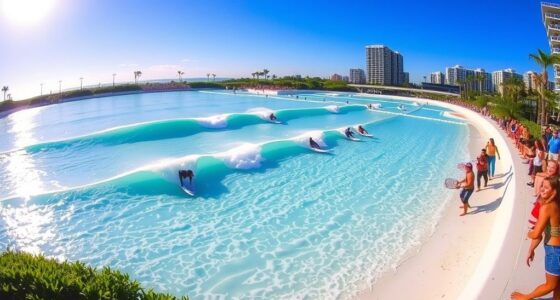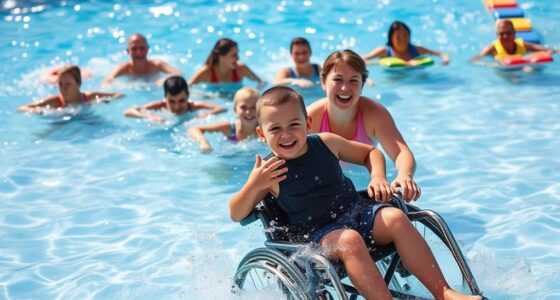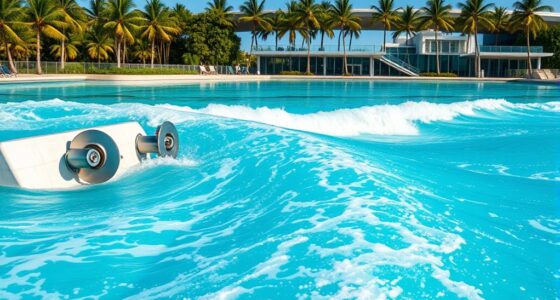
In surf parks, choosing between chlorination and ozone depends on your priority for water quality. Chlorination is cost-effective, simple to operate, and provides ongoing residual disinfection, but it can leave chemical smells and skin irritation if not managed properly. Ozone treatment, on the other hand, destroys contaminants faster, improves water clarity, and reduces chemical exposure, though it requires higher upfront costs and complex equipment. To understand which system best suits your needs, explore the details further.
Key Takeaways
- Chlorination provides residual disinfection, maintaining ongoing water safety, while ozone offers rapid contaminant breakdown without residuals.
- Ozone treatment enhances water clarity and reduces chemical exposure, whereas chlorination is more cost-effective and easier to maintain.
- Combining ozone with low-level chlorination balances strong oxidation with continuous residual protection for surf park water.
- Proper water quality monitoring is essential regardless of method to prevent skin, eye, and respiratory issues.
- Environmental impacts favor ozone due to fewer chemical byproducts and lower chemical usage compared to traditional chlorination.

Surf parks have become popular destinations for wave enthusiasts, but maintaining high water quality is vital for your safety and enjoyment. When you’re in the water, you want to feel confident that the environment is clean and safe. That’s where pool sanitation and chemical balancing come into play. These elements are essential for ensuring the water stays free of harmful bacteria and contaminants, so you can focus on catching waves without worry.
Pool sanitation involves the processes used to keep the water hygienic. In surf parks, this typically means using disinfectants to eliminate bacteria, algae, and other microorganisms. The most common method is chlorination, which involves adding chlorine to the water to kill germs and keep the water clear. Chlorine is reliable, cost-effective, and well-understood, making it a popular choice across many water facilities. However, maintaining proper chemical balancing is equally important. If the pH levels and chlorine concentrations aren’t correctly managed, the water can become either too corrosive or too inviting for bacteria. Proper chemical balancing ensures that the disinfectants work effectively, reducing the risk of skin irritation or eye discomfort for swimmers.
Maintaining balanced chlorine levels is essential for hygienic, safe surf park water.
Ozone treatment offers a different approach to pool sanitation. It’s a powerful oxidizer that destroys bacteria, viruses, and organic contaminants more quickly than chlorine. When ozone is infused into the water, it reacts rapidly with impurities, breaking them down into harmless byproducts. Unlike chlorine, ozone doesn’t leave a residual chemical smell or taste, which can enhance your overall experience. But ozone alone isn’t always enough; it’s often combined with low levels of chlorination to maintain ongoing sanitation, especially in high-traffic surf parks.
Choosing between chlorination and ozone depends on a variety of factors, including cost, maintenance, and water quality goals. Chlorine systems are simpler and cheaper to operate but may require more careful chemical balancing to prevent over-chlorination or residual buildup. Ozone systems tend to have higher upfront costs and complex equipment, but they reduce chemical exposure and improve water clarity. Whichever method is used, consistent monitoring of water chemistry is vital. Regular testing ensures that water remains within safe parameters, protecting your skin, eyes, and respiratory health.
Additionally, advancements in AI technology are being explored to optimize water treatment processes, making them more efficient and environmentally friendly. Ultimately, your safety and enjoyment depend on effective pool sanitation and precise chemical balancing. Whether it’s chlorine or ozone, keeping water clean isn’t just about compliance; it’s about creating a welcoming environment where you can focus on riding the waves without worrying about waterborne hazards. By understanding these systems and their importance, you can better appreciate the effort that goes into maintaining high water quality in surf parks.

Lansru Men Wetsuit, 5/4mm Upgrade CR Neoprene Wetsuits for Men, Ideal Thermal Wet Suit in Cold Water, Front Zip for Surfing Snorkeling Diving Swimming
Advanced Insulation: Lansru's 5MM SCR NEOPRENE wetsuits excel in elasticity and warmth, surpassing those made with SBR neoprene...
As an affiliate, we earn on qualifying purchases.
Frequently Asked Questions
How Do Chlorination and Ozone Affect Swimmer Allergies?
You might wonder how chlorination and ozone influence swimmer allergies. Chlorine can irritate your skin, eyes, and respiratory system, potentially triggering allergy symptoms or immune responses. Ozone, being a powerful oxidizer, often causes fewer irritations and may reduce allergy triggers. If you’re prone to allergies, ozone-treated water could be gentler on your immune system, helping you enjoy surf parks without as much risk of allergy flare-ups.
What Are the Long-Term Health Risks of Ozone in Water?
Think of ozone as a double-edged sword—cleaning your water but potentially cutting into your health. Long-term exposure to ozone in water might pose risks, as it can break down into byproducts with carcinogenic potential. While ozone is effective in sterilization, repeated contact could increase your chances of respiratory issues or other health problems over time. Stay informed and consider the long-term health implications before exposure.
Can Surf Parks Switch Between Chlorination and Ozone?
You can switch between chlorination and ozone as alternative disinfection methods in surf parks. This flexibility allows you to optimize water treatment based on water quality, safety, and environmental impact. By integrating different water treatment methods, you can maintain high water quality standards and reduce long-term health risks. Regularly evaluating the effectiveness of each method guarantees the best disinfection approach, enhancing both safety and user experience.
How Do These Methods Impact Environmental Sustainability?
You want to know how water treatment methods impact environmental sustainability. Chlorination has a higher environmental footprint due to chemical use and potential byproducts, while ozone treatment is more resource-efficient and produces fewer harmful residues. Switching between these methods affects resource efficiency and overall sustainability. Choosing ozone can reduce chemical consumption and lessen environmental impact, making your surf park more eco-friendly and aligned with sustainable practices.
Are There Any Differences in Maintenance Costs?
When comparing maintenance costs, you’ll notice differences in cost comparison and maintenance complexity. Ozone systems often have higher upfront costs but lower ongoing expenses due to less chemical use and easier maintenance. Chlorination tends to have lower initial costs but requires regular chemical handling and more frequent upkeep. Overall, ozone may be simpler to maintain long-term, though initial investment is higher, making it an essential factor in your decision.
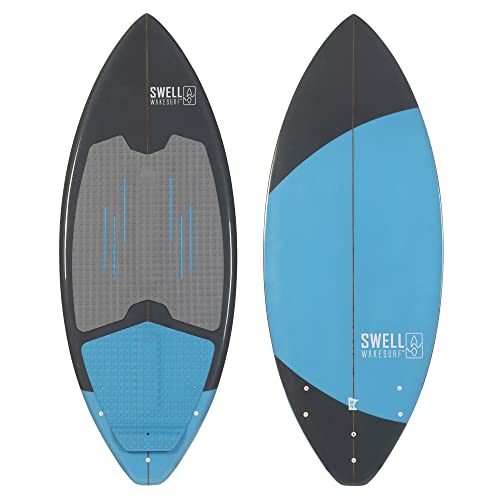
SWELL Wakesurf - Vermillion Skim Board (56)
BOARD STYLE: The Vermillion Skim Board is a skim style wakesurfer. Ideal for surface tricks like 360's, shuv-its,...
As an affiliate, we earn on qualifying purchases.
Conclusion
When choosing between chlorination and ozone for surf parks, remember that your water quality depends on the right balance. Chlorination might be the trusty old guard, but ozone offers a powerful, almost magical clean that transforms your water into crystal-clear paradise. Don’t settle for less—your surfing experience deserves the best. With the right treatment, you’ll feel like you’re riding waves in a pristine, never-before-seen aquatic wonderland. Trust the system that keeps your water perfect every single time.

Ronix Koal Classic Fish Wakesurf Board for All Levels | Versatile Forgiving Surf-Style Board with Tool-Free Fin-S System & Swallowtail | Best for Recreational Wakesurfing, Glossy Black/Bamboo, 5'
SURF-STYLE PERFORMANCE FOR ALL LEVELS - The Ronix Koal Classic Fish Wakesurfing Board is designed as a true...
As an affiliate, we earn on qualifying purchases.
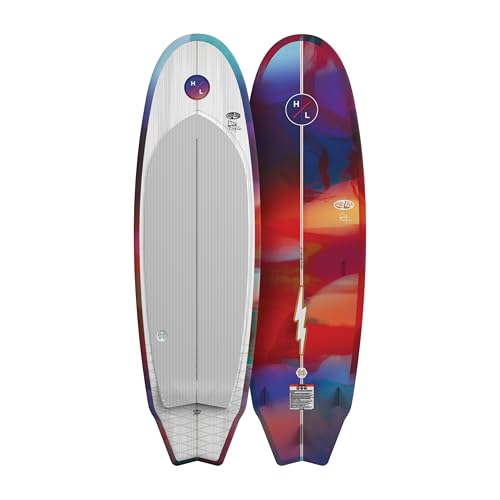
Hyperlite Landlock Longboard-Inspired Wake Surf Board - for Beginners to Intermediate Riders - Catching All Waves Behind The Boat - 5’9”
BEGINNER-FRIENDLY RIDE: Designed for first-time riders, bigger surfers, or relaxed sessions, this longboard-inspired wakesurf board incorporates Hyperlite’s rounded...
As an affiliate, we earn on qualifying purchases.