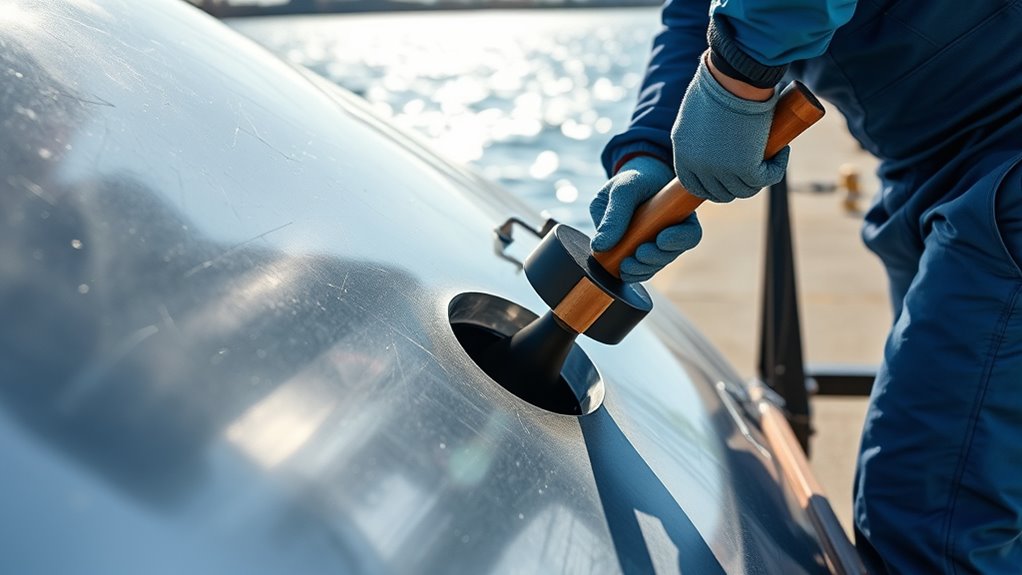

To repair aluminum hull dents in the field, first assess the damage’s size and depth, and prepare the surface by cleaning with solvent and removing paint if needed. For minor dents, use tools like a rubber mallet and wood block to reshape the metal; for larger dents, carefully apply heat to expand the aluminum. Fill deep areas with marine-grade epoxy or aluminum filler, then sand and finish to match the hull. Continue to learn detailed steps to guarantee a durable fix.
Key Takeaways
- Assess dent size and depth to determine if simple reshaping or heating is needed.
- Prepare the surface by cleaning, sanding, and removing paint or coatings around the dent.
- Use manual tools like a rubber mallet and wood block for minor dents; heat larger dents carefully if necessary.
- Fill deep dents with marine-grade epoxy or aluminum filler, then cure, sand, and shape for a seamless finish.
- Refinish the area with matching paint or coating to restore hull appearance and ensure durability.
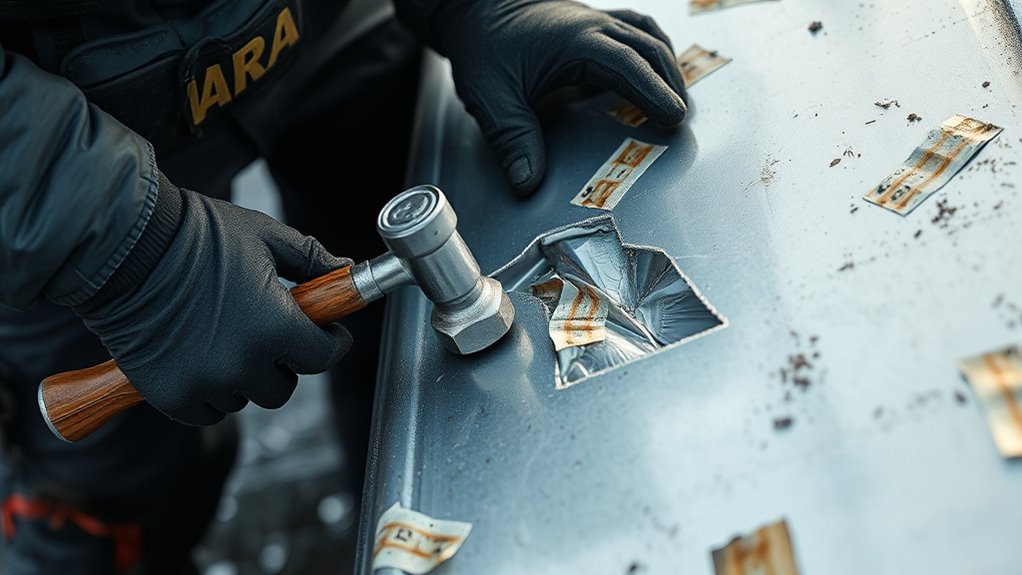
Aluminum hull dents can compromise your boat’s performance and appearance, but repairing them is often straightforward if you know what steps to take. When dealing with dents in your boat’s hull, it’s helpful to think of the repair process like dental bonding—using the right materials and techniques to restore strength and smoothness. Just as dental bonding requires precision and proper adhesion, fixing an aluminum hull dent demands careful surface preparation and the right tools to ensure a seamless repair.
Start by evaluating the severity of the dent. If it’s a minor ding, you might be able to fix it with simple tools like a rubber mallet and a block of wood or a specialized dent removal kit. For larger dents, you may need to heat the area with a heat gun to expand the metal slightly, making it easier to reshape. Be cautious not to overheat, as excessive heat can cause warping or weaken the aluminum. Once you’ve reshaped the metal as best as possible, use a sanding block to smooth out rough edges and prepare the surface for further treatment.
Assess dent severity; use tools or heat for larger dents; smooth edges with a sanding block.
If the dent has caused paint or coating damage, you’ll need to sand the area down to bare metal. This is similar to preparing a surface for dental bonding—clean, dry, and free of debris. Clean the area thoroughly with a solvent or acetone to remove oil, dirt, or any contaminants. Proper surface prep ensures that the repair material adheres well and that the finish matches the surrounding hull. Additionally, choosing a repair method compatible with the material’s sustainability can help maintain the environmental benefits of the original fabric.
For deeper dents or areas with compromised structural integrity, consider using aluminum patching or welding. If welding isn’t an option, you can use a high-quality marine-grade epoxy or aluminum filler that cures to a hard, durable finish. Think of this as applying a dental bonding agent—precise application is key to achieving a smooth, seamless repair. Once the filler is cured, sand and shape it to match the hull’s contour, then repaint or refinish the area to restore its appearance.
In the field, you might also want to address other boat maintenance issues, such as solar panel repair. Just like fixing dents, solar panel repair involves diagnosing the issue—be it cracked panels, wiring problems, or connection failures—and applying targeted fixes. Both tasks require careful inspection, the right tools, and patience. With the right approach, repairing aluminum hull dents becomes manageable, allowing you to maintain your boat’s performance and look without the need for costly professional repairs.

Fender x Wavestorm Collaboration 8ft Surfboard | Graphic top Deck with high Density Slick Bottom | for Kids and Adults | Foam Construction with Accessories | Leg Leash and Fin Set Included
The Wavestorm 8ft surfboard dimensions are 96 l x 22.5" w x 3.25" thick - weight is 11.4lbs...
As an affiliate, we earn on qualifying purchases.
Frequently Asked Questions
Can I Repair Aluminum Hull Dents Without Professional Tools?
You can attempt DIY techniques to repair aluminum hull dents without professional tools, but it’s challenging. Basic tool requirements include a mallet, wooden blocks, and a heat source. Carefully applying gentle taps and using heat can help reshape the aluminum. However, for deep or complex dents, professional repair is recommended to avoid causing further damage. Always assess your skill level before tackling hull repairs on your own.
How Long Does It Typically Take to Fix a Hull Dent?
You might wonder how long fixing a hull dent takes. The time depends on the dent’s size and location, as well as your hull inspection and tool selection. Usually, minor dents can be remedied within a few hours if you have the right tools and experience. Larger or more complex dents may take longer, possibly a day or more. Proper assessment and preparation help ensure a quicker, more effective repair process.
Are There Specific Safety Precautions for Field Repairs?
When doing field repairs, you need to prioritize safety by wearing personal protective equipment like gloves, goggles, and gloves to prevent injuries. Always follow fire safety protocols, keeping flammable materials away from heat sources. make certain you have proper ventilation, especially if using chemicals or tools that emit fumes. Being cautious helps prevent accidents and injuries, making your repair work safer and more effective.
Will Repairing Dents Affect the Boat’s Resale Value?
You might wonder if repairing dents impacts your boat resale value. Generally, professional dent repair can improve your boat’s appearance, which benefits resale prospects. However, if the repair isn’t done properly or leaves visible marks, it could negatively affect resale value. Overall, well-executed dent repair maintains or even enhances boat resale value, but poor work might reduce it. Always choose experienced professionals to guarantee the best dent repair impact.
What Are the Costs Involved in DIY Aluminum Hull Dent Repair?
When considering DIY aluminum hull dent repair, you should do a cost analysis to understand expenses involved. Material expenses include aluminum filler, sandpaper, welding supplies, and protective gear. You might also need basic tools like a hammer, pry bars, and a grinder. Overall, costs can range from $50 to $300 depending on the dent’s size and your existing tools. Budget accordingly to ensure a successful repair without overspending.
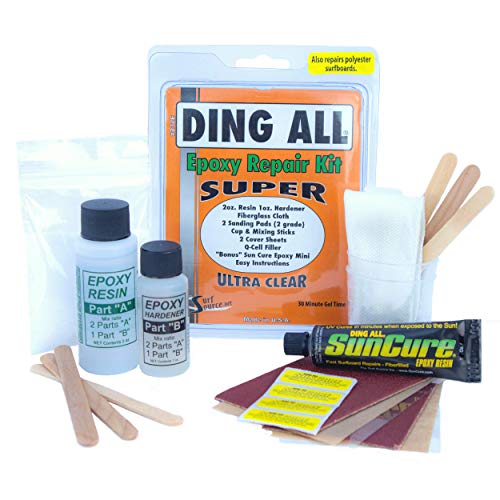
Ding All 3 Oz (84ml) Super Epoxy Repair Kit for Small to Medium Size Epoxy and Polyester Surfboards Repairs
THE ORIGINAL EPOXY REPAIR KIT: The Ding All Standard Kit contains ultra-clear, easy sand SS 2000 epoxy resin...
As an affiliate, we earn on qualifying purchases.
Conclusion
Now that you’ve learned how to repair aluminum hull dents in the field, the real test begins. Will your quick fixes hold up under pressure, or will hidden damage surface later? Remember, every dent has a story, and your next move could determine whether the hull stays strong or succumbs to unseen flaws. Stay vigilant—sometimes, the most vital repair isn’t the one you see, but the one you can’t. Keep your skills sharp; the ocean’s secrets wait.

Ding All Polyester Sanding Resin with Catalyst - Smooth and Non-Tacky Product for Surfboard Repairs - 8 oz
THE ORIGINAL POLYESTER SANDING RESIN: Ding All Polyester Resin contains Silmar brand 250A Polyester Sanding Resin, which is...
As an affiliate, we earn on qualifying purchases.

Ding All 4 Oz All SUPER Polyester Repair Kit for Medium to Large Sized Polyester Surfboards Repairs
THE ORIGINAL POLYESTER SANDING RESIN: Ding All Polyester Resin contains Silmar brand 250A UV Polyester Sanding Resin, which...
As an affiliate, we earn on qualifying purchases.