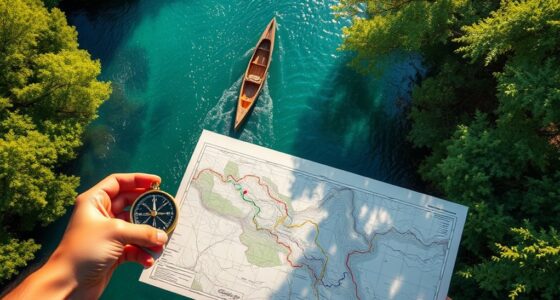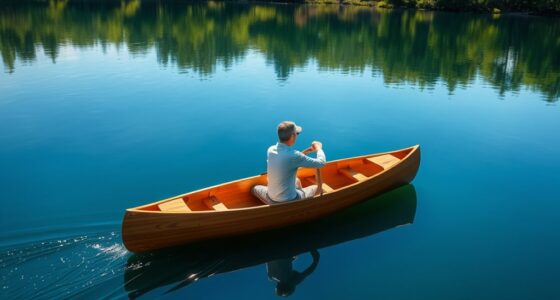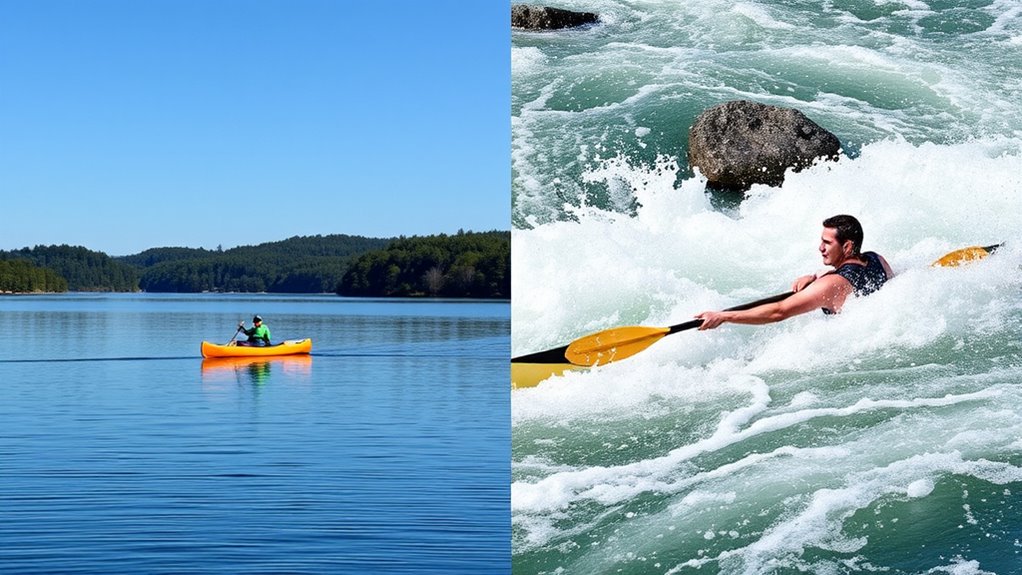

Flatwater and river canoeing have key differences in environment and skills required. In flatwater, you’ll focus on steady strokes and balance in calm conditions. River canoeing demands quick reflexes and adaptability to navigate currents and obstacles. While flatwater builds foundational techniques, river paddling requires physical strength and risk management. You’ll need specialized gear for river adventures too. Want to explore more about these unique styles and what they entail?

Get sports gear delivered free — and shop member deals
- Fast, free delivery on millions of items
- Access to Prime Big Deal Days deals on October 6–7
- Prime Video, Amazon Music and more included
Key Takeaways
- Flatwater canoeing focuses on smooth strokes and steady pacing, while river canoeing requires quick reflexes to navigate turbulent waters and obstacles.
- Skills developed in flatwater include balance and steering, whereas river canoeing emphasizes reading water and making swift decisions.
- Safety considerations differ; flatwater has fewer hazards, while river canoeing requires heightened awareness and emergency preparedness due to currents and obstacles.
- Equipment for flatwater emphasizes stability, while river canoeing necessitates specialized safety gear like life jackets and helmets.
- Both styles require knowledge of canoe safety protocols, but river canoeing demands more rigorous risk management due to environmental challenges.

Have you ever wondered how flatwater canoeing stacks up against river canoeing? Both styles offer unique experiences and challenges, but they require different skills and considerations. When you’re out on calm lakes or slow-moving rivers, flatwater canoeing focuses on smooth surfaces and steady strokes. In contrast, river canoeing presents a whole different game, where currents and rapids come into play, demanding more advanced paddling techniques and an understanding of canoe safety.
In flatwater canoeing, you’ll enjoy a more leisurely pace. The flat, calm waters allow you to focus on perfecting your paddling techniques without the worry of navigating through turbulent waters. You’ll learn to use long, smooth strokes, maintaining a consistent rhythm as you glide through the water. This environment is ideal for practicing your balance and steering skills, as you can take your time to find what works best for you. Canoe safety is also simpler in flatwater settings; you’re less likely to encounter sudden hazards, and you can easily scout the area before setting out on your journey.
Switch gears to river canoeing, and you’ll find yourself facing a different set of challenges. Here, the water is constantly moving, and the current can dictate your path. You’ll need to develop quick reflexes and adaptive paddling techniques to navigate through rapids or avoid obstacles like rocks and fallen trees. This style of canoeing not only requires physical strength but also mental agility—being able to read the water and make split-second decisions is vital for your safety and enjoyment. Canoe safety becomes paramount; knowing how to execute a swift maneuver can mean the difference between a smooth ride and a challenging situation. Additionally, understanding risk management in river canoeing is crucial for ensuring both safety and enjoyment.
As you move from flatwater to river canoeing, you’ll discover that each style teaches you something unique. Flatwater builds your foundational skills, while river canoeing pushes you to refine those skills under pressure. Both require an understanding of canoe safety, but river canoeing demands a greater emphasis on risk management and emergency preparedness. You’ll need to wear proper gear, like life jackets, and be aware of your surroundings at all times.
As an affiliate, we earn on qualifying purchases.
Frequently Asked Questions
Can Beginners Start With River Canoeing or Should They Choose Flatwater First?
You can start with river canoeing, but it might be better to choose flatwater first. Beginners often face challenges like steering currents and dealing with rapids, which can be overwhelming. By starting on flatwater, you’ll build essential skills and confidence, making the shift to river canoeing smoother. As you progress, you’ll develop better balance and paddling techniques, allowing you to tackle river conditions more effectively when you’re ready.
What Safety Gear Is Essential for Both Flatwater and River Canoeing?
For both flatwater and river canoeing, vital safety gear includes life jackets and helmets. You should always wear a properly fitted life jacket to stay afloat in case of capsizing. If you’re tackling river currents, a helmet is essential to protect your head from potential impacts. Additionally, consider bringing a whistle for signaling and a first aid kit for emergencies. Prioritizing safety gear guarantees you can enjoy your paddling adventure with peace of mind.
How Do Weather Conditions Affect Flatwater and River Canoeing Experiences?
Weather conditions can turn your canoeing adventure into a dance with nature. When you’re on flatwater, calm skies mean smooth sailing, but sudden storms can make the surface choppy. In river canoeing, weather variability can bring swift currents and rising water temperatures, challenging your skills. Always check forecasts before you go; a sunny day might invite you out, but a brewing storm could spell trouble, transforming tranquility into turbulence.
Are There Specific Canoe Types Best Suited for Flatwater or River Use?
Yes, certain canoe types are better suited for flatwater or river use. For flatwater, you’ll want a longer, narrower canoe designed for speed and efficiency, enhancing watercraft versatility. In contrast, river canoes are typically shorter and wider, providing stability and maneuverability in turbulent waters. Each canoe design caters to specific conditions, ensuring you have the best experience whether you’re steering on calm lakes or maneuvering lively river currents.
What Are the Environmental Impacts of Flatwater Vs River Canoeing?
When you’re gliding across serene waters, you might not think about the impact you’re having. Both flatwater and river canoeing can affect the environment differently. Flatwater can lead to less wildlife disturbance due to calmer conditions, but you still need to practice eco-friendly habits. On the river, fast currents can cause more sediment disruption and potential wildlife disturbance. Being mindful of your surroundings guarantees you preserve these beautiful ecosystems while enjoying your adventure.
Conclusion
In the grand adventure of canoeing, whether you’re gliding peacefully on a tranquil lake or steering through the thrilling rapids of a river, each experience offers its own unique rewards. Just like Odysseus faced the challenges of the sea, you’ll develop skills and confidence that set you apart. Embrace the calm and the chaos; they’ll teach you resilience and joy. So, grab your paddle, and set forth on your journey—every stroke is a step toward unforgettable memories!
NFL season / tailgating Picks
team gear
As an affiliate, we earn on qualifying purchases.