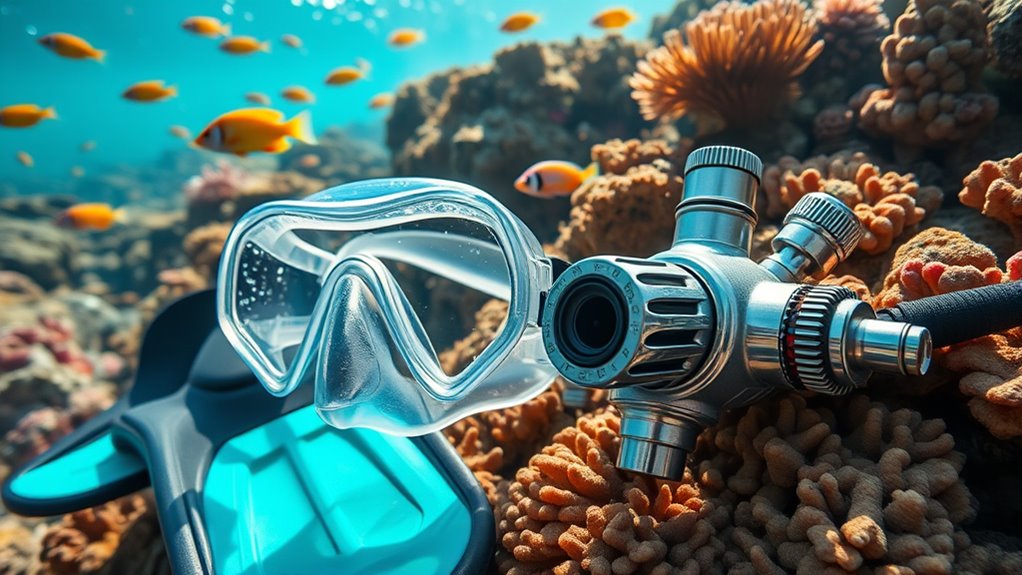

Choosing the right diving gear—masks, regulators, and fins—is vital for your safety and enjoyment underwater. Make certain your mask fits snugly and has tempered glass lenses with anti-fog coatings. For regulators, look for reliable performance and safety features, like a secondary mouthpiece. When selecting fins, prioritize comfort and movement efficiency. Always assess your equipment for wear and compliance with safety standards. Want to know more about enhancing your diving experience? Keep exploring the essentials of diving gear.

Get sports gear delivered free with Prime
- Fast, free delivery on millions of items
- Prime Video, Amazon Music and more included
- Member-only deals all year
Key Takeaways
- Ensure masks fit snugly and test for a proper seal by inhaling gently without the strap.
- Select regulators based on performance in your diving conditions and ensure they meet safety standards.
- Choose fins that provide propulsion efficiently and match them to your specific diving activities.
- Prioritize comfort, fit, and safety features in all equipment to enhance your underwater experience.
- Regularly assess and test your gear for wear and performance to ensure reliability during dives.
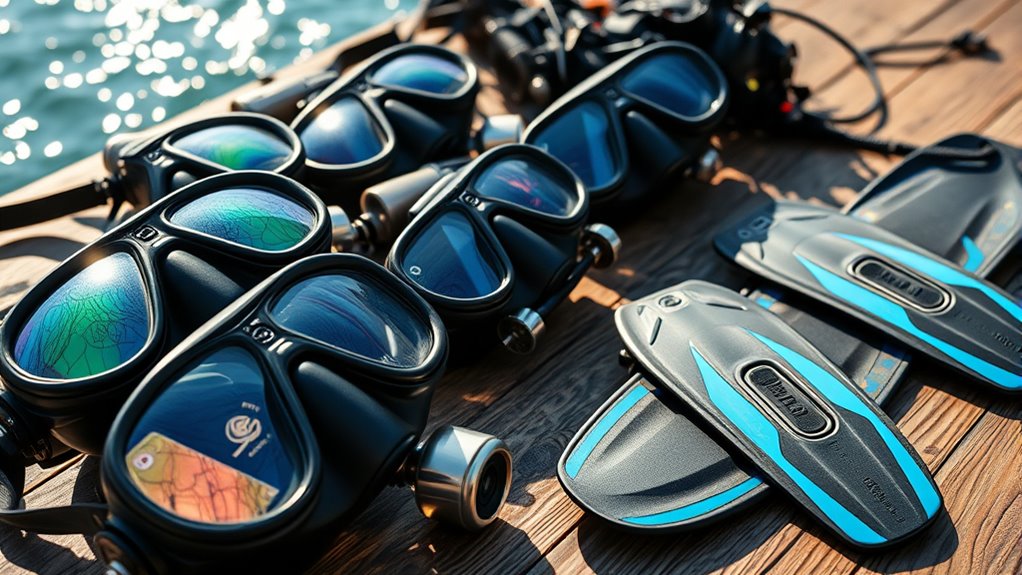
When you’re gearing up for a dive, how do you choose the right equipment? Selecting the right gear isn’t just about personal preferences; it’s vital for your safety and enjoyment underwater. You need to consider several factors, including comfort, fit, and the specific conditions you’ll encounter. Masks, regulators, and fins are your primary tools, and each plays an important role in your diving experience.
Choosing the right diving equipment is crucial for safety and enjoyment; prioritize comfort, fit, and specific conditions for an optimal experience.
Let’s start with masks. A good mask should fit snugly without causing discomfort. You can test this by placing the mask on your face without the strap and inhaling gently through your nose; it should create a seal. Look for tempered glass lenses for better visibility and anti-fog coatings to keep your view clear. If you’re diving in areas where communication is key, consider a mask that accommodates underwater communication devices. This will allow you to interact with your dive buddy, ensuring you both stay informed and safe.
Next up is the regulator. It’s your lifeline underwater, supplying you with air from your tank. When choosing a regulator, pay attention to its performance in different conditions. For example, if you’re diving in cold water, a regulator designed for those conditions is essential. Make sure it meets diving safety standards, as this guarantees reliability and efficiency. You should also check if it includes features like an octopus—a secondary mouthpiece for emergencies, which is a must for any safe dive.
Fins are just as important, as they can profoundly influence your movement in the water. You want fins that provide good propulsion without requiring excessive energy. Try on various styles—full-foot or open-heel—and see which feels best for you. Consider the type of diving you’ll be doing; for example, if you’re exploring coral reefs, fins that allow for delicate movements may be preferable. Look for those that also comply with diving safety standards to ensure durability and reliability.
diving mask with tempered glass and anti-fog coating
As an affiliate, we earn on qualifying purchases.
As an affiliate, we earn on qualifying purchases.
Frequently Asked Questions
How Do I Clean and Maintain My Diving Gear?
To clean and maintain your diving gear, rinse it thoroughly with fresh water after each dive to remove salt and sand. Establish a regular cleaning routine, using mild soap for deeper cleans. Store your gear in a cool, dry place, avoiding direct sunlight. Inspect your equipment for wear and tear regularly, and replace any damaged parts promptly. By following these steps, you’ll make certain your gear lasts longer and performs better on every dive.
What Is the Lifespan of Diving Masks and Fins?
Your diving mask typically lasts around 5 to 10 years, depending on its durability and how well you care for it. High-quality silicone masks tend to last longer. As for fins, their lifespan varies based on fin material; plastic fins may wear out faster than those made of rubber or composite materials. Regularly inspect your gear for signs of wear and tear to guarantee they remain safe and effective for your diving adventures.
Can I Rent Diving Gear Instead of Buying?
Absolutely, you can rent diving gear instead of buying! It’s a lifesaver for those who want to immerse themselves without breaking the bank. Rental options are everywhere, and they offer you a chance to try high-quality gear without the hefty price tag. Plus, if you’re just starting out or diving infrequently, renting is a smart way to keep gear affordability in check. Dive in and enjoy the underwater world without the commitment of ownership!
How Do I Know My Size for Diving Gear?
To know your size for diving gear, start with fit assessments. Measure your head for masks, ensuring it’s snug but comfortable. For wetsuits, check your chest, waist, and inseam to find the right fit. Regulators usually come in standard sizes, but it’s best to try them on. Don’t forget about fins; they should fit securely without pinching. Always consult sizing charts provided by manufacturers for the best gear sizing.
Are There Specific Brands Recommended for Beginners?
Absolutely, there are several brands that cater to beginners with great options. You might want to check out Scubapro, Cressi, and Aqua Lung—they’re known for their beginner-friendly gear. These brands offer reliable masks, regulators, and fins that make your first diving experiences enjoyable and safe. Always look for equipment that fits well and feels comfortable; it’ll enhance your underwater adventures and build your confidence as you dive deeper into the sport!
Conclusion
Choosing the right diving gear is like finding the perfect partner for an underwater dance—each piece must complement the other. Your mask should fit snugly, your regulator should breathe easily, and your fins should propel you gracefully through the water. So, take your time in selecting the gear that feels right for you. When you’ve got the right setup, you’ll plunge into the ocean with confidence, ready to explore the wonders beneath the waves!
Halloween Picks
halloween
As an affiliate, we earn on qualifying purchases.