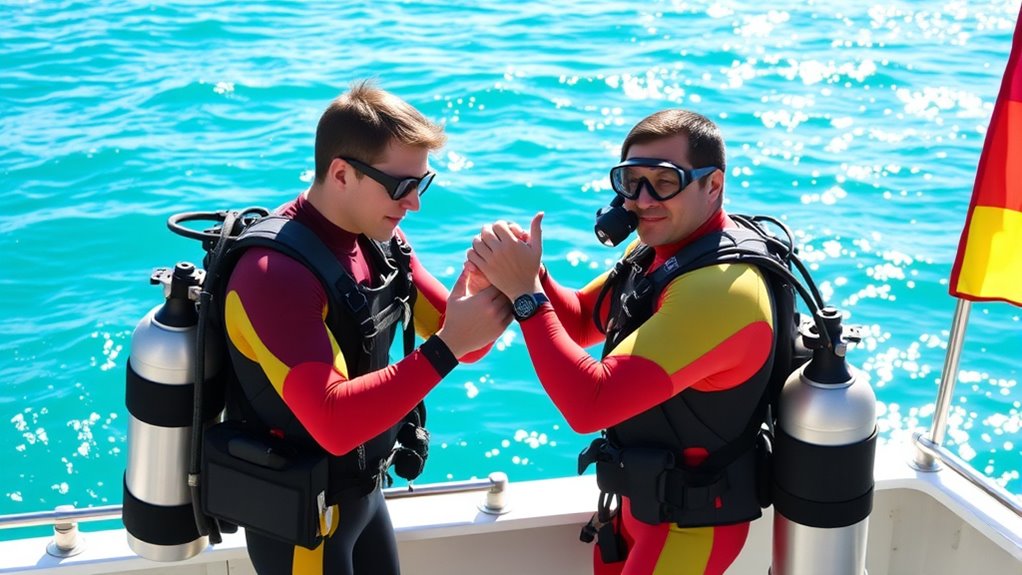

Safety procedures for scuba diving start with thorough buddy checks and detailed dive plans. Before you dive, discuss entry and exit points, depth, and duration with your buddy. Make sure to inspect your equipment and each other’s gear for functionality. Agree on underwater signals for communication, and stay close to your buddy throughout the dive. Post-dive, debrief and identify improvements for future dives. There’s so much more you can discover to enhance your diving experience.

Get sports gear delivered free with Prime
- Fast, free delivery on millions of items
- Prime Video, Amazon Music and more included
- Member-only deals all year
Key Takeaways
- Conduct thorough buddy checks to confirm both divers’ equipment is functional and ready for the dive.
- Discuss and agree on the dive plan, including entry/exit points, depth, and duration, to ensure mutual understanding.
- Establish and practice underwater communication signals to effectively convey messages during the dive.
- Maintain close proximity to your buddy throughout the dive and regularly check in to ensure safety.
- After the dive, hold a debriefing session to reflect on successes and areas for improvement for future dives.
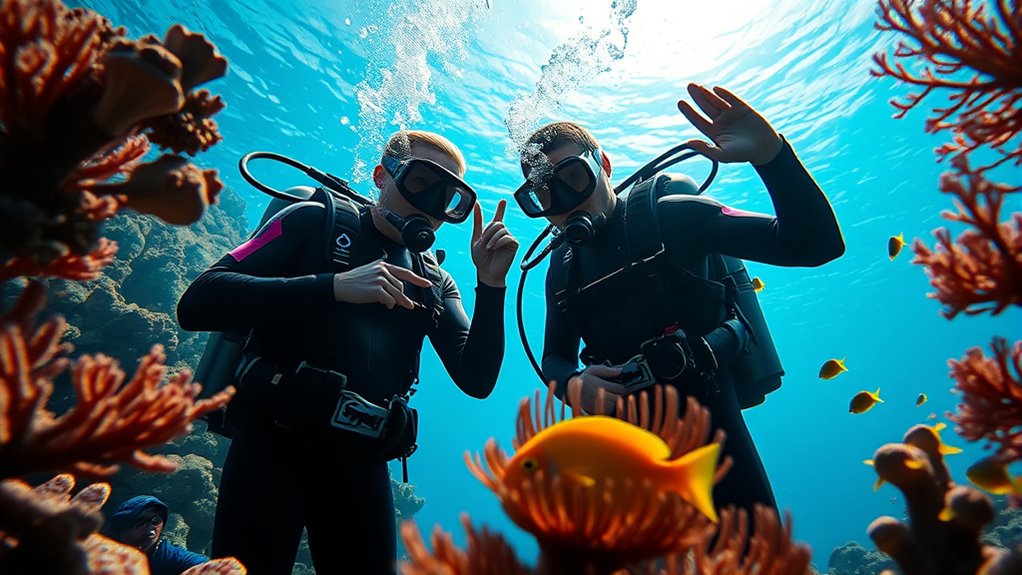
When you plunge into the underwater world, guaranteeing your safety is paramount. One of the best ways to do this is by sticking to buddy checks and plans. You and your diving partner should always be on the same page before you submerge. This means discussing your dive plan, including your entry and exit points, the depth you’ll reach, and the duration of your dive. Having a clear plan helps prevent miscommunication and keeps both of you safe.
Before you even think about diving, make sure your equipment is ready to go. Equipment maintenance is vital. Check your gear thoroughly, including your tank, regulator, and buoyancy control device. Look for any signs of wear or damage, and don’t hesitate to replace anything that seems off. A well-maintained setup is your first line of defense against potential hazards underwater. You should also review your buddy’s gear and ensure everything’s functioning properly. It’s a good practice to double-check each other’s equipment.
Once you’ve both confirmed that your gear is in top shape, it’s time to establish emergency signaling methods. Before you dive, agree on specific signals to use during the dive. For example, if one of you encounters difficulty, a simple signal for “ascend” can be life-saving. Knowing how to communicate underwater, where sound doesn’t travel, is essential. Make sure you’re both familiar with these signals and practice them before you dive.
During your dive, stay close to your buddy. Regularly check in with each other, whether it’s through gestures or just a glance. If anything feels off, don’t hesitate to signal your buddy and discuss the situation. If you experience any issues, remember to remain calm. Panic can cloud your judgment, so keep your head clear and follow your dive plan.
Once you complete your dive, don’t forget to debrief. Discuss what went well and what could be improved for next time. This reflection will prepare you for future dives and enhance your safety practices. Practicing buddy checks and maintaining your equipment builds a solid foundation for safe diving. It not only keeps you safe but also enriches your diving experience. By prioritizing safety, you guarantee that your underwater adventures are both enjoyable and secure. Additionally, understanding emergency signaling methods can significantly enhance your safety during dives.
As an affiliate, we earn on qualifying purchases.
Frequently Asked Questions
What Should I Do if My Buddy Goes Missing Underwater?
If your buddy goes missing underwater, stay calm and signal for help using emergency signals. Try to locate them by retracing your steps and checking nearby areas. If you can’t find them within a minute or so, initiate lost diver procedures. Deploy a surface marker buoy if possible, then ascend safely to inform the boat crew. Keep an eye on the surroundings for any signs of your buddy during your ascent.
How Can I Improve Communication With My Dive Buddy?
To improve communication with your dive buddy, start with a thorough pre-dive talk. Discuss your dive plan, expectations, and any specific signals you’ll use. Establish clear hand signals for common situations, like “up,” “down,” or “problem.” Practice these signals before you dive, ensuring you both understand them. During the dive, maintain eye contact, and use hand signals to communicate effectively. This way, you’ll both feel more confident and connected underwater.
What if My Dive Buddy Is Inexperienced?
If your dive buddy’s still getting their fins wet, it’s essential to build their diver confidence. Take time to familiarize them with the equipment, letting them explore it like a child discovering a treasure chest. Start with shallow dives where they can practice skills in a safe environment. Communicate openly about any concerns, and encourage them to ask questions. Your support will help them blossom into a more confident diver, ready for deeper adventures.
Can I Dive Alone if I’m Experienced?
You can dive alone if you’re experienced, but it’s essential to conduct a thorough risk assessment first. Solo diving presents unique challenges, and even seasoned divers can face unexpected situations underwater. Make sure you’re well-prepared, have the right gear, and know your limits. It’s always safer to dive with a buddy, but if you choose to go solo, stay vigilant and maintain a strong understanding of your diving environment.
What Equipment Should I Carry for Emergencies?
You should always carry a first aid kit and emergency signaling devices when diving. A first aid kit helps you address minor injuries quickly, while signaling devices like a whistle or a surface marker buoy can alert others if you’re in trouble. It’s also wise to have a dive computer or dive watch for tracking your time underwater. Being prepared with the right equipment guarantees you can handle emergencies effectively.
Conclusion
As you prepare for your dive, remember that safety’s your guiding star, much like Odysseus steering the treacherous seas. By conducting thorough buddy checks and making solid dive plans, you’re not just protecting yourself; you’re ensuring a seamless journey through the underwater world. Trust in your partner, communicate openly, and embrace the adventure ahead. With these safety procedures in place, you can dive with confidence, knowing you’re equipped to face whatever the depths may hold.
Halloween Picks
halloween
As an affiliate, we earn on qualifying purchases.