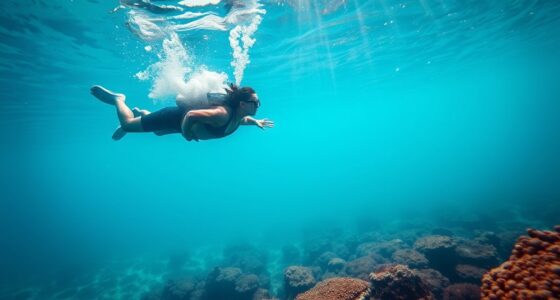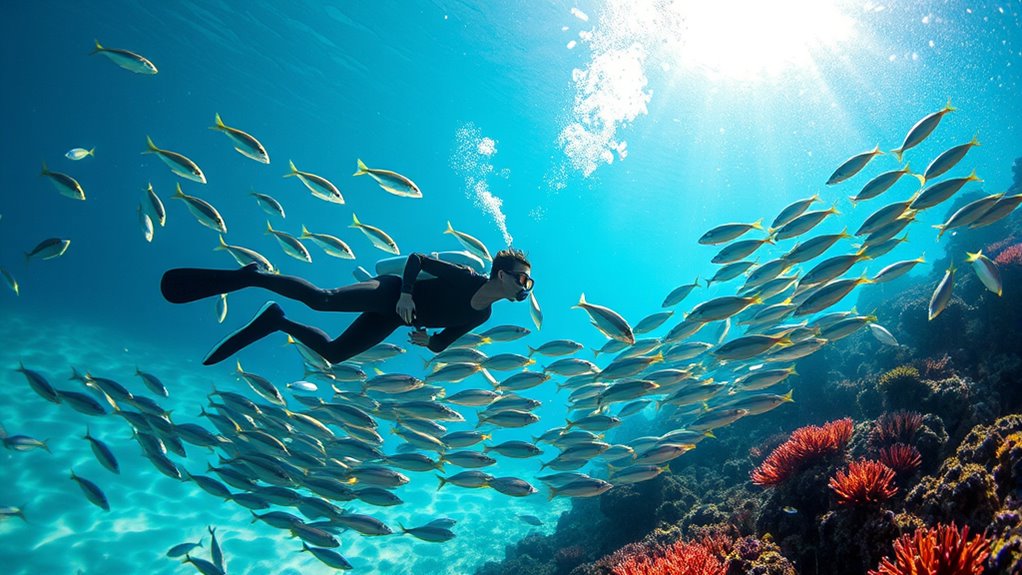

To capture stunning underwater photos, use external lighting to combat light absorption and enhance colors. Maintain steady buoyancy for sharp images, and experiment with various camera angles and compositions for added interest. Set your white balance to ‘underwater’ or ‘flash’ mode, and adjust shutter speed and aperture for ideal exposure and depth of field. Regular practice is key to improving your technique and capturing breathtaking images. There’s plenty more to discover about perfecting your underwater photography skills.
Key Takeaways
- Use external lighting, like strobes, to enhance colors and reduce the effects of light absorption underwater.
- Maintain steady buoyancy control to prevent blurry images and achieve sharp focus.
- Experiment with different camera angles and compositions to create visually engaging shots.
- Adjust camera settings for underwater conditions, using ‘underwater’ white balance and an aperture of f/8 or f/11.
- Practice regularly to refine your skills and increase your confidence in capturing stunning underwater scenes.

Whether you’re diving into a coral reef or swimming in a tranquil lake, underwater photography offers a unique way to capture the beauty of the aquatic world. To make the most of your underwater adventures, understanding effective lighting techniques and camera settings is vital. With the right approach, you can transform ordinary shots into stunning images that truly reflect the underwater experience.
First, let’s talk about lighting techniques. Water absorbs light differently than air, so you’ll often find that your photos lack vibrancy and detail without proper lighting. When you’re diving deeper, natural light diminishes rapidly, leading to blue or green hues. To combat this, consider using an external flash or underwater strobe. This added light source helps to illuminate your subject and brings out the vivid colors that might otherwise be lost. Remember to position your light at a 45-degree angle to reduce backscatter—those annoying specks of light that can ruin an otherwise perfect shot.
Effective lighting is crucial for vibrant underwater photography; use an external flash to illuminate your subjects and minimize backscatter.
Next, you’ll want to pay close attention to your camera settings. Most underwater photography tools offer manual settings, which give you control over exposure, shutter speed, and aperture. Start by setting your white balance to ‘underwater’ or ‘flash’ mode, depending on your lighting technique. This will help guarantee your colors appear more natural. For shutter speed, aim for at least 1/125 of a second to freeze any motion, especially if you’re capturing fast-moving fish or currents. Adjust your aperture to f/8 or f/11 for better depth of field. This setting helps keep both the foreground and background in focus, a must when you’re photographing diverse marine life.
If you’re using a DSLR or mirrorless camera, consider shooting in RAW format. This gives you greater flexibility in post-processing to adjust colors, exposure, and contrast. Don’t forget to practice proper buoyancy control; staying steady while shooting is key to avoiding blurry images. Additionally, understanding the tax implications of divorce asset division can help you better manage expenses related to your photography gear.
Lastly, don’t be afraid to experiment. Try different angles and compositions, and play with your camera settings until you find what works best for your specific environment. Whether you’re photographing a vibrant coral reef or a serene underwater landscape, each dive offers a new opportunity to refine your skills and capture breathtaking images. With these tips in your toolkit, you’re well on your way to creating stunning underwater photography that showcases the mesmerizing world beneath the surface.
Frequently Asked Questions
What Camera Settings Are Best for Underwater Photography?
For underwater photography, you’ll want to set a higher ISO to capture more light, especially in deeper waters. Use a wide aperture to create a shallow depth of field, making your subject pop. Experiment with different lens choices, like a macro lens for close-ups or a wide-angle lens for sweeping shots. Incorporate natural and artificial lighting techniques to enhance colors and reduce backscatter, ensuring your images are vibrant and clear.
How Can I Prevent Water Damage to My Camera?
Oh sure, just toss your camera in like it’s a beach ball! But if you want to avoid a soggy disaster, focus on camera maintenance. Always use a reliable waterproof casing to keep those pesky water droplets at bay. Regularly check seals and gaskets, too; they’re your camera’s best friends! Don’t forget to rinse your gear after each dive to eliminate salt and sand. Trust me, your camera will thank you later!
Should I Use a Flash or Natural Light?
You should consider using a flash for underwater photography. Natural light can create beautiful effects, but it often requires exposure adjustments to capture the vibrant colors and details. Flash lighting techniques help illuminate your subjects and reduce backscatter, enhancing image clarity. If you’re shooting in deeper water, a flash is almost essential to bring out the richness of colors that natural light struggles to reach. Experiment with both to see what works best for you!
What Are the Best Underwater Photography Locations?
The best underwater photography locations will blow your mind! You’ll find stunning spots like the Great Barrier Reef, where vibrant marine life behavior unfolds, or the Bahamas, showcasing incredible underwater landscape compositions. Don’t miss the Maldives for breathtaking coral formations and diverse species. Each destination offers unique perspectives, so you can capture everything from majestic sea turtles to schools of fish, making your underwater adventures unforgettable. Get ready to plunge into beauty!
How Do I Edit Underwater Photos Effectively?
To edit underwater photos effectively, start with basic post-processing techniques. Use software like Lightroom or Photoshop to adjust exposure and contrast. Next, focus on color correction; underwater shots often have a blue or green tint. Use the color balance tool to enhance reds and yellows, bringing out vibrant colors. Don’t forget to sharpen your images slightly to emphasize details. Experiment with these adjustments until you achieve the desired look for your stunning underwater scenes.
Conclusion
Now that you’ve got these underwater photography tips, imagine plunging into your next adventure, capturing stunning images that tell a story. As you glide through the water, you might just stumble upon a vibrant reef or a curious sea turtle, creating a perfect moment to snap that unforgettable shot. Coincidentally, each dive could lead to new discoveries, both in the ocean and in your photography skills. So, grab your camera, dive in, and let the magic unfold!