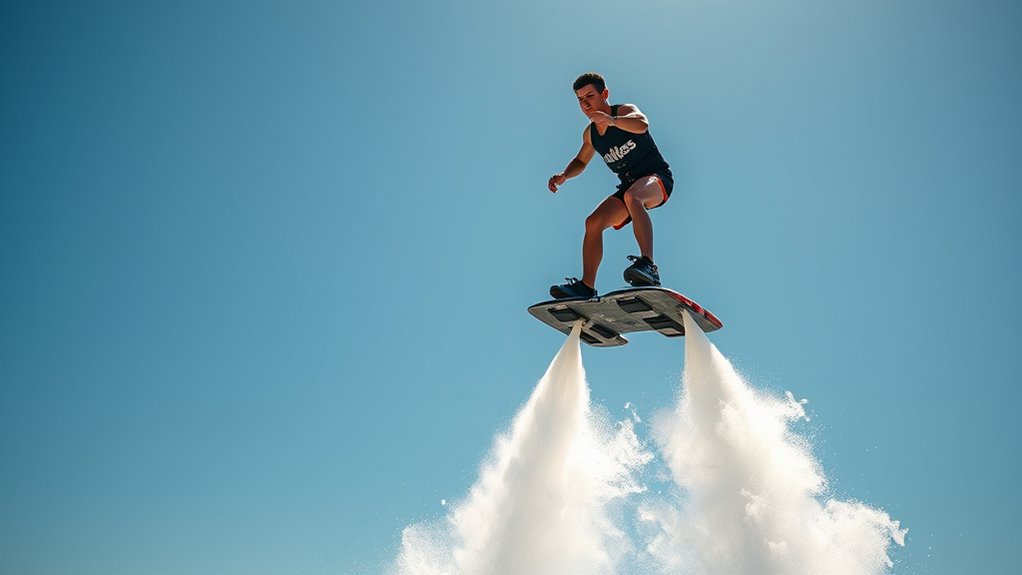

To fine-tune your flyboarding elevation, you should make small, gradual throttle adjustments. Increasing throttle slightly boosts water flow, lifting you smoothly, while easing off carefully brings you down or stabilizes your height. Consistently practicing these subtle changes improves control and balance. Remember to stay relaxed and focus on steady movements. As you master these techniques, you’ll find it easier to maintain a smooth, controlled flight—if you keep exploring, you’ll learn even more tips.
Key Takeaways
- Make gradual throttle adjustments to ensure smooth, controlled changes in altitude.
- Use small, precise throttle increments for better responsiveness and stability.
- Combine throttle control with body positioning to fine-tune elevation and balance.
- Avoid sudden throttle jumps to prevent loss of control or abrupt elevation shifts.
- Practice consistent, gentle throttle modulation to develop a natural feel for water jet response.
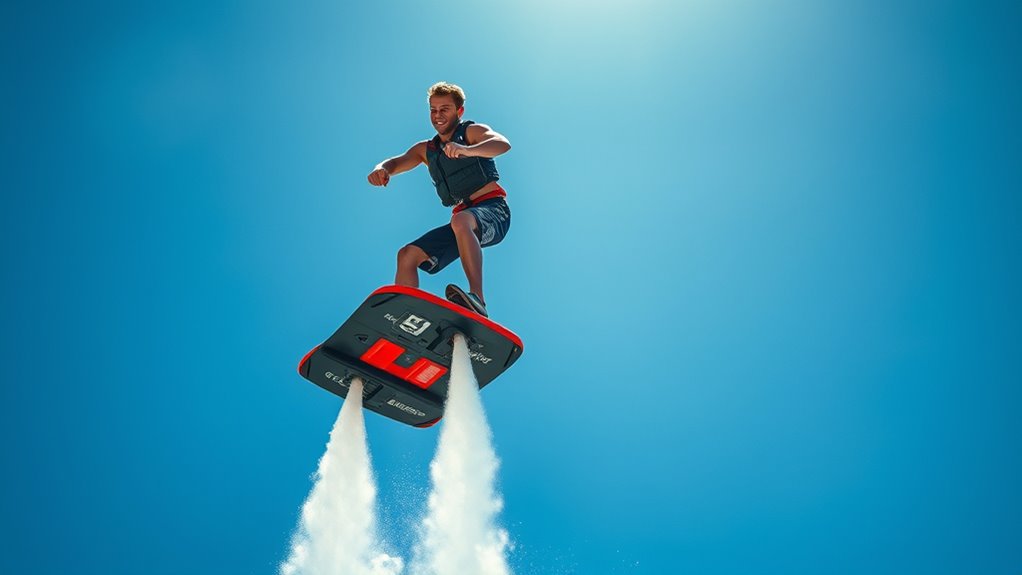
Have you ever wondered how pilots control their speed and altitude while flyboarding? It all comes down to understanding the hydrodynamic principles at play and mastering throttle control. When you’re up on a flyboard, you’re fundamentally manipulating water jets to lift and steer yourself. The key is to fine-tune your throttle to achieve smooth elevation changes without losing balance or risking safety. The hydrodynamic principles involved explain how water pressure and flow influence your movement. Increasing the throttle speeds up the water jets, generating more upward force, while easing off reduces lift. By understanding these forces, you can better anticipate how your adjustments will affect your height and stability.
Getting comfortable with throttle control requires practice and awareness of safety precautions. Always start slowly, especially if you’re new to flyboarding. Rapid or excessive throttle inputs can cause sudden movements, making you lose control or fall into the water. Always wear proper safety gear, including a life vest and helmet, and follow instructor guidance if you’re taking lessons. Keep your body relaxed, and don’t tense up, as stiff movements can make controlling the board more difficult. When you want to ascend, gradually increase the throttle, feeling how the water jets respond. To descend or stabilize, gently reduce the throttle, allowing the water pressure to decrease naturally. This incremental approach helps you maintain balance and prevents abrupt shifts that could throw you off.
Understanding the importance of precision control helps enhance your overall flyboarding skills by allowing more accurate adjustments. Maintaining safety precautions is fundamental when fine-tuning your throttle. Always be aware of your surroundings—other riders, boats, or obstacles—so you can adjust your height safely. Avoid sudden or aggressive throttle movements, which could lead to accidents or injuries. Remember, water jets are powerful, and controlling them carefully minimizes risks. The more you practice, the better you’ll understand how small throttle adjustments translate into smooth, controlled movements. As you become more confident, you’ll learn to combine throttle control with body positioning for precise elevation changes and smooth transitions. Ultimately, mastering these hydrodynamic principles and adhering to safety precautions will elevate your flyboarding experience, making it safer, more enjoyable, and more impressive for everyone watching.
In essence, fine-tuning your throttle involves understanding water flow, making gradual adjustments, and always prioritizing safety. With patience and practice, you’ll develop a natural feel for how your movements influence your altitude and stability. Remember, safety isn’t just a rule—it’s a fundamental part of enjoying this exhilarating activity. By respecting the hydrodynamic principles and following safety precautions, you’ll be able to soar smoothly and confidently on your flyboarding adventures.
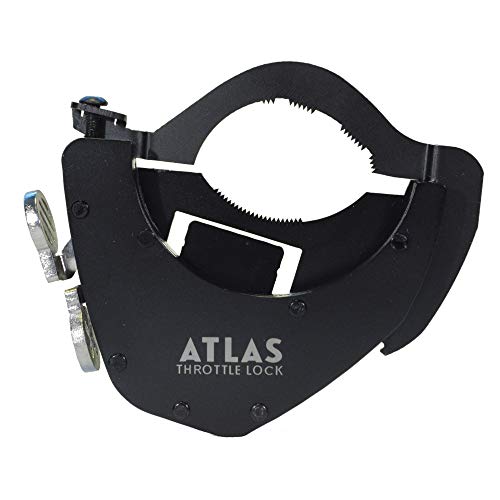
ATLAS Throttle Lock – A Motorcycle Cruise Control Throttle Assist, Bottom KIT
PLEASE READ: Find your Motorcycle by clicking the User Guide [pdf] under the "Product guides and documents" section…
As an affiliate, we earn on qualifying purchases.
As an affiliate, we earn on qualifying purchases.
Frequently Asked Questions
How Do I Troubleshoot Throttle Issues During Flyboarding?
When troubleshooting throttle issues, start by checking the throttle calibration to guarantee it’s correctly synchronized with the engine’s response. If you notice inconsistent power, adjust the power settings gradually to find a smooth, steady elevation. Make sure all connections are secure and free of damage. If problems persist, reset the throttle system or consult the manual for specific calibration steps. Regular maintenance helps prevent throttle glitches during your flyboarding sessions.
What Safety Precautions Should I Take When Adjusting Throttle?
When adjusting the throttle, you should always wear protective gear like a life jacket and helmet to stay safe. Make sure you’re familiar with emergency procedures in case something goes wrong. Keep your hands steady and avoid sudden movements, which can cause accidents. Always test throttle responses slowly, and if you notice any issues, stop immediately. Prioritize safety to prevent injuries and ensure a smooth, enjoyable flyboarding experience.
Can Throttle Sensitivity Be Customized for Different Skill Levels?
Many believe throttle sensitivity can be customized for different skill levels, and research supports this idea. You can adjust throttle calibration to match your experience, making the flyboard easier or more responsive as needed. Skill customization allows beginners to start with gentle control, gradually increasing sensitivity as confidence grows. This tailored approach enhances safety and performance, helping you master flyboarding comfortably and efficiently.
How Does Water Temperature Affect Throttle Responsiveness?
Water temperature can markedly impact throttle responsiveness during flyboarding. When the water’s colder, the increased density may cause your equipment to react more sluggishly, making throttle control feel less responsive. Conversely, warmer water tends to improve responsiveness because it’s less dense. You might notice smoother elevation adjustments in warmer conditions, while colder water requires you to apply more precise or gradual throttle inputs to maintain control.
Are There Recommended Maintenance Tips for Throttle Components?
Think of your throttle system as the heartbeat of your flyboard—keeping it healthy is essential. Regularly perform throttle calibration to guarantee smooth response, and inspect components for wear or corrosion. Clean electrical contacts and lubricate moving parts as needed. Proper maintenance keeps your throttle responsive and reliable, preventing surprises mid-flight. Remember, a well-maintained throttle is key to a seamless ride, making your flyboarding experience both fun and safe.

GP Enterprises RP00K0016 Pressure Regulator Valve kit for Convertible Jet Pumps
The Pressure Regulator is compatible with Everbilt Convertible Jet pump models: DP250, DP370C, DP550C, AUTODP250
As an affiliate, we earn on qualifying purchases.
As an affiliate, we earn on qualifying purchases.
Conclusion
As you master throttle control, you’ll notice how smooth adjustments lead to effortless elevation, almost as if the water itself responds to your intentions. It’s no coincidence that fine-tuning your throttle enhances your flyboarding experience, blending precision with instinct. With practice, each lift becomes more intuitive, revealing that the key to seamless flight lies in your ability to subtly balance power and control. Ultimately, this harmony transforms every ride into a fluid dance with the water.
flyboarding safety gear
As an affiliate, we earn on qualifying purchases.
As an affiliate, we earn on qualifying purchases.
flyboarding training kit
As an affiliate, we earn on qualifying purchases.
As an affiliate, we earn on qualifying purchases.