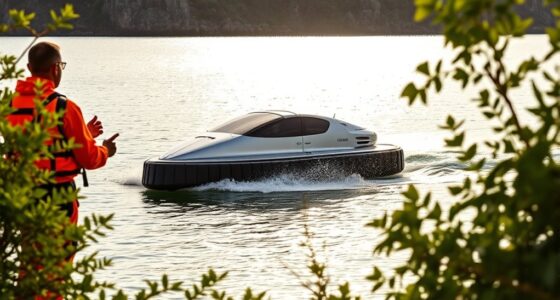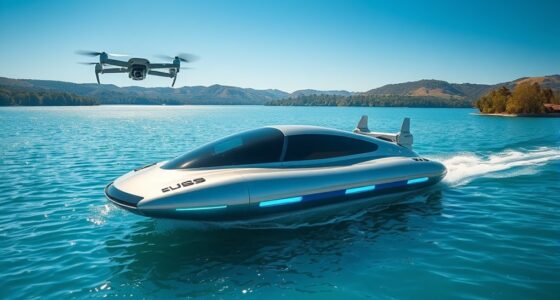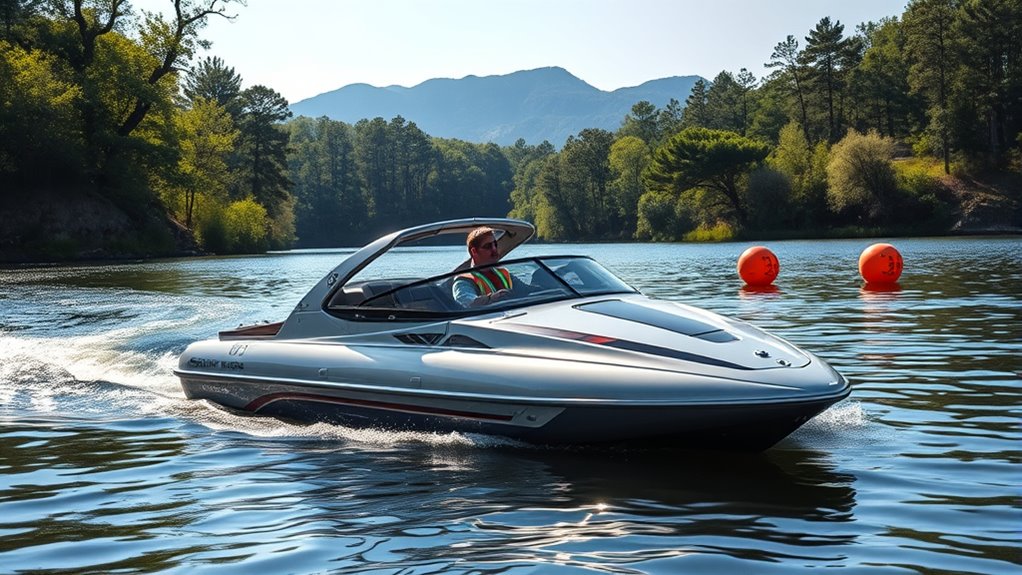

When operating amphibious vehicles, you need to follow both land and water navigation rules to stay safe. On land, obey traffic signals, stay within lanes, and give way to pedestrians and cyclists. On water, maintain safe speeds, respect designated channels, and use signals to alert others. Shift seamlessly between environments, check safety gear, and stay aware of markers and other craft. Continuing will help you master all essential safety and navigation practices for incident-free journeys.
Key Takeaways
- Obey both land traffic signals and waterway markers, including buoys and navigational aids.
- Maintain safe speeds and distance from other vessels and pedestrians during transitions.
- Use proper signaling devices and lights to indicate turns, stops, and presence on land and water.
- Follow designated navigation channels and avoid reckless maneuvers in water.
- Conduct safety checks before transitioning and ensure all safety equipment is in place.
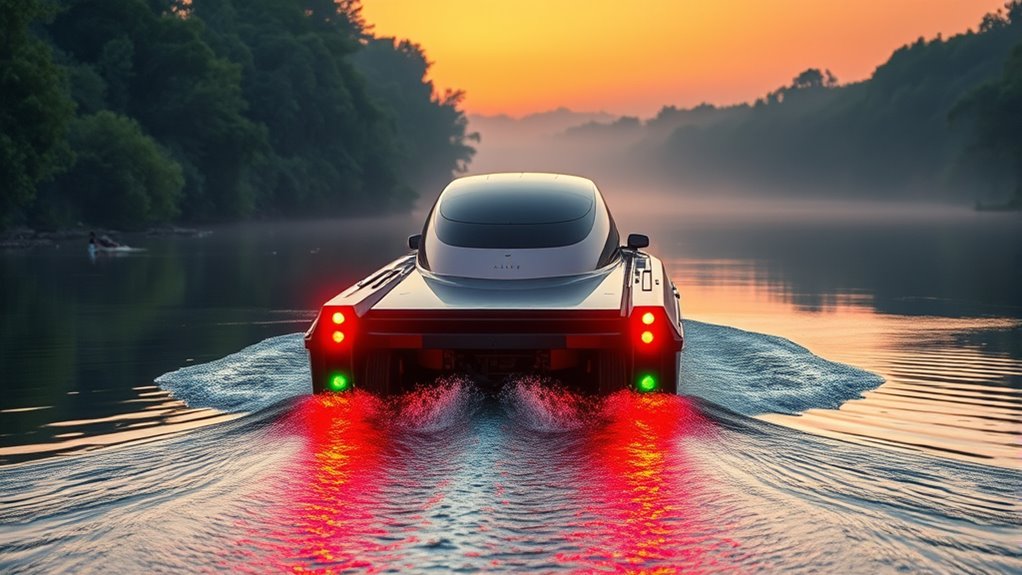
Navigational rules for amphibious vehicles are essential for ensuring safety and smooth operation when switching between land and water. These vehicles often operate in two very different environments, each with its own set of expectations and hazards. To navigate safely, you need to understand and adhere to specific traffic regulations and safety protocols designed for such versatile craft. On land, you’re expected to follow conventional road rules: obey traffic signals, stay within designated lanes, and yield to pedestrians and other vehicles. When transitioning onto water, these rules shift, but the importance of safety remains unchanged. You must use appropriate signals to indicate your intentions, such as turning or stopping, whether on land or water, and ensure that your vehicle’s lights are functioning correctly to increase visibility.
Navigational rules for amphibious vehicles ensure safety when switching between land and water environments.
Pay close attention to traffic regulations specific to amphibious vehicles. These rules dictate how you should behave when moving from land to water and vice versa. For example, before entering the water, you should check that your vehicle’s water safety systems are active, and that it’s properly equipped with life jackets, signaling devices, and emergency kits. On water, the rules emphasize maintaining a safe speed, avoiding reckless maneuvers, and respecting navigation channels designated for such vehicles. You’ll also need to be aware of waterway markers, buoys, and other navigational aids that help prevent collisions and ensure safe passage. On land, you’re responsible for obeying speed limits and traffic signs, just like any other vehicle, but you should also be cautious of pedestrians and cyclists, especially near docking areas or boat ramps. Additionally, understanding the Self Watering Plant Pots systems can help maintain your vehicle’s components in optimal condition, ensuring reliable operation during transitions.
Safety protocols are equally important. Always conduct pre-operation checks of your amphibious vehicle, inspecting brakes, steering, and communication systems. When switching between environments, do it smoothly and cautiously to avoid abrupt movements that could cause accidents. On water, keep a safe distance from other boats and watercraft, and use your horn or sound signals to alert others of your presence. On land, watch for pedestrians, especially in crowded areas, and be attentive to traffic flow. Remember, safety protocols also include having a clear understanding of emergency procedures, such as what to do if your vehicle gets stuck or takes on water unexpectedly. Proper training and regular drills help you respond swiftly and confidently in case of emergencies.
Ultimately, mastering these navigational rules for amphibious vehicles ensures your safety and that of others. By respecting traffic regulations and following safety protocols, you can enjoy the unique experience of amphibious travel while minimizing risks. Whether on land or water, your awareness and adherence to these rules create a safer environment for everyone involved. Properly managing transitions, signals, and safety measures keeps your journey smooth and incident-free.

Cressi Donatello Wrist Dive Computer - Black/Blue - Air & Nitrox Modes - Gauge & Free Diving - HD Backlit Display
Compact Design: Experience the ease of diving with the Cressi Donatello Wrist Dive Computer, designed with a single-button...
As an affiliate, we earn on qualifying purchases.
Frequently Asked Questions
Are Special Licenses Required to Operate Amphibious Vehicles?
You might need special licenses to operate amphibious vehicles. Depending on where you’re at, amphibious vehicle licensing could require you to obtain specific operator certifications. These certifications guarantee you’re knowledgeable about both land and water navigation rules. Check with local authorities or licensing agencies to find out if you need a unique license or training. Being properly certified helps you operate safely and legally, avoiding fines or penalties.
How Do Weather Conditions Affect Amphibious Vehicle Navigation?
You should always respect marine weather, as it can quietly introduce navigation hazards that challenge your amphibious vehicle’s handling. Storms, fog, or strong winds can obscure visibility and shift currents unexpectedly. When weather conditions worsen, it’s wise to proceed with extra caution, slow down, and stay alert. Being aware of these factors helps you navigate safely, ensuring you avoid potential dangers posed by changing marine weather and hidden hazards.
What Safety Equipment Is Mandatory Onboard Amphibious Vehicles?
You need to keep essential safety equipment onboard your amphibious vehicle, including life jackets for every passenger, which are vital in emergencies. Additionally, carry emergency flares to signal for help if needed. Always guarantee this equipment is easily accessible and in good condition. Proper safety gear helps prevent accidents from turning into disasters, so make sure you’re prepared before setting out on any water or land journey.
Can Amphibious Vehicles Be Used in Commercial Operations?
You can use amphibious vehicles in commercial operations, especially when they’re part of your commercial fleet management. These vehicles are versatile for tasks like tours, logistics, or emergency response. Just make certain you follow proper amphibious vehicle maintenance procedures and comply with safety regulations. Using them effectively requires understanding both land and water navigation, so you stay compliant and maximize their performance in your commercial activities.
How Are Navigation Errors Corrected During Amphibious Vehicle Operation?
During amphibious vehicle operation, you correct navigation errors through visual navigation techniques, such as using landmarks and depth cues, to realign your course. If you notice discrepancies, you adjust your direction promptly, relying on your observations and instruments. Regularly monitoring your position helps prevent cumulative errors, ensuring safe travel. Effective error correction combines visual cues with onboard navigation aids, enabling you to maintain accurate navigation across both land and water environments.

Cressi Leonardo 2.0 Dive Computer - Black/Blue - HD Backlit & Waterproof Watch - Nitrox/Gauge Modes & Dive Watch - Audible Alarm
Effortless Navigation: The Cressi Leonardo 2.0 Dive Computer features a user-friendly interface suitable for both beginners and seasoned...
As an affiliate, we earn on qualifying purchases.
Conclusion
Navigational rules for amphibious vehicles are vital for safety on land and water. Remember, over 60% of amphibious vehicle accidents occur due to navigation errors, highlighting the importance of following proper protocols. By staying alert, respecting traffic signals, and understanding waterway signs, you can help prevent accidents and guarantee smooth travels. Keep these rules in mind, and you’ll navigate confidently, whether on the road or in the water. Safe travels!

Mares Puck 4 Wrist Dive Computer | Entry-Level Watch-Style One Button Control Underwater Scuba Diving Computer, Black/Aqua
CUSTOMIZABLE DIVE ALGORITHM - The Puck 4 diving computer features the Bühlmann ZH-L16C algorithm with adjustable gradient factors,...
As an affiliate, we earn on qualifying purchases.

Suunto Zoop Novo Wrist Scuba Diving Computer, Black, Without USB
Operating modes: air, nitrox, gauge and freedom modes
As an affiliate, we earn on qualifying purchases.