
When comparing jet boats to outboard and inboard boats, you’ll find each type has unique advantages. Jet boats offer quick acceleration and great maneuverability, especially in shallow waters. Outboard boats provide versatility and better fuel efficiency, while inboard boats excel in stability for long trips in rough conditions. Your choice boils down to your specific needs and water activities. Explore further to discover which option aligns best with your boating lifestyle.
Key Takeaways
- Jet boats offer superior maneuverability and quick acceleration, making them ideal for water sports and shallow water navigation.
- Outboard boats provide a broad range of horsepower options and better fuel efficiency for various recreational activities.
- Inboard boats deliver smooth rides and stability in rough waters, making them suitable for long-distance cruising.
- Maintenance on outboard engines is easier due to their external mounting, while inboard engines require more complex access.
- Jet boats tend to perform poorly at lower speeds, while outboards and inboards maintain better fuel economy overall.

When you’re deciding on the best type of boat for your needs, it’s important to understand the key differences between jet boats, outboard boats, and inboard boats. Each type has its unique features that can considerably affect your boating experience, especially when it comes to propulsion differences and maintenance considerations.
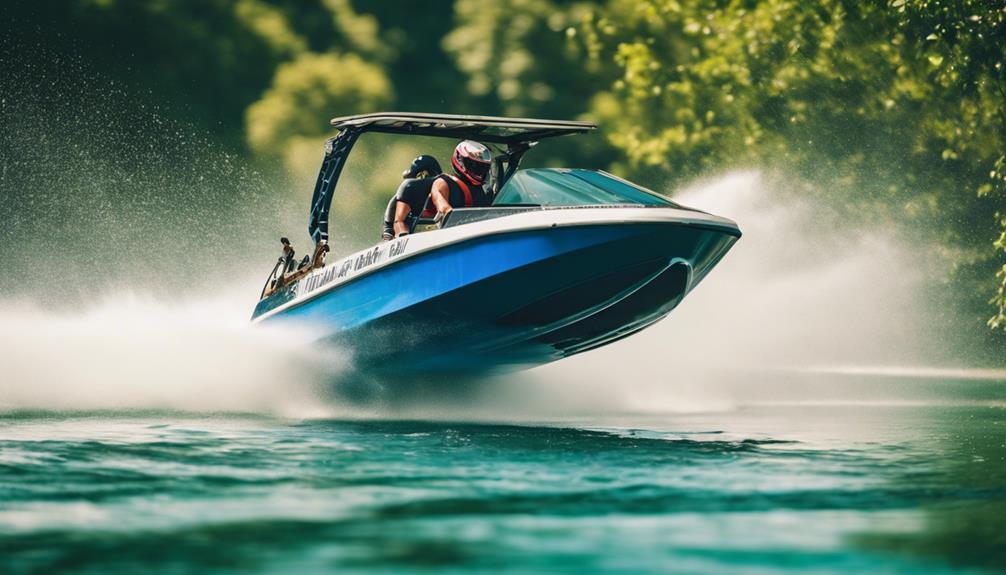
Jet boats use a jet propulsion system that draws water from underneath the hull and expels it through a nozzle at the back, providing excellent maneuverability and shallow water versatility. This design allows for quick acceleration and makes jet boats particularly popular for water sports like wakeboarding and tubing. However, they do have limitations, such as less efficiency at lower speeds and reduced fuel economy compared to outboard and inboard boats. If you enjoy dynamic activities and plan to navigate shallow waters, a jet boat might be the right fit for you.
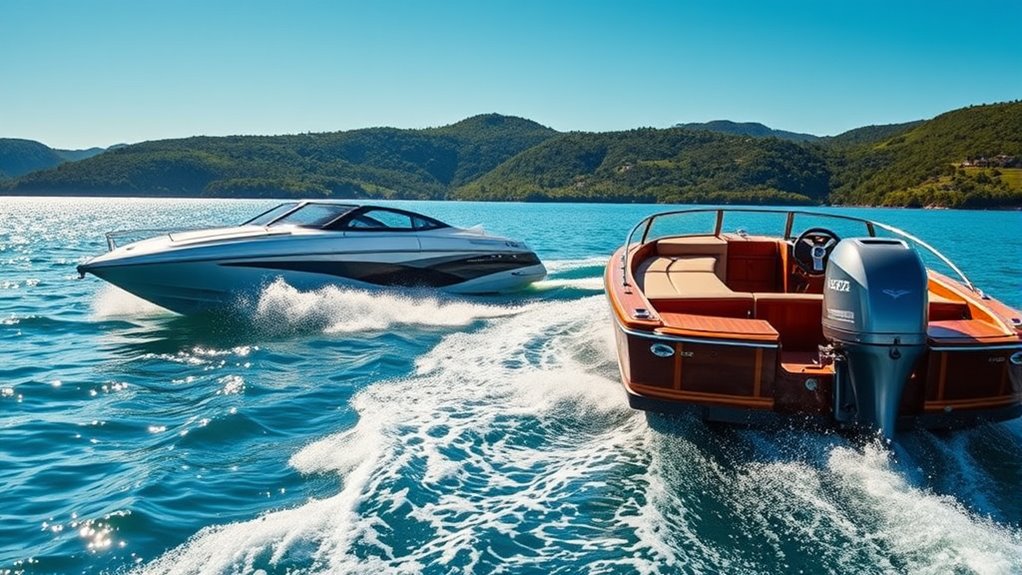
On the other hand, outboard boats feature engines mounted on the exterior of the transom. This design provides ease of maintenance since you can quickly access the engine without having to plunge into the boat’s interior. Outboards generally offer better fuel efficiency and a wider range of horsepower options, making them suitable for various activities, from fishing to cruising. However, keep in mind that they can be more vulnerable to damage from waves and rough weather, so if you’re often in choppy waters, consider this factor when making your choice.
Inboard boats, with their engines housed within the boat’s hull, deliver a smooth ride and better handling in rough conditions. They typically have a higher weight distribution, which can contribute to stability, especially when cruising at higher speeds. Maintenance considerations for inboard boats can be more complex and costly, as accessing the engine may require more effort and time. If you plan on using your boat for long trips or exploring open waters, the stability and performance of an inboard might appeal to you.
Ultimately, your decision should align with your specific needs and preferences. Whether you choose a jet boat for agility, an outboard for ease of maintenance, or an inboard for stability, understanding these propulsion differences and maintenance considerations will help you make an informed choice. Water efficiency and flush power are also vital factors to consider in your overall experience. Enjoy the journey of finding your perfect boat!
Frequently Asked Questions
What Are the Maintenance Costs for Jet Boats Versus Outboard and Inboard Boats?
When considering maintenance costs, jet boats generally have lower repair expenses due to fewer moving parts. You’ll find that outboard motors might require more frequent servicing, which can add up over time. Inboard boats often need complex maintenance, leading to higher costs. Ultimately, cost considerations depend on how often you use your boat and the type of conditions you navigate. Regular upkeep is essential to keep any boat running smoothly.
How Do Jet Boats Perform in Shallow Water Compared to Others?
Jet boats excel in shallow water navigation, offering superior obstacle clearance compared to traditional boats. Their unique propulsion system allows you to glide over sandbars and rocks without getting stuck. You’ll find that jet boats can access tight spots and shallow coves easily, making them ideal for exploring. With a shallow draft, you can maneuver through areas where outboard and inboard boats struggle, enhancing your overall boating experience in shallow waters.
Are Jet Boats Safer Than Outboard and Inboard Boats?
Jet boats can be safer than outboard and inboard boats due to their unique safety features. They typically have fewer exposed components, reducing accident risks from propeller strikes. The enclosed jet drive minimizes the chance of entanglement, which can be a concern with traditional motors. However, safety also depends on your experience and the conditions you’re steering. Always prioritize safety measures, regardless of the type of boat you choose.
What Types of Water Sports Are Best Suited for Jet Boats?
Jet boats are perfect for thrilling water sports like wakeboarding and skiing, where speed and agility reign supreme. Imagine slicing through the water like a knife through butter, making sharp turns with ease. They’re also great for kayaking adventures, allowing you to reach scenic spots quickly. For those peaceful moments, jet boats can take you to hidden coves for fishing expeditions, blending excitement and relaxation in one exhilarating package.
How Do Fuel Efficiency Levels Compare Across These Boat Types?
Fuel efficiency levels vary across boat types. Generally, outboard and inboard boats tend to offer better fuel consumption due to their engine efficiency, especially at cruising speeds. Jet boats, while powerful, often consume more fuel because of their design and the way they operate. If you’re looking for the most economical option for longer trips or regular use, outboard and inboard boats might be the better choice for you.
Conclusion
In summary, choosing between jet boats, outboard, and inboard boats is like picking your favorite ice cream flavor—each offers a unique experience. Jet boats excel in shallow waters and maneuverability, while outboard boats provide versatility and ease of maintenance. Inboard boats, on the other hand, deliver power and stability for larger waters. Ultimately, your decision should reflect your boating style and needs, ensuring you enjoy every moment on the water. Happy boating!