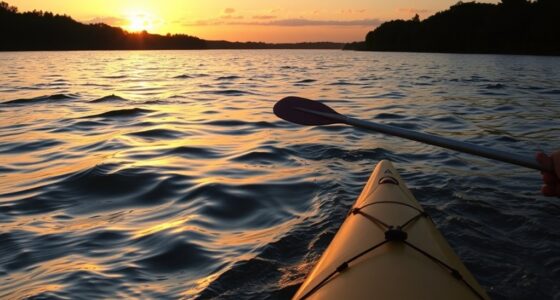
When planning a multi-day kayak tour, you’ll want to research entry and exit points, daily paddling distances, and potential obstacles like rapids. Packing is essential too—make sure you’ve got lightweight gear, waterproof bags for clothing and food, and plenty of water and snacks. Don’t forget safety gear such as a PFD, first-aid kit, and navigation tools. With the right preparation, you’ll have a memorable adventure. There’s even more to contemplate for a successful trip ahead.
Key Takeaways
- Research and map accessible entry and exit points, considering daily paddling distances for comfort and scenic breaks.
- Prioritize safety gear like a fitted PFD, first-aid kit, GPS, and spare paddle for emergencies.
- Use lightweight, waterproof bags for clothing and food, ensuring you pack enough supplies for the entire trip.
- Follow environmental guidelines by practicing “Leave No Trace” principles and minimizing your impact on natural surroundings.
- Plan for weather variations and potential hazards, ensuring you have necessary supplies for hydration and energy.

Have you ever dreamed of gliding through serene waters while camping under the stars? If so, multi-day kayak touring might be the adventure you’re looking for. Picture yourself paddling through tranquil lakes and rivers, surrounded by nature’s beauty, as you set up camp each night under a blanket of stars. However, before you set out on this thrilling journey, proper planning and packing are essential to guarantee a safe and enjoyable experience.
First things first—route planning is vital. You’ll want to research your chosen route thoroughly. Look for accessible entry and exit points, and consider the distance you can comfortably paddle each day. It’s wise to account for potential obstacles like rapids or weather changes that could impact your journey. Pay attention to local regulations and permits needed for camping in certain areas. Mapping out your route ahead of time not only helps you stay on track but also enhances your overall experience by allowing you to anticipate scenic spots for breaks or camping.
Next, let’s talk about safety gear. You can’t overlook the importance of being prepared for unexpected situations. Always wear a personal flotation device (PFD), and make sure it fits properly. Bring along a first-aid kit, a whistle, and a headlamp for evening navigation. If you’re venturing into remote areas, consider carrying a GPS device or map and compass for navigation. It’s also smart to have a spare paddle and pump in case of emergencies. Having the right safety gear can make a significant difference in your peace of mind while out on the water.
Once you’ve mapped your route and gathered your safety gear, it’s time to pack. Focus on lightweight, compact gear that’s easy to fit in your kayak. Choose durable, waterproof bags for your clothing and food supplies, and be sure to bring enough food and water for the entire trip. Don’t forget your cooking equipment, such as a portable stove and lightweight cookware. While packing, always remember to follow the “Leave No Trace” principles to minimize your environmental impact. Additionally, it’s beneficial to stay hydrated throughout your journey by incorporating juice cleansing practices to maintain your energy levels while on the water.
Frequently Asked Questions
What Is the Best Time of Year for Multi-Day Kayak Touring?
The best time for multi-day kayak touring is typically late spring to early fall. During these months, you’ll enjoy pleasant weather and longer daylight hours, making your experience more enjoyable. Seasonal considerations like water temperature and river flow are vital, too. Plus, wildlife activity peaks during this time, giving you a chance to see animals in their natural habitats. So, plan your trip accordingly to maximize your adventure!
How Do I Choose the Right Kayak for Touring?
To choose the right kayak for touring, consider the kayak materials, like plastic or fiberglass, which affect durability and weight. Look for a model with a suitable weight capacity to handle both your gear and body weight comfortably. Test various sizes and designs to find one that fits your paddling style. Don’t forget to check for storage options, as you’ll want enough space for your multi-day adventures.
What Are Common Safety Tips for Multi-Day Kayaking?
When you’re out on a multi-day kayak trip, prioritize safety by carrying a water filtration system to guarantee you have clean drinking water. Always wear a life jacket and let someone know your route and expected return time. Keep an emergency signaling device, like a whistle or flare, handy in case you need help. Stay aware of weather conditions, and never kayak alone to enhance your safety on the water.
Can I Kayak Alone on Multi-Day Trips?
You can kayak alone on multi-day trips, but it’s a bit like sailing a ship solo through stormy seas. While the thrill is undeniable, the risks increase without a crew. Solo kayaking offers freedom, yet group trips provide safety in numbers. Make sure you’re experienced, plan meticulously, and inform someone of your route. Always trust your instincts and take precautions; the open water can be both enchanting and unpredictable.
What Should I Do in Case of Bad Weather?
If bad weather hits, it’s essential to prioritize emergency preparedness. Keep an eye on weather monitoring apps or local forecasts before and during your trip. If conditions worsen, seek shelter immediately. You might need to change your route or cut your trip short. Always have a plan for emergencies, including a safe spot to wait out storms. Remember, your safety’s more important than sticking to your itinerary. Stay alert and stay safe!
Conclusion
As you set out on your multi-day kayak adventure, remember that preparation is key to ensuring smooth sailing. With the right planning and packing, you’ll navigate challenges like a pro and soak in the beauty of nature. Don’t forget to keep your gear organized and prioritize safety—after all, it’s better to be safe than sorry. So, grab your paddle and hit the water; the journey of a lifetime awaits!